Get Full Government Meeting Transcripts, Videos, & Alerts Forever!
Get email alerts on the Citizens Convenience Center topic
No spam. Unsubscribe anytime.
Town of Cary staff say downtown convenience center must close by Dec. 2026; council weighs $175K design and $3–4M rebuild
Summary
Town staff told the council the downtown Citizens Convenience Center at 313 N. Dixon sits in railroad right-of-way and must be vacated for a federally funded railroad siding extension; staff presented three options — full closure, partial services retained on-site, or relocating to 801 Old Apex Road — with design estimated at $175,000 and construction roughly $3–4 million, and pledged to return in spring with cost and impact analyses.
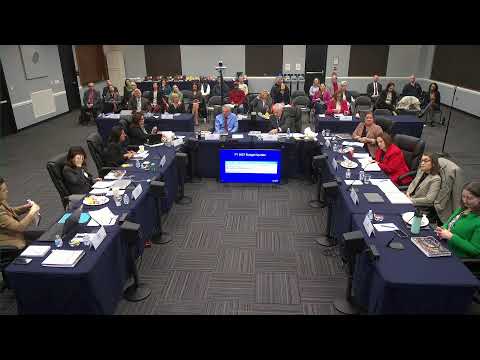
Town of Cary staff told the Cary Town Council at a Feb. 5 work session that the downtown Citizens Convenience Center must be vacated because the North Carolina Railroad has received federal funding to extend a siding and the project requires clearing the railroad right-of-way.
Shelly, a town staff member presenting the study, said the public portion of the facility at 313 N. Dixon has been in use since the 1950s and serves about 250 visitors per day (roughly 90,000 people per year). "We have to be out of the current space by December," Shelly said, adding that the Federal Railroad Administration-approved construction is scheduled to begin Oct. 27 and the railroad needs the site cleared for pre-construction work.
The consultant Garrett & Moore delivered three options for the council to consider: close the center entirely to the public as of December 2026; reconfigure the current site to retain yard-waste and food-waste drop-off but remove other services currently in the railroad right-of-way; or relocate most public services to a town-owned property at 801 Old Apex Road. Staff estimated design for a new location at about $175,000 and offered a preliminary construction range of $3–4 million; current annual operating costs for the convenience center are roughly $800,000–$900,000.
Council members pressed staff for specifics on what the railroad will require removed (pavement, containers, other infrastructure). Shelly said staff will meet the railroad to determine the exact scope and will return with an estimate for removal costs. "No matter what option we pick, we'll have whatever it costs us to get out of the right-of-way," she said.
Members also asked about community impacts if the center closes. Shelly said the town has not performed a formal impact study but expects some residents would shift to county facilities for large items; Wake County operates several nearby centers (Apex, Morrisville, Morrisville-area sites and others). Councilors suggested the town could seek a Wake County partnership to maintain a Cary location, or consider charging users to recover some costs; staff said they would ask the consultant to examine fee and cost-recovery options and return with additional analysis.
Several council members raised the possibility of hybrid or interim approaches — for example, closing most public services while keeping a food-waste drop-off or yard-waste capability on-site — to avoid a full multi-year lapse in services. Shelly said some hybrid approaches may be feasible if access can be redesigned so public users do not cross the town's work area and if design can be completed quickly enough.
Staff committed to several next steps: obtain a clearer list from the railroad of required removals and a removal-cost estimate; cost out options 1 and 2 (closure vs. partial retention) and produce design estimates for any reconfiguration; investigate interim solutions for food-waste drop-off; and return to the council this spring with more detailed estimates and a recommended timeline. The council did not take any formal vote at the work session.
The council also asked staff to post signs and public notices immediately so residents are aware of the December 2026 deadline. Shelly acknowledged there will likely be a period when public services are unavailable — "it could be a year or two," she said — but said staff will try to limit service gaps where possible.
What’s next: Staff will meet with the railroad and the consultant, return with cost and impact analyses, and present follow-up recommendations in the spring work session.