Lifetime Citizen Portal Access — AI Briefings, Alerts & Unlimited Follows
Committee advances HB1413 to create Dream Scholarship endowment and new postgraduate medical scholarships
Loading...
Summary
The House Higher Education Committee voted to advance HB1413, which establishes a non‑lapsing Dream Scholarship endowment split into three accounts and creates a new postgraduate medical scholarship funded from lottery revenue and administered by the Georgia Student Finance Commission; the bill also proposes moving the lottery education reserve toward 100% to protect the HOPE program.
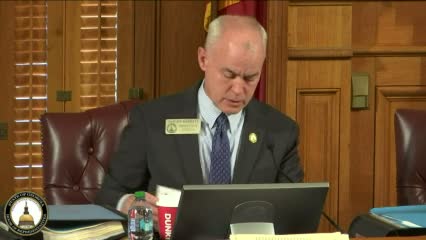
The House Higher Education Committee on Tuesday moved forward HB1413, a bill that restructures the Dream Scholarship into a non‑lapsing endowment and creates a lottery‑funded postgraduate medical scholarship.
The sponsor, identified in the meeting as the chair for the presentation (chair), said the bill "creates a Dream Scholarship endowment fund with three separate accounts — the principal account, the scholarship account, and the transitional scholarship account" so the monies are preserved and administered through the Georgia Student Finance Commission. He said the arrangement lets the state protect the principal while using earned proceeds for scholarships.
The bill also "creates a scholarship opportunity for postgraduate medical training in Georgia," the sponsor said, adding the new scholarships would be funded from lottery revenue and administered by the Georgia Student Finance Commission with the state treasury managing investments. "This is to hold the monies in a non‑lapsing fund," he said.
During questioning, Chairman Carpenter asked whether scholarship recipients would be required to practice in Georgia. The sponsor replied the bill includes a contract requiring recipients to "practice in Georgia for four years," but he said the length of the service requirement could be adjusted in policy or statute.
Representative Barnes asked which medical fields would be eligible. The sponsor described the awards as intended for postgraduate medical training across multiple practice areas rather than a single specialty, and suggested that targeting for workforce shortages and precise eligibility criteria could be determined by the appropriate workforce boards or in policy rather than being rigidly specified in statute.
Committee members also asked whether private fundraising would be routed into the same fund or a separate university system fund. The sponsor said institutional foundations would not be required to contribute and that the Student Finance Commission would control allocation policy while treasury handles investments.
Without objection the committee voted to give HB1413 a do‑pass recommendation to the next stage of review.
The committee did not adopt final statutory text changes during the meeting; the sponsor said the bill is being refined as it moves through the legislative process and that a target date for a finalized bill text had been discussed.