Get AI Briefings, Transcripts & Alerts on Local & National Government Meetings — Forever.
Oro Valley council adopts use and telecommunications taxes, declines commercial-rental tax
Loading...
Summary
In a split vote, council adopted a 2.5% use tax and a 2.5% telecommunications tax to diversify revenue; a proposed commercial rental tax was debated at length and failed to pass. Council cited structural revenue pressures and rising pavement and public-safety costs in support of the measures; business groups urged caution.
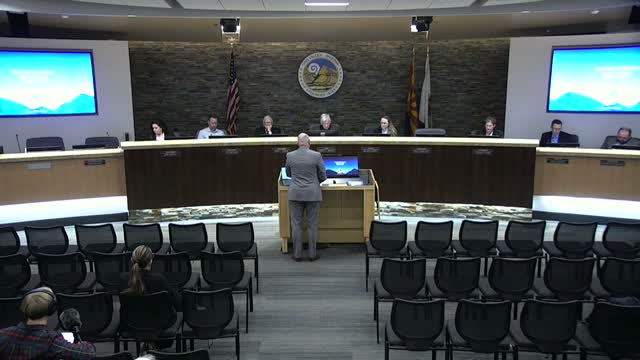
The Oro Valley Town Council on Jan. 14 approved two new local tax measures — a 2.5% use tax and a 2.5% telecommunications tax — and rejected a proposed commercial rental tax after extensive public comment and council debate about impacts on businesses and residents.
Chief Financial Officer Dave Gephardt framed the package as a response to a structural imbalance in the town’s general fund: growth-dependent revenues have flattened while pavement-preservation and public-safety costs have risen sharply. He said the town faces a projected sales-tax shortfall and that diversifying non-growth revenue sources would help maintain services and capital needs.
Ordinance O26-02 (use tax, 2.5% effective 07/01/2026) passed on a 4–3 roll-call vote recorded in the transcript. Gephardt described the use tax as a parity tool that taxes out-of-state purchases and contractors similarly to local retailers, with estimated revenues in a moderate range and a stated recommendation to dedicate use-tax proceeds to capital needs.
Council then approved Ordinance O26-03 to add a telecommunications tax (2.5% effective 07/01/2026) by the same narrow margin; staff estimated modest annual revenue from that item. Multiple members expressed philosophical reluctance to raise taxes but cited the need to diversify revenues.
By contrast Ordinance O26-04 (commercial rental tax) drew substantial opposition from business owners, who said the tax would be uneven and harm small businesses. The council debated the measure and ultimately failed to adopt it (transcript records the motion as failing 4–3). Multiple council members emphasized staff work to reduce costs and stressed they do not relish raising taxes.
Public commenters included representatives of the Chamber of Commerce and local small-business owners who urged the council to prioritize business stimulus and marketing over new taxes; others urged a comprehensive strategic approach to the town’s structural budget issues. Councilmembers said staff had produced benchmarking information and outreach; supporters said the taxes are measured and data-driven steps to protect core services.