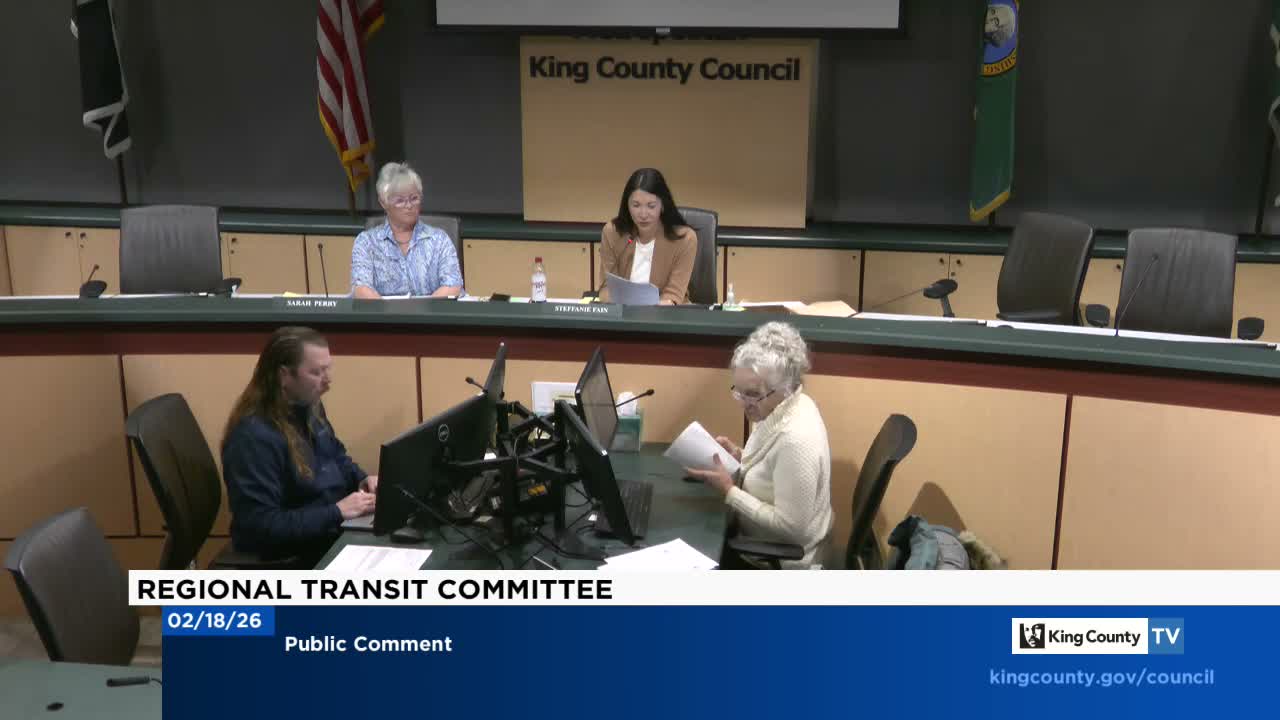
Metro outlines 2026 service growth, safety upgrades and tap-to-pay pilot

Regional Transit Committee (King County) · February 18, 2026

Loading...

AI-Generated Content: All content on this page was generated by AI to highlight key points from the meeting. For complete details and context, we recommend watching the full video. so we can fix them.

Summary

King County Metro told the Regional Transit Committee it plans to add 450,000 service hours this biennium, is implementing safety-task-force recommendations (including new operator-partition buses), and has soft-launched tap-to-pay on the G Line as it prepares for large 2026 events including FIFA.

Metro General Manager Michelle Allison reported to the King County Regional Transit Committee on Feb. 18 that Metro is entering 2026 as a “year of delivery,” with a planned 450,000 additional service hours funded in the county budget and continued implementation of safety and service improvements.

Allison said Metro maintained strong ridership in 2025 and is expanding service this year: “Thanks to the King County budget, we are expected to grow service by 450,000 hours. That is a tremendous amount of growth for this biennium,” she said. She reported January average weekday boardings for Metro buses were over 270,000 and that ridership in January was 5.4% higher than the prior year.

Allison reviewed Metro’s role in recent emergency responses and big-event operations, saying the agency supported county response during December flooding and executed large-scale operational planning for the Seahawks Super Bowl parade. “For Metro alone, we had around 319,000 riders” during the parade, Allison said, and Metro used those lessons to prepare for the FIFA World Cup.

On safety, Allison described work to implement recommendations from a regional transit safety task force and highlighted the rollout of new buses from Gillig that include operator safety partitions. “We’re working to strengthen our partnerships, our resource allocation, and really understanding how we hold ourselves accountable to implementing what was raised,” she said.

Allison also described fare-payment innovation: Metro has soft-launched a tap-to-pay pilot on the G Line that allows riders to tap a credit card or digital wallet; Metro plans to expand the feature beyond the G Line. Allison said Metro will include ORCA use and distribution and new payment-technology data in upcoming briefings to RTC.

The report noted ongoing coordination with partner agencies on major corridor disruptions (citing Revive I‑5 construction) and previewed infrastructure progress such as the Tukwila base opening and additional coach procurements. Allison invited committee members to request briefings and to provide direction on regional priorities for Metro’s 2026 work.

The committee asked no substantive questions during the floor discussion; Chair Stephanie Fain encouraged members to reach out to Metro and to attend a joint April briefing with the County Council focused on FIFA preparations.

Ending: The committee accepted the report and moved on to an RTC overview and work-plan discussion. A more detailed Metro data briefing (including ORCA/tap-to-pay metrics and post-event ridership analysis) was promised for a future meeting.