Get AI Briefings, Transcripts & Alerts on Local & National Government Meetings — Forever.
City attorneys and staff tell Hastings residents drinking water remains tested and protected amid long-running Superfund cleanup
Loading...
Summary
At a Hastings City work session, city attorney Mike Sullivan and longtime city environmental representative Marty briefed the council and residents on decades-long Superfund cleanup work, saying contaminated wells were shut and that the city continues extensive testing and well-permit monitoring to protect drinking water.
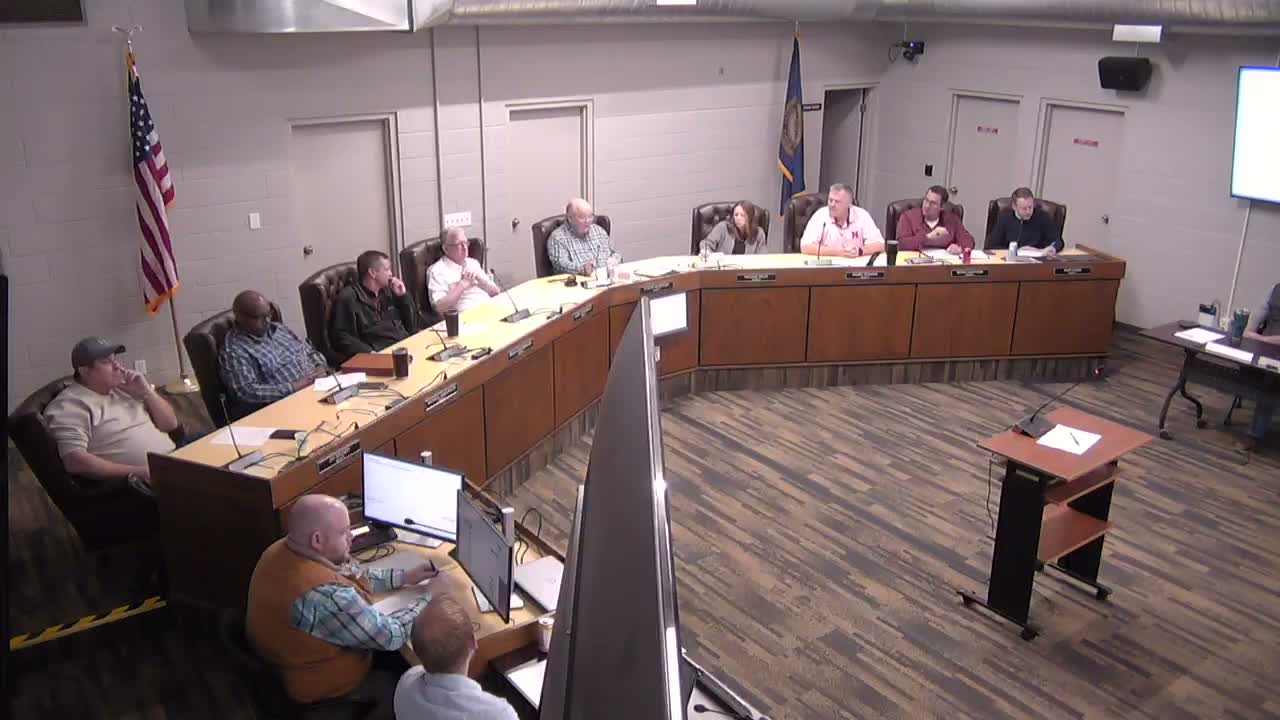
City attorney Mike Sullivan and city environmental staff told Hastings residents at a Feb. 13 work session that the long-running federal Superfund cleanup here remains active but local drinking water is monitored and protected.
"We're drinking clean water," Sullivan said, describing steps the city has taken over four decades, including shutting contaminated wells and drilling replacement wells in areas outside known plumes. He outlined seven local Superfund subsites — including the South Landfill, North Landfill, the 2nd Street site and Farmarco near the elevator — that EPA has been addressing and said groundwater contamination (notably trichloroethylene, or TCE, and historic fumigants such as carbon tetrachloride) is being investigated and monitored.
Why it matters: Residents raised concerns after social-media attention about historic contamination and possible impacts on private wells. Sullivan and Marty said the city has repeatedly tested water, cooperates with EPA and the state, and has enacted permitting and monitoring within an institutional control area to protect both public and private supplies.
Sullivan said EPA enforcement is broad and can require costly remedies; he told the council EPA once estimated cleanup costs for local work in the tens of millions and that the city has engaged engineering consultants (Arcadis) to pursue cost-effective options. "EPA has the authority to tell us what they want for a cleanup," Sullivan said, adding that engineers are trying to persuade EPA toward economical approaches.
City staff member Marty discussed the city’s wellhead-protection and institutional-control program, saying the department requires permits for wells in the control area, samples private wells, and communicates results to owners. "We require every well in an institutional control area to be permitted," Marty said, describing a sampling protocol tied to contaminant levels and a program that monitors irrigation wells and domestic wells within roughly two miles of the city.
Marty also described the South Landfill’s phytocap (a deep-rooted vegetative cap) approach, noting planting schedules and maintenance to limit infiltration and the potential to manage carbon and moisture. He said the active, most consequential cleanup work continues at the South Landfill and that routine groundwater testing has shown lower concentrations at plume edges, although monitoring continues to verify trends.
Public concerns and response: Residents asked whether private wells near the city remain safe. Marty said the city provides signs and outreach and that, when sampling detects exceedences, staff advise property owners and coordinate with state health and environmental authorities. Sullivan and Marty recounted an episode where a pregnant resident’s complaint prompted rapid shutdown of a well (Well 18) and laboratory confirmation of TCE and PAHs, which led to immediate protective action.
Council members and staff asked the presenters about next steps. Sullivan and Marty said the city will continue sampling, report results, coordinate with EPA and state regulators, and pursue remediation measures required by EPA while seeking cost-effective solutions.
What’s next: Officials said continued monitoring and reporting will proceed and that technical and regulatory discussions with EPA and state agencies will determine any future mandated remedies. The city encouraged residents with private wells to seek permitting and testing before drilling and said more data and updates will be provided through regular utility reports.