Lifetime Citizen Portal Access — AI Briefings, Alerts & Unlimited Follows
Hastings council approves TIF‑backed plan to convert old middle school into 68 apartments
Loading...
Summary
After a public hearing, the Hastings City Council approved a plan modification to use tax‑increment financing and other public and private funds to support a 68‑unit adaptive reuse of the former middle school; the measure passed 7–1.
The Hastings City Council voted to approve a redevelopment plan modification that clears the way for a tax‑increment‑financing (TIF)‑supported conversion of the city’s former middle school into a 68‑unit apartment building.
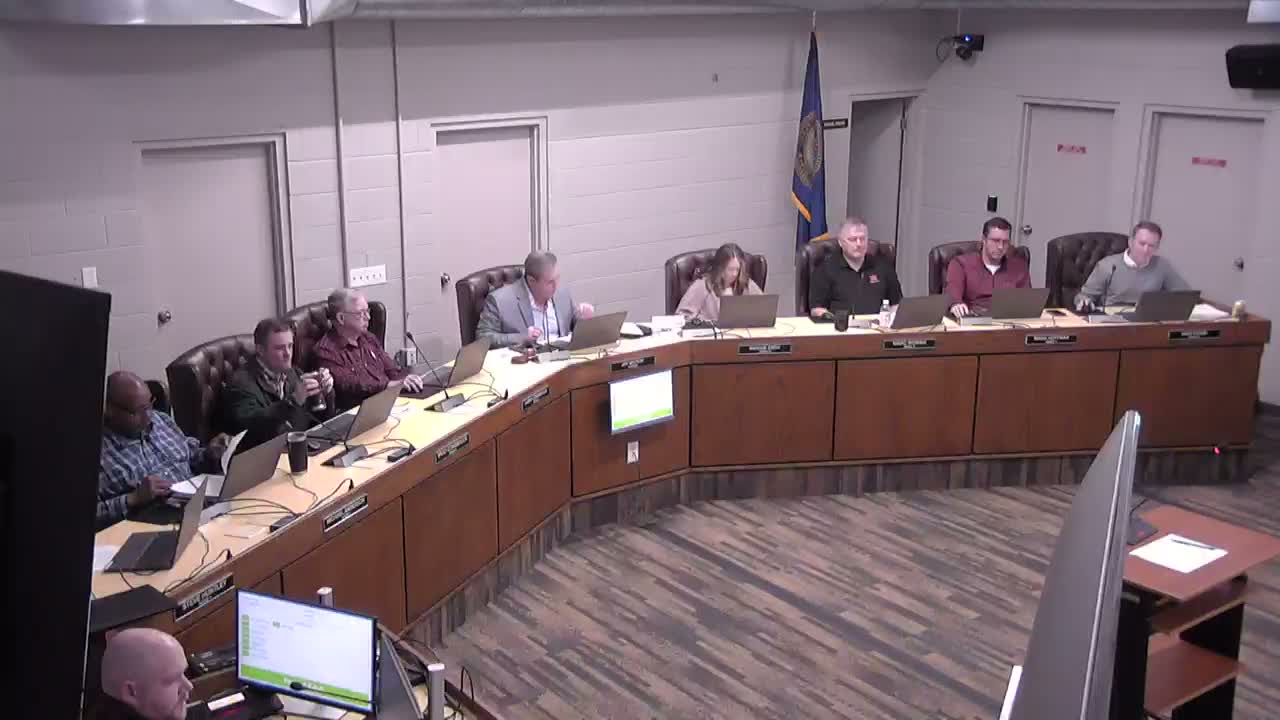
Mayor Huntley closed the public hearing and the council approved Resolution No. 2026‑0606 — the vote passed 7–1. City staff and project supporters told the council the project covers about 1.69 acres near the northeast corner of North Lincoln Avenue and West Fifth Street and depends on a mix of public and private funding to be financially feasible.
Why it matters: City staff and the Community Redevelopment Authority (CRA) said the adaptive reuse is unlikely to proceed without TIF because construction costs outpace the project’s income valuation. Randy Chick, speaking for the CRA, outlined the proposed financing package: approximately $7.5–$8 million in bank financing, about $2.4 million in owner equity, a $1.8 million TIF loan, $830,000 from the Nebraska Affordable Housing Trust Fund (which carries a 10‑unit requirement restricted to households at or below 120% of area median income), a $1,000,000 rural workforce loan from HEDC, a $445,000 CDBG façade award (with roughly $90,000 local match provided by the CRA), and an additional $700,000 from the CRA. The city also applied for an EPA asbestos cleanup grant to fund site mitigation; staff said that grant would not require repayment.
Developer and staff statements: Dave Rippey of 1917 Redevelopment LLC said bank financing is contingent on TIF approval and that the project converts a city‑owned liability into a downtown asset. Rippey described an 18‑month construction timeline after asbestos mitigation and said the team has rebid several packages to build the pro forma and emphasize local contractors. “This is the largest one of these projects to occur in our state,” Rippey said, arguing the project will boost downtown foot traffic and support small businesses.
Public comments and concerns: Several residents and community partners spoke in support. Jody Sussman, a former Planning & Zoning commissioner, urged the council to consider long‑term community benefits; Shannon Landauer of the Chamber and Hastings Economic Development Corporation said the timing is right because the project has multiple funding sources. Longtime resident Chuck Bauer called the building a historic community asset and urged preservation over demolition.
Opposition and fiscal questions: Edward Croats questioned spending roughly $15 million on a project he said might be worth about $10 million and asked whether the city risks “throwing money down a hole.” He asked whether demolition and a different use (for example, a field house) might be preferable. Council members pressed staff and the developer on contingency plans if revenues or valuations fall short; staff and the developer responded that the TIF note is secured by developer debt and, if tax increment does not cover the note, the in‑lieu payments or owner equity would address gaps. Kevin (city staff) and Randy Chick explained that valuation methods differ (cost‑based vs. income‑based), which creates the apparent gap between a construction cost estimate of roughly $15.5 million and an income‑based valuation nearer $9.5 million.
Legal and procedural questions: Council members flagged a clerical discrepancy between the agenda (which listed 5th & Hastings) and the newspaper public notice; the city attorney and clerk confirmed the newspaper notice was posted correctly for public‑hearing purposes and staff said the agenda will be corrected administratively.
Next steps: With the council’s approval, staff expects asbestos remediation procurement and concurrent architecture/engineering work to proceed; the developer indicated longer‑lead architecture and engineering work could start in March with demolition and construction following asbestos mitigation and permitting. The council recorded that the redevelopment will be monitored as projects proceed and that TIF repayment depends on the project’s eventual tax increment and commitments from the developer and lenders.
Provenance: Topic introduced at SEG 200 and concluded with the vote in SEG 1684. Quotes and project funding details sourced to RANDY CHICK (CRA representative), DAVE RIPPEY (1917 Redevelopment LLC), KEVIN (city staff), and public commenters EDWARD CROATS, JODY SUSSman, and CHUCK BAUER.