Get AI Briefings, Transcripts & Alerts on Local & National Government Meetings — Forever.
Senate approves broad public‑assistance overhaul after heated debate
Loading...
Summary
Senate passed SB 1758 (public assistance package) 26‑11 after extended debate over SNAP documentation, Medicaid work requirements and a behavioral‑health expansion; opponents warned additional paperwork could push eligible families out of programs.
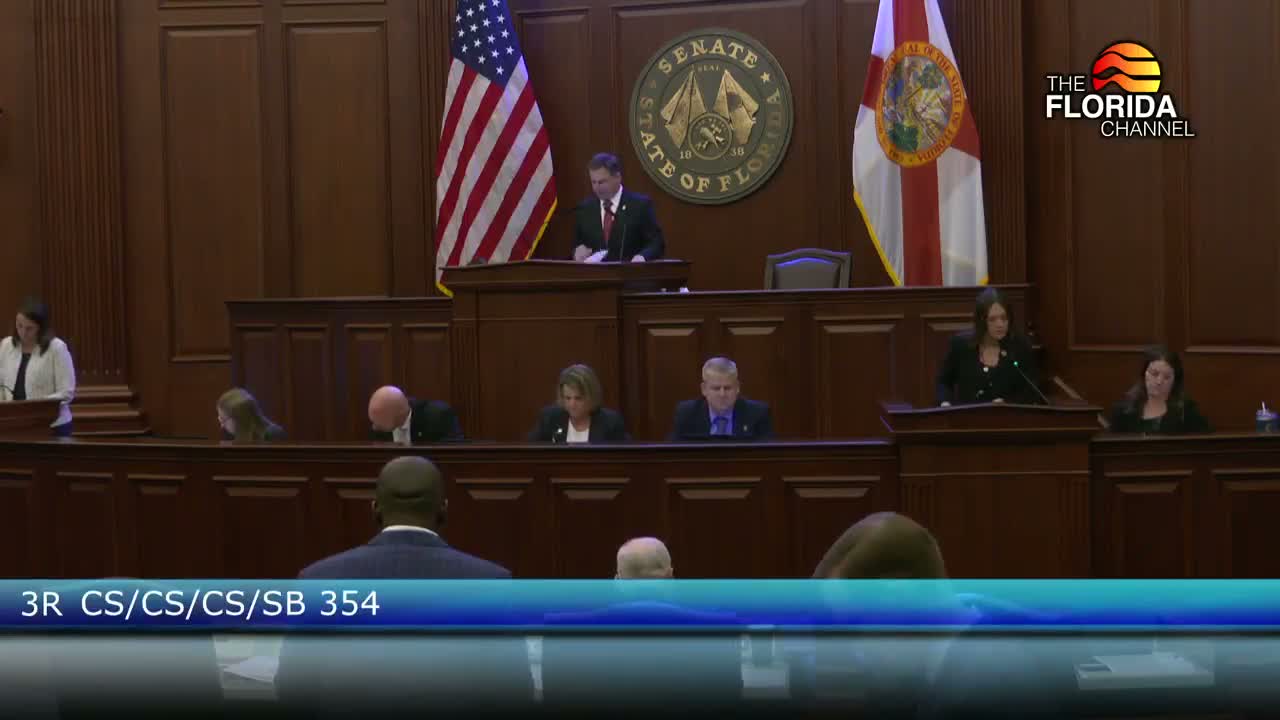
The Florida Senate approved a comprehensive public‑assistance package, SB 1758, on March 9, voting 26‑11 after several hours of debate over new documentation and work requirements affecting SNAP and Medicaid recipients.
Sponsor Sen. Gates told the chamber the bill combines multiple reforms — changes to SNAP administration, measures to reduce the program’s error rate, a one‑year transition plan tied to work requirements and a behavioral‑health expansion intended to secure federal waivers. "This bill calls for billions of dollars to be spent to do that," Gates said, adding the package aims to avoid roughly $1 billion in federal penalties and to tighten fraud controls.
Opponents, led by Leader Berman and Sen. Bracy Davis, said the bill’s documentation provisions go too far. "This bill takes a program meant to fight hunger and turns it into a maze," Leader Berman said, arguing that requiring proof of shelter and utility expenses and removing reliance on self‑attestation will create administrative barriers for families, seniors and people with disabilities. Sen. Bracy Davis raised staffing concerns at the Department of Children and Families, noting the division processing SNAP applications currently reported hundreds of vacancies and could struggle with added verification duties.
Other supporters stressed the need to correct a high SNAP error rate, which sponsors said is far above the federal standard. In closing, Gates argued the bill balances accountability and service expansion — including new home‑and‑community mental‑health services — and urged colleagues to approve it.
The Senate recorded 26 yays and 11 nays. The sponsor said the measure will next be considered in the House; opponents warned implementation details and agency capacity will be key to whether the changes benefit or harm vulnerable Floridians.
The debate included requests for clarification about documentation standards and concerns about cliff effects after the bill’s transition period ends; sponsors said a business‑plan review and programmatic evaluations will follow.