Get AI Briefings, Transcripts & Alerts on Local & National Government Meetings — Forever.
Port Orange planning commission motion to allow 6-foot corner-lot fence fails after residents, staff disagree
Loading...
Summary
The Port Orange planning commission denied a motion to allow a 6-foot fence on a corner lot after staff recommended denial, neighbors and HOA leaders opposed the variance and the applicant cited a family member’s medical needs.
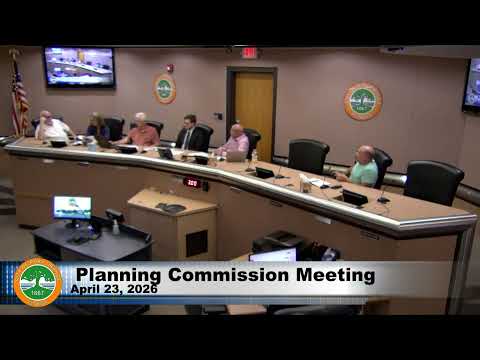
The Port Orange planning commission voted down a motion to allow a property owner to keep a 6-foot vinyl fence on a corner lot, after staff recommended denial and neighbors and HOA leaders urged consistent enforcement.
Tim Berman, community development staff, told the commission the fence — installed about 2015 and discovered through code enforcement — sits on a corner lot that by code has a primary and secondary front yard. He said the fence’s setback meets sight-triangle requirements and the police reported no accidents, but staff recommended denial because the city’s corner-lot provisions do not allow the taller fence in that secondary front yard location without a variance. “That is why staff’s recommendation was not to approve the variance,” Berman said.
The applicant’s representative, Peter Francis, described the fence as a 6-foot vinyl installation added roughly 10 years ago for privacy and to meet a family member’s medical and safety needs. “A 6 foot fence prevents unsupervised exit from the yard, providing a secure environment for the family member to enjoy the outdoors,” Francis said, and he argued the fence does not obstruct motorists’ or cyclists’ sight lines.
Several people from the neighborhood and HOA leaders opposed the variance. Alcides (Al) Rivera, who identified himself as HOA president, questioned the medical-necessity claim and said he did not believe the HOA had approved the fence. Resident Mike Anderson said past requests for 6-foot fences in corner-lot locations were denied and urged consistent application of rules: “We need to follow one set of rules, one set of guidelines for the whole thing,” he said. Other commenters said the dispute over a back fence and prior HOA litigation complicates the neighborhood context.
John Francis, who said he lives at the property in question, disputed claims that the HOA never approved the front fence and repeated the family-safety rationale: “We don't want to see our family member’s safety at risk,” he said, and urged the commission to grant the variance.
Commission discussion focused on two discrete points: whether the issue before the commission was height or location (staff: height only; setbacks met) and whether HOA approvals are relevant to the commission’s city-code variance review (attorney and staff: HOA matters are separate; city ordinances govern the variance). City legal counsel reviewed the statutory criteria the commission must apply to variance requests, including whether special conditions are peculiar to the property, whether the condition resulted from the applicant’s actions, and whether the requested variance is the minimum necessary.
After public comment and deliberation, a commissioner moved to approve the variance and the motion was seconded. During roll call the clerk read votes aloud and the chair announced the result: “So the count is 4 0 1 against,” and said the motion did not carry. The commission did not approve the variance; commissioners and staff noted the applicant may pursue other options, including reinstalling a 4-foot fence with a permit or appealing the planning decision through the prescribed channels.
The meeting adjourned at 6:08 p.m.