Get AI Briefings, Transcripts & Alerts on Local & National Government Meetings — Forever.
Rep. Tabke’s homestead relief bill laid over after committee testimony
Loading...
Summary
The House Taxes Committee laid over House File 27‑15, a targeted homestead property‑tax relief (circuit‑breaker) proposal, after testimony from Minnesota Realtors and county advocates who said the change would help lower‑income homeowners without shifting local tax burdens.
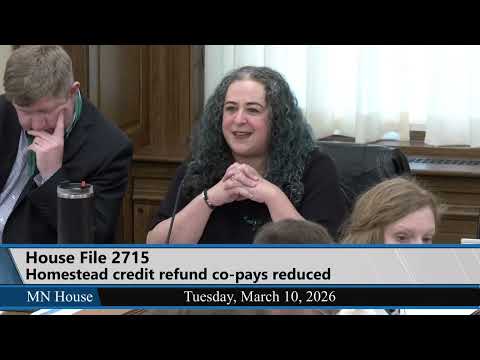
The House Taxes Committee on March 10 laid over House File 27‑15, a bill the author described as a targeted property‑tax relief measure designed to help Minnesotans on the lower end of the income scale remain in their homes.
Representative Tabke, the bill’s author, said the measure would provide a “circuit‑breaker” style refund to homeowners facing rising property taxes after "decades of disinvestment" in schools and local services. She asked the committee to consider the bill’s ability to deliver direct relief without shifting costs to other property taxpayers.
Paul Edgar, senior vice president of governmental affairs for the Minnesota Realtors Association, told the committee the Homestead Credit Refund program is an important affordability tool and quoted Department of Revenue research: “Property tax refunds offset 15.9% of the residential property tax burden,” and the refunds “offset a much higher portion in the lowest 5 deciles.” Edgar said the bill’s proposed adjustments — increasing maximum refunds, lowering eligibility thresholds or changing the call payment percentage — are useful policy levers for targeting relief.
Nathan Jessen of the Minnesota Intercounty Association described the proposal as an existing, administrable tool that would provide direct relief "without causing a shift and causing property tax increases on other properties." He said the revenue estimate indicates approximately 475,000 homeowners could benefit under the proposal.
Members from both sides of the committee voiced support for taking the proposal up further. Representative Hewitt, using her real‑estate experience, said relieving property‑tax burdens could free up housing stock and ease moves for seniors and other homeowners. Representative Tabke thanked members for the discussion and renewed her motion to lay the bill over.
The committee adopted the author’s DE1 amendment by voice vote earlier in the hearing and then laid HF 27‑15, as amended, over for possible inclusion in the 2026 omnibus tax bill. The action was a procedural lay‑over; no final floor action occurred on the bill in committee that day.
What’s next: The bill is being held for possible inclusion in the 2026 tax package; the committee may revisit it as the session’s budget and package negotiations proceed.