Get Full Government Meeting Transcripts, Videos, & Alerts Forever!
Get email alerts on the Venue Renovation topic
No spam. Unsubscribe anytime.
Oak View Group outlines phased plan to renovate BOK Center and Arvest Convention Center, flags $57.9M Phase 1 gap
Summary
Oak View Group presented a four‑phase capital plan to renovate the BOK Center and Arvest Convention Center and said the venues produced an estimated $142 million in FY2025 economic impact. Phase 1 would require a roughly $57.9 million BOK Center renovation (12–14 week shutdown); TPFA is modeling bonding and hotel‑tax scenarios to close funding gaps.
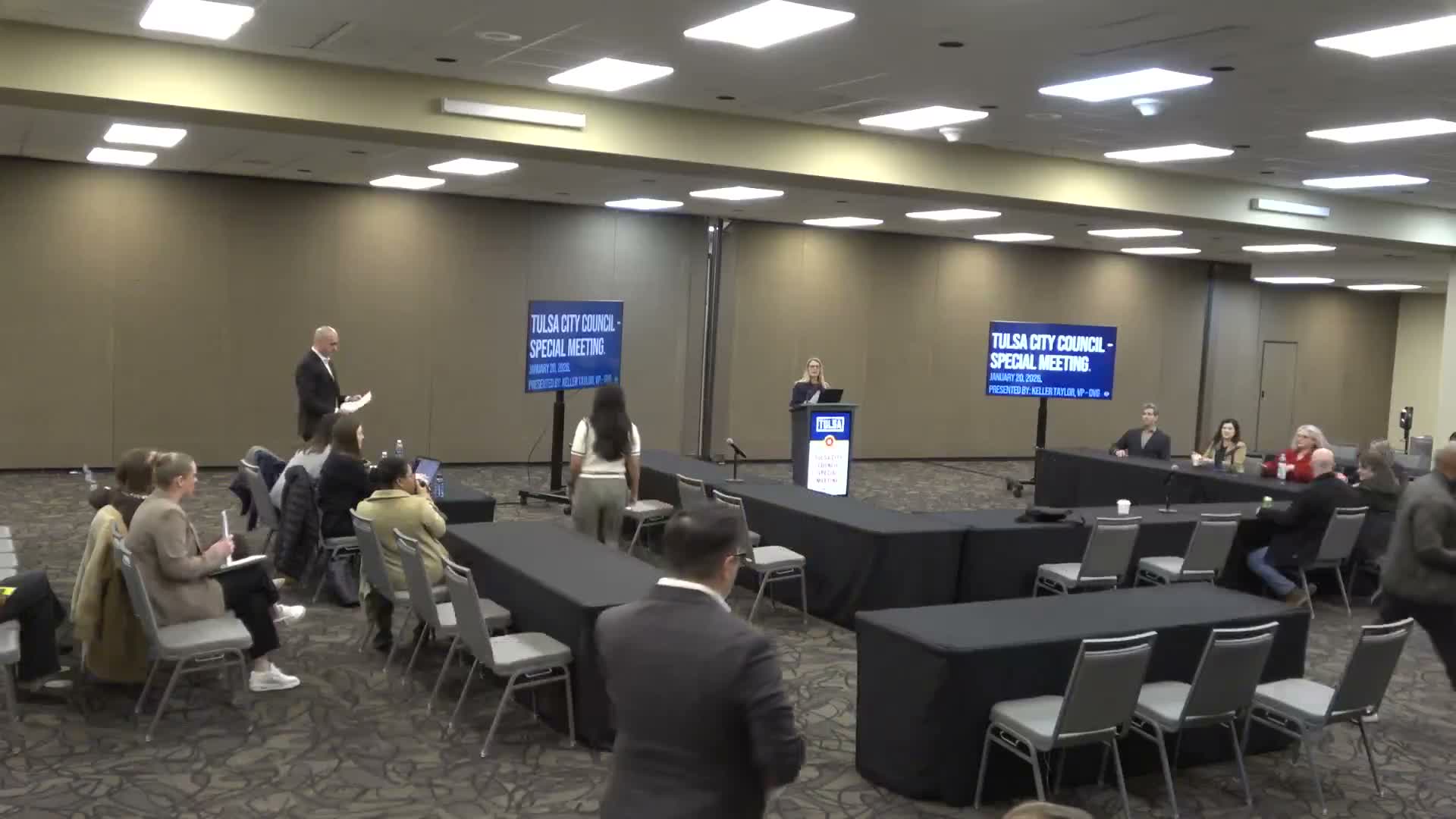
Oak View Group (OVG) presented a four‑phase plan to City Council members for renovating the BOK Center and Arvest Convention Center, telling the council that the two venues generated roughly $142,000,000 in event impact for fiscal year 2025 and drove substantial local sales‑tax receipts.
Keller, the OVG presenter, said the presenters used Destinations International calculators and ticket‑buyer data to estimate the venues hosted more than 300 events in FY2025 and generated nearly $5,000,000 in direct local sales tax for the City of Tulsa. "$142,000,000 in total event impact is extremely substantial," Keller said, and he described visitor‑journey data showing attendees spend in hotels, casinos and restaurants in the four hours before and after events.
The presentation outlined a four‑phase reinvestment strategy. Phase 1 would focus on the BOK Center — seating, suites, center‑hung scoreboard and back‑of‑house systems — carried out in a single 12–14 week temporary closure to compress costs and contractor scheduling. Keller said that earlier work at comparable venues has been completed in similar compressed windows.
Keller said the BOK Center Phase 1 figure is "north of $50,000,000" and discussed the slide labeled as a $57.9 million line item for phase 1. He described other line items for MEP, ice‑plant equipment and IT and said some convention‑center items (notably an ACC roof) are estimated at nearly $15,000,000 while IOT 3 funding covers about $10.5 million of that line.
OVG and TPFA also reviewed available and prospective funding sources: a TPFA capital reserve (about $14,000,000), an OVG manager contribution (Keller cited a $5,000,000 contribution, with roughly $1.7 million suggested as available for projects), approximately $21,000,000 in IOT 3‑directed funds and an annual combined venue net operating profit of roughly $3,500,000.
Councilors asked detailed follow‑up questions about contingencies, timeline and revenue modeling. Councilor Victor Wright asked whether the cost estimates included contingencies; Keller said the estimates are sequenced to the expected year of work and include an owner contingency of about 8 percent. When asked about a proposed full‑service restaurant, Keller estimated it would generate roughly $300,000–$350,000 a year in net food and beverage income.
Councilors pressed on whether raising the hotel‑motel tax could close the funding gap. Keller and a TPFA representative said the current fund generates about $9,000,000 a year; a higher rate discussed in the meeting could raise that pool toward about $17,000,000, depending on allocations. A TPFA representative said TPFA is meeting with city finance and bond counsel to model whether bonding the facilities fund could close the gap and expected to have initial analyses in roughly two weeks.
Councilors also asked whether IOT 3 funds could be reallocated; Keller said most IOT 3 dollars are targeted to specific phase‑2/3 line items and are not fully flexible to be moved to Phase 1. Keller agreed to work with city finance staff to supply scenario models showing revenue timing and potential timelines for a Phase 1 shutdown if different funding paths were chosen.
The presenters and TPFA framed the work as necessary to preserve the venues' competitiveness for large acts and multiday conventions and to protect premium seating revenue. No formal council vote or motion was taken during the presentation; the session moved on to a site walkthrough at the convention‑center east entrance.
Ending: Keller asked the council to visit the east entrance integration point on the exit tour and reiterated the team would follow up with the requested financial scenarios and TPFA bonding options.