Get Full Government Meeting Transcripts, Videos, & Alerts Forever!
Get email alerts on the Industrial Development topic
No spam. Unsubscribe anytime.
Cleburne council sends controversial concrete batching-plant request back to planning after strong neighborhood opposition
Summary
The council remanded a special-use permit application for DFW Concrete Products' proposed precast facility on Windmill Road back to Planning & Zoning for more study after residents raised health, dust and sight-line concerns; applicants say the plant is largely enclosed and would be low-impact. The council directed staff to provide PNZ the new materials and notified neighbors before the next hearings.
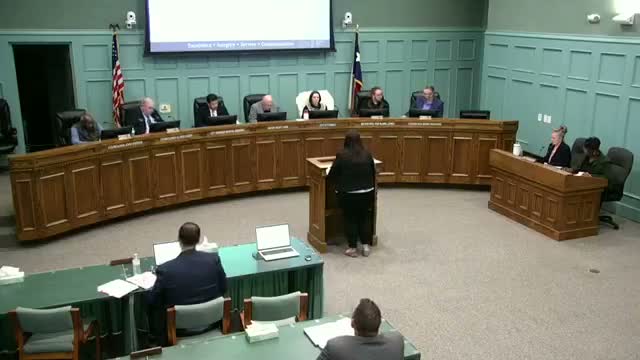
A divided but deliberate Cleburne City Council on Jan. 29 sent a request from DFW Concrete Products for a special-use permit at 3835 and 3941 Windmill Road back to the Planning & Zoning Commission for additional review after residents warned the operation could harm neighborhood air quality and block sight lines.
Planning staff described the proposal as a precast concrete production facility that would operate largely indoors and would not produce ready-mix for off-site sale. Staff said peak production was estimated at about 75 cubic yards per day and the operation would generally use a contained mixing system, two roughly 36-foot silos and about 13 truck trips per day for deliveries. Because Planning & Zoning had recommended denial by a 4-3 vote, approval by council would have required a supermajority.
Applicants Brad Worth and Kenan Williams told the council the business is a family-owned precast manufacturer and not a ready-mix plant. Williams said the mixing and emission controls would be enclosed and monitored, that the company follows Texas Commission on Environmental Quality (TCEQ) rules, and that peak production numbers cited were conservative. The applicants also estimated an initial payroll and investment: roughly 10 employees at startup, expanding toward about 30 by year five, and equipment and infrastructure investment they said could exceed $3 million in the first year and $10 million to $20 million over the next 5 10 years.
Neighborhood speakers, including resident Clint Manning, registered strong opposition. Manning told council the site sits within less than 300 feet of homes and said he feared fine silica dust that he linked to respiratory and other health problems. Another commenter raised concerns that proposed screening or walls could create a blind curve at a nearby S-shaped road segment. City staff and several councilmembers said new information that had not been before the Planning & Zoning Commission was now available to council and needed further vetting by PNZ.
To address neighbors' concerns, the council unanimously moved to table the item and remand it to Planning & Zoning. The council directed staff to share the additional materials with PNZ, develop more-detailed screening and sight-line plans (including options such as a 45-degree cut to preserve visibility), and notify affected neighbors so they can review the packet before the next PNZ and council hearings. The applicant told council it has a contract clause with an out date near the end of February; staff said they would attempt to "double-stack" PNZ and the next council meeting to meet that timeline if possible.
The remand means no permit or final decision was made; the item will return to PNZ for further deliberation and return to council with added detail on screening, sight-line mitigation and documented dust controls.