Lifetime Citizen Portal Access — AI Briefings, Alerts & Unlimited Follows
Appellate argument focuses on March beneficiary changes, durable power of attorney and standing to sue
Loading...
Summary
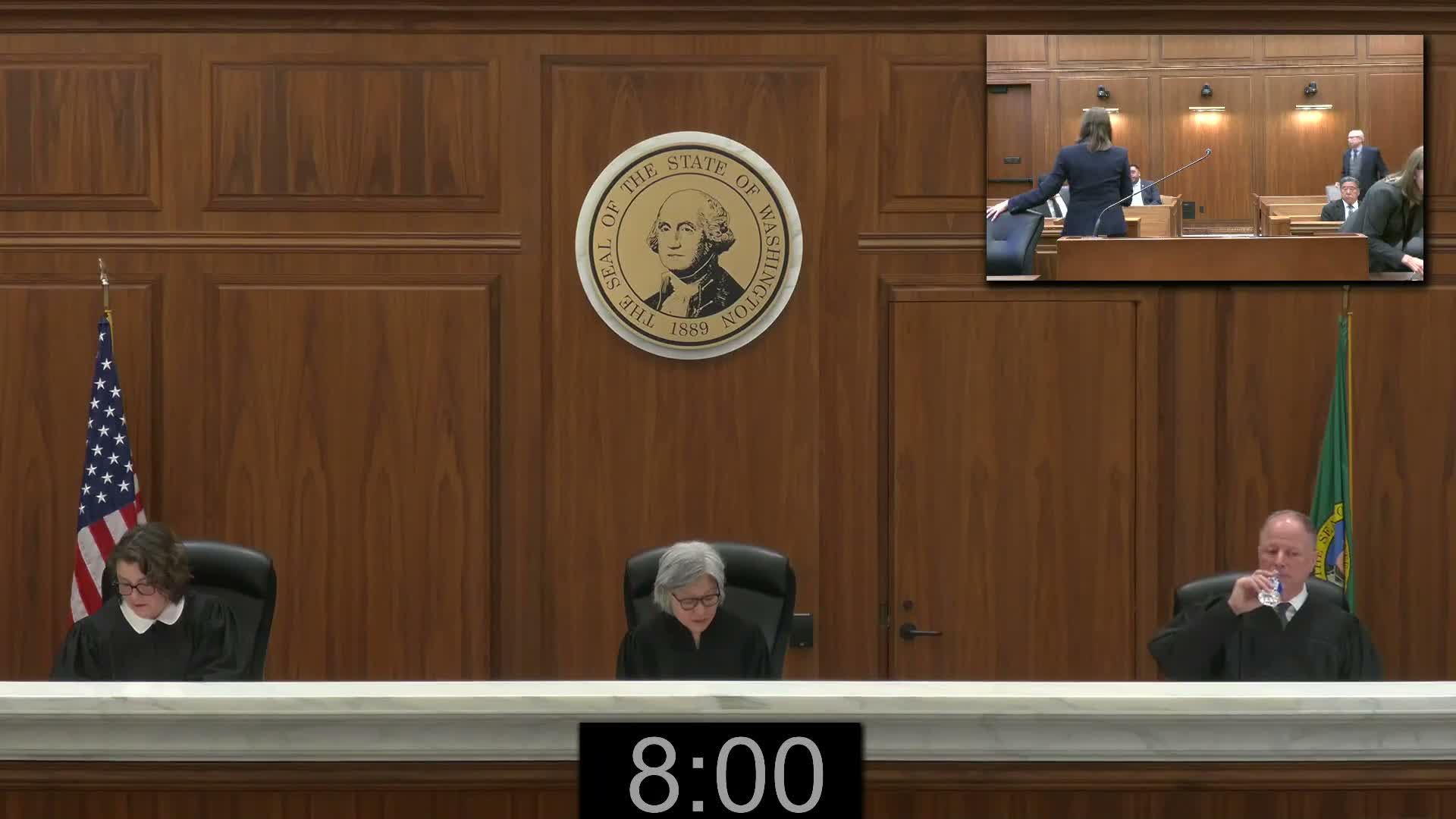
Attorneys sparred at oral argument over whether March 3 beneficiary designations — which the department allegedly relied on — and later March 4 durable power of attorney changes are actionable; the respondent urged the court to affirm dismissals, arguing beneficiaries lack standing and fiduciary claims belong to the personal representative.
Doug Shepherd, attorney for the appellants, told the court that the key dispute at trial concerned beneficiary designations and whether the government relied on a March 3 change made by the respondent, Luciana Crosswhite, rather than an earlier designation. "We sued the government after this, and they indicated that they relied upon the March 3 designation done by her," Shepherd said, arguing those facts created disputed issues of material fact at summary judgment and trial.
Kevin Colling, counsel for the respondent, asked the court to affirm the trial court's summary-judgment and reconsideration rulings that dismissed the appellants' claims, and to reverse limited cross-points on no-contest and standing. "I respectfully request the court affirm the trial court substantive rulings at the trial court level," Colling said, summarizing his request to uphold dismissals of uniform power-of-attorney and fiduciary-abuse claims and to reverse only where the trial court erred on cross issues.
The bench questioned how capacity to execute a durable power of attorney dated March 4, 2022, affected an allegedly different beneficiary redesignation on March 3, 2022. One judge asked counsel to explain whether the March 3 action and the March 4 instrument were distinct and which facts were before the TEDRA petition. The question framed a central factual dispute: whether the March 3 beneficiary change was made by the respondent and relied upon by the department, and whether the decedent had capacity when documents were signed.
Shepherd told the court there was a preexisting durable financial power of attorney dated 2021 admitted as exhibit 1, and said that at trial the appellants were unable to obtain certain government records and that medical-witness testimony cast doubt on the decedent's capacity. He said deeds, a trust and at least one document dated March 5 were later presented that named the respondent as sole beneficiary of the trust and the decedent's house.
Colling countered that beneficiary designations are ambulatory until death and that beneficiaries generally lack standing to litigate those designations before the decedent's death. He invoked the durable-power statute (cited in argument as "11 1 25 RCW") and argued that claims rooted in alleged fiduciary breaches based on a durable power of attorney are the purview of a personal representative, not individual beneficiaries. He also disputed that the petitioners could establish the essential element that the decedent was a "vulnerable adult" for financial-exploitation claims (as discussed under "chapter 74 34" in argument), saying the trial court had found insufficient proof on that element on reconsideration.
On the no-contest clause, Colling acknowledged a rebuttable presumption arises if a petitioner had probable cause or acted in good faith, but said the tribunal still must assess whether the respondent rebutted that presumption. He told the court his briefing showed the petitioners presented no adequate rebuttal evidence and, further, that they engaged in improper conduct — submitting a proposed order and using the case as a "discovery stopping course," conduct Colling argued undercut enforcement of the no-contest clause.
Neither side framed a final outcome in the hearing transcript. The bench thanked counsel at the close of oral argument. No ruling or opinion was announced in the record provided.