Get Full Government Meeting Transcripts, Videos, & Alerts Forever!
Get email alerts on the Housing Homekey topic
No spam. Unsubscribe anytime.
Residents and campus advocates urge Riverside council to accept $20.1M Homekey funds for University Terrace project
Summary
During a lengthy public-comment period March 3, Riverside residents, legal advocates and UCR students urged the council to reverse a decision rejecting $20.1 million in Homekey funds for the University Terrace supportive-housing project, warning rejection risks lives and state sanctions; opponents raised neighborhood concerns and questioned advocacy tactics.
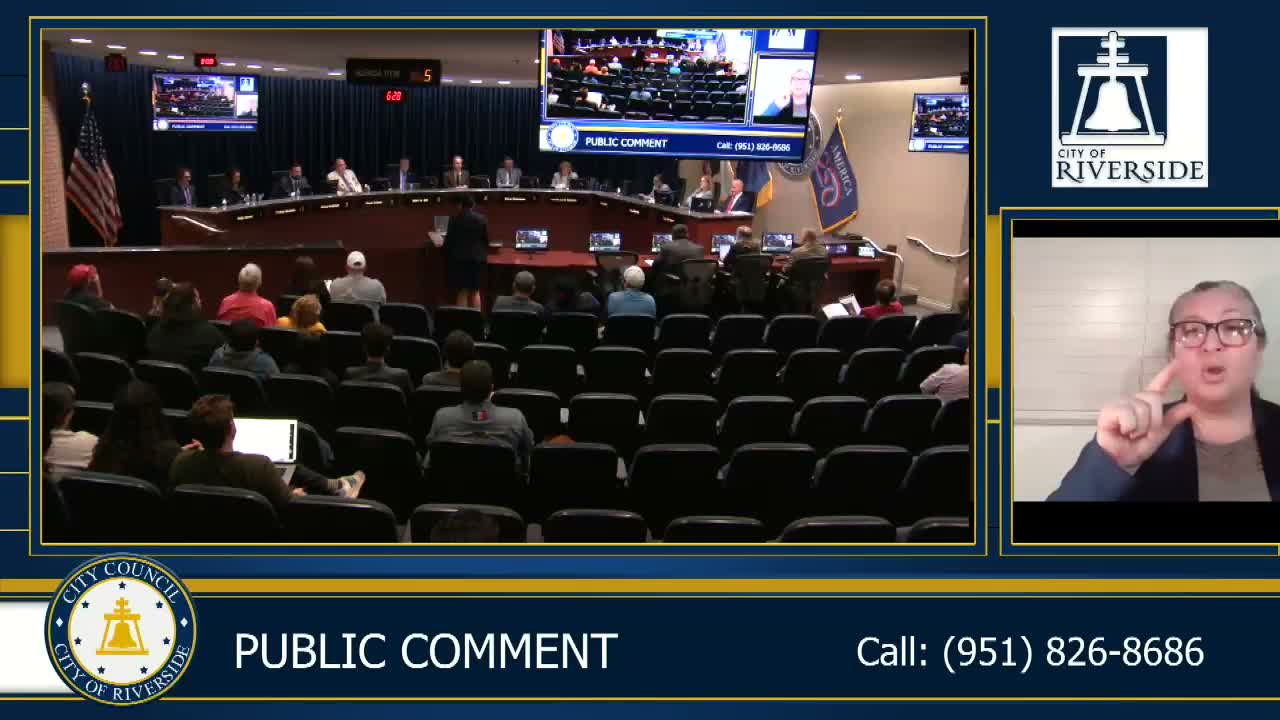
A steady stream of speakers at Riverside’s March 3 evening meeting urged the City Council to accept $20.1 million in Homekey funding to convert a motel into permanent supportive housing for people experiencing homelessness at the University Terrace site.
Ugochi Anabara Nicholson, an attorney with the Public Interest Law Project, told the council the city’s decision to reject Homekey money places Riverside’s housing-element certification and its pro-housing designation at risk. “The city can reverse this horrifying statistic and avoidable loss of life by funding permanent supportive housing projects, such as the University Terrace project,” Nicholson said, citing a figure that 140 people in Riverside died without shelter last year.
Students and local residents also spoke in favor. Several University of California, Riverside students said the project would improve safety and housing access for low-income students and the broader community. “This is about saving lives,” a UCR student said during public comment, adding that the city’s rejection risks losing grants and future projects that could benefit Riverside residents.
Opponents and nearby business owners called for more neighborhood input. Mark Elliott, a University Avenue resident and business owner who said he had collected a petition from corridor businesses and residents, described what he called coordinated advocacy campaigns that pressure the city and silence residents who fear backlash. “Residents should feel comfortable to come to council meetings,” Elliott said, asking the city to formally include local petition signers in the public record.
Speakers on both sides raised legal and procedural concerns. Public-interest counsel said state officials have flagged the city’s rejection of Homekey funds and urged the council to engage before an April closed session. Others pushed back against claims they were organizing opposition only to protect private interests.
No formal council action on Homekey funding was recorded at the March 3 meeting. Multiple speakers urged the council to reopen negotiations with state officials and move the project from planning into implementation; public commenters referenced a planned closed session in April where the city may discuss related legal matters.
Next steps: Advocates said they will continue to press the council in the run-up to April closed-session discussions and any future open hearings. Council members did not take formal action on the Homekey funding at the March 3 session.