Lifetime Citizen Portal Access — AI Briefings, Alerts & Unlimited Follows
Dublin launches zoning‑code audit to align rules with Envision Dublin and transit plans
Loading...
Summary
Planning staff introduced a formal audit of Dublin’s zoning and subdivision regulations and sought council priorities; council emphasized plan alignment, clearer public access to code, transit‑oriented development readiness, and housing and sustainability considerations.
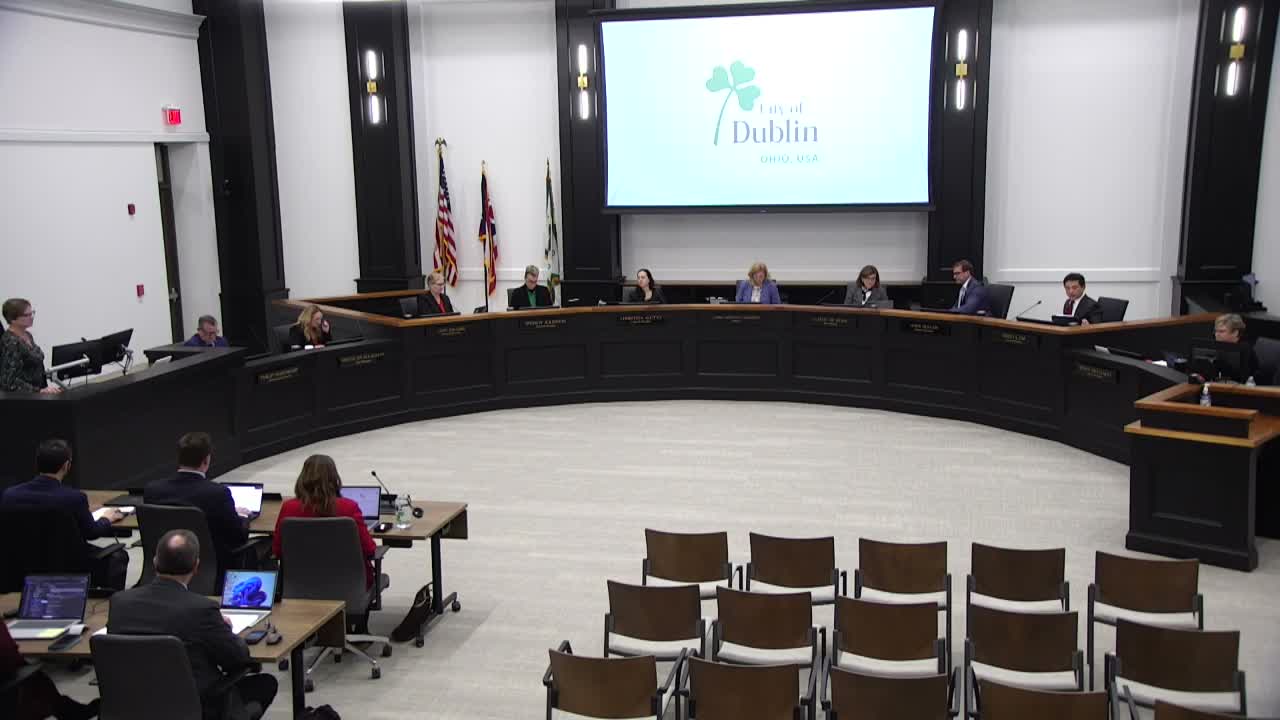
Planning staff introduced a formal Zoning Code and Subdivisions Regulation Audit to Dublin City Council on Feb. 23, asking the council to help set priorities for the analysis and later implementation.
Sarah Holt, planning staff, said the city contracted Clarion and McBride Dale Clarion to perform an audit that will analyze and prioritize code updates to better implement adopted plans including Envision Dublin, the housing study and the sustainability plan. "An audit is an analysis and prioritization exercise," Holt said, describing phase 1 as an opportunity to modernize format, clarify procedures and identify topics for future code changes without rewriting codes immediately.
Councilmembers urged staff to make the code easier for residents to navigate and to align code categories with Envision Dublin’s land‑use classifications. Council Member Grama recommended improved public‑facing search tools and an index to help residents find code sections. Several councilmembers stressed plan alignment, asking staff to prioritize items that could immediately affect pending development decisions and to accelerate work on topics with near‑term impact.
Mayor Ambrose Grooms and others focused on transit‑oriented development readiness tied to the LinkUS and passenger‑rail planning corridors. "We need to lean into code language about transit‑oriented development and see how many units would feel comfortable for our community in those spaces," Mayor Grooms said, urging earlier alignment so zoning is ready as transit projects advance.
Council also raised mixed‑use definitions and density/intensity guidance, housing variety and affordability, sustainability standards, and materials and design guidance to reduce discretionary friction at Planning and Zoning. Staff said the audit’s deliverable is expected in the second quarter of 2026 and phase 2 (implementation of changes) is budgeted for later in the year; staff requested individual follow‑up meetings with council in March to refine priorities.
Holt said the audit will compile stakeholder feedback, technical advisory input and existing plan recommendations into a policy matrix, and that city staff will present draft and final audit documents to the planning commission and city council for review before a decision on implementation steps.