Lifetime Citizen Portal Access — AI Briefings, Alerts & Unlimited Follows
Three related bills on restrooms and sex definitions draw large, emotional turnout and sharp partisan disagreement
Loading...
Summary
HB 18 93 (private schools), HB 20 75 (public buildings) and HB 25 36 (broad sex-definition and covered-entity rules) drew hours of testimony. Sponsors said they seek to protect privacy in intimate spaces; opponents warned the measures are discriminatory, unenforceable and could place transgender and intersex people at risk.
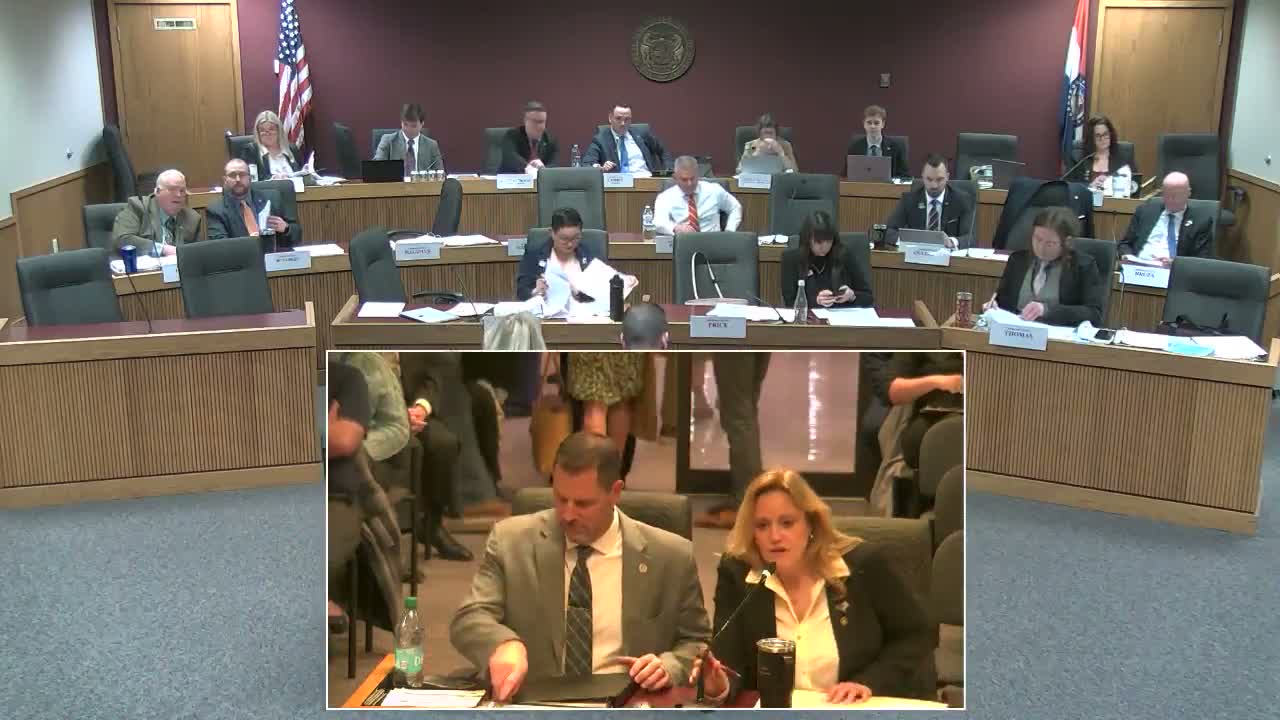
Sponsors Wendy Hausman (HB 18 93) and Brandon Phelps (HB 20 75) presented companion measures aimed at clarifying private-school authority and requiring public buildings and public K—12 schools to designate multi-occupancy restrooms, locker rooms and similar facilities by biological sex. Representative Hausman said HB 18 93 simply codifies the Missouri Supreme Court—s treatment of private-school policies and is intended to prevent litigation; Representative Phelps said HB 20 75 would set consistent standards for public buildings and withhold state funding from political subdivisions that do not comply.
The committee—s questioning focused on enforceability and unintended consequences. Representative Fuchs pressed sponsors on "original birth certificate" language and asked how intersex people would be treated; sponsors repeatedly said they did not have specific implementation details and offered to work with members. Representative Thomas and others raised scenarios (students on trips, family restrooms, inspection/custodial access) that highlighted gaps in the bills—text.
HB 25 36, introduced separately by Representative Becky Lobinger, would embed definitions of "male" and "female" in statute, require sex-based designation of multi-occupancy intimate facilities at public institutions (including schools, corrections, and shelters), and create a private civil remedy against covered entities that grant opposite-sex access or fail to take "reasonable steps" to prevent it. The bill drew a large coalition of proponent witnesses (Alliance Defending Freedom counsel Erica O'Connell, Heritage Action) who framed the measure as protecting privacy, dignity and safety for women and girls.
Opponents filled the committee room and the microphone queue. Dozens of Missourians testified that the bills would be discriminatory, legally unworkable, and dangerous. Testimony came from transgender and intersex individuals, parents, faith leaders, civil-rights groups (ACLU of Missouri), medical and child-safety advocates, and law-enforcement research groups. Multiple witnesses and organizations cited police-found studies showing near-zero instances of sexual assaults by persons claiming transgender status in public restrooms, and argued the bills would not reduce assaults by predators—which are most often committed by known offenders.
Speakers warned of specific consequences: forced use of facilities that do not match a person—s gender identity, difficulty for intersex people (who may lack a clear option on a birth certificate), burdens on institutions to take undefined "reasonable steps," potential litigation and fiscal impacts from civil suits, and collateral effects on colleges, corrections and shelters. Several witnesses said the bills operate as a broader strategy to exclude transgender people from public life.
Committee members and witnesses repeatedly returned to three central questions: (1) How will the law be enforced in a way that is practical and protective? (2) How will intersex and medically complex cases be handled? (3) What are the fiscal and legal knock-on effects from changing root statutory definitions of sex? Witnesses asking for changes urged narrower, evidence-based solutions (facility-design fixes, single-occupancy options, targeted protective measures for vulnerable sites) rather than sweeping statutory reform.
What happens next: The three bills remain at committee. Sponsors said they are open to technical changes and clarifications; opponents urged the committee to reject the measures or substantially narrow them. The hearing produced numerous proposed edits and flagged potential state fiscal and litigation implications that would likely be considered in markups.