Lifetime Citizen Portal Access — AI Briefings, Alerts & Unlimited Follows
Torrington ZBA leaves appeal open after heated exchanges over use of historic driveway at 246 Mountain Road
Loading...
Summary
The Torrington Zoning Board of Appeals kept open a public hearing on March 9 over a zoning enforcement officer’s denial for a house at 246 Mountain Road, after attorneys and staff debated whether a 14.29% driveway qualifies as a transferable preexisting nonconforming use. The applicant granted a 35‑day extension so commissioners and staff can review additional materials.
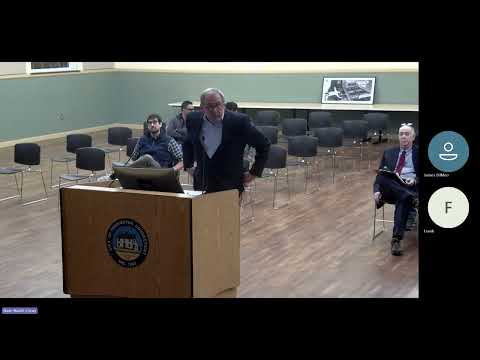
The Torrington Zoning Board of Appeals on March 9 left open a public hearing over an appeal of a zoning enforcement officer decision about access to 246 Mountain Road.
Chair Mark Trevella opened the meeting and called forward a memorandum read into the record by Zoning Enforcement Officer Nate Nardi Cyrus. Nardi Cyrus’s memo described the lot as 2.505 acres split off under Connecticut’s "first cut" statute (Conn. Gen. Stat. §8-18), and identified two principal concerns raised by city staff: sight‑distance and a driveway grade exceeding the zoning maximum. "The denial of this zoning permit was because of the proposed driveway grades greater than 12% in violation of section 5.13.2g2 of the Torrington zoning regulations," Nardi Cyrus said, citing vehicle traction, emergency access and icing risks.
Attorneys for the applicants and the abutting owners vigorously disputed the zoning office’s legal conclusion. Attorney Jim Strube, representing Kathy and Charles Schapp, framed the issue as whether the existing farmhouse driveway — which he said has served the property for more than a century — is a protected preexisting nonconforming use that can be "intensified" to serve a second lot. "The proposed use of the preexisting nonconforming driveway as a shared driveway by both 290 Mountain Road and 246 Mountain Road is a mere continuation of the preexisting nonconforming use," Strube said, asking the board to sustain the appeal.
Franklin Pillesi, an experienced land‑use attorney representing the abutting owners, cited Connecticut case law and state statutes to press the same conclusion. Pillesi walked the board through precedent he said permits intensification of long‑standing nonconforming uses and noted Torrington’s own nonconforming‑use rules (section 5.12). "More of the same is a lawful intensification of a prior existing nonconforming use," he told the ZBA, citing multiple state decisions in his written materials.
Applicants also introduced technical materials into the record. Strube read an email from Kolbe Engineering that criticized the city engineer’s switchback alternative and a contractor estimate that put excavation for a conforming switchback design at roughly $88,000 — an amount the attorney characterized as disproportionate to the value of the lot.
Several neighbors, including Russell and Gail Doolittle (owners of 290 Mountain Road) and Rich Buley Sr., testified in support of allowing the Schapps access via the existing driveway, stressing family ownership dating to the 19th century and long local familiarity with the driveway. "So I ask you to let her use the driveway to access our house," Russell Doolittle said.
Nate Nardi Cyrus said he had prepared a response but preferred to organize his comments after reviewing the newly submitted materials and noted that a member of the board had not seen some evidence in person. After discussion, the applicant family agreed to a 35‑day extension to allow staff and the remote commissioner to review the additional documents. The board accepted the extension and left the public hearing open; staff and counsel said the ZEO would deliver a more organized written response before the continued session.
What happens next: the hearing will reconvene after the extension so the board can consider the additional legal and engineering evidence and then vote on whether to sustain the appeal and order the zoning enforcement officer to approve a permit or to uphold the denial. The record now contains staff memos, survey and deed records, engineering comments and multiple legal memoranda from both sides.
Sources and evidence: the ZEO memo (read into the record), attorneys’ presentations and submitted engineering and cost estimates were all entered in the record during the March 9 hearing. The ZBA explicitly kept the record open and scheduled a continuation to allow further review.