Get Full Government Meeting Transcripts, Videos, & Alerts Forever!
Get email alerts on the Pretrial Release topic
No spam. Unsubscribe anytime.
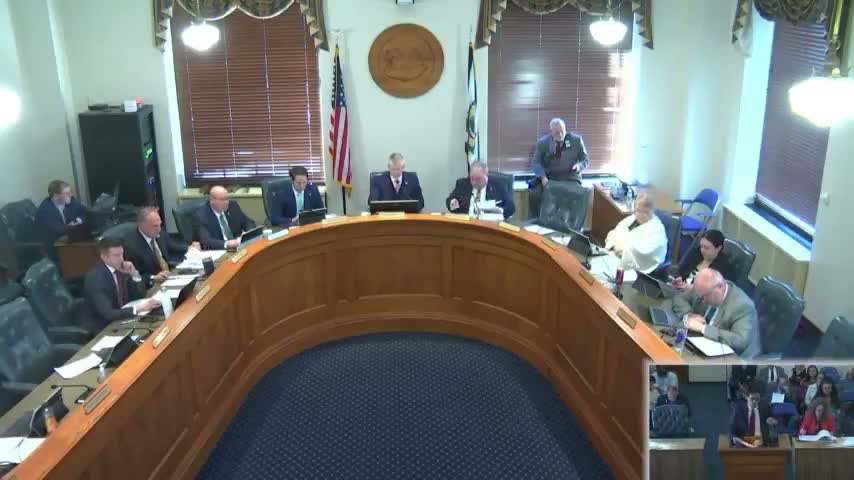
Senate Judiciary committee advances bill limiting magistrates’ ability to grant PR bonds for felonies after extended debate
Summary
After extended testimony and floor‑level debate, the Senate Judiciary Committee voted to report House Bill 4606 to the full Senate. The bill would require judicial officers to consider residency and community ties in setting bail and includes a proviso preventing magistrates from issuing personal‑recognizance (PR) bonds for felony charges; an amendment to remove that proviso failed.
The Senate Judiciary Committee reported House Bill 4606 to the full Senate on a voice vote after more than an hour of debate and two witnesses’ testimony.
House Bill 4606 would require a judicial officer to consider residency, ties to the community and flight risk when setting bail and to consider whether a defendant is a resident of West Virginia or the United States. The bill also contains language—added as a proviso—that would bar magistrates from releasing a defendant charged with a felony on his or her own recognizance (PR bond).
“So the intent of the bill to start with was to, have residency be a factor when when you're doing bail,” said Delegate Hornby, the bill sponsor, describing the measure and noting it passed the House with strong bipartisan support. He told the committee the provision aligning magistrate practice with an older code section was intended to make the statutes consistent across chapters.
Committee members pressed counsel and outside witnesses on the practical effects and the statute’s drafting. Keith Hoover, administrative director at the Supreme Court of Appeals, told members that the bail provisions must be read top to bottom because the section “works like a flowchart,” and that isolated lines can produce conflicting interpretations. “If you just jump into this section of code and start reaching individual lines without looking at it top to bottom, you're gonna get an incorrect result,” he said.
Kenneth Matthews, West Virginia economic justice associate with the American Friends Service Committee, urged caution about removing PR authority for magistrates. He told senators the data shared with the committee showed magistrate PR bonds for felony filings represented about 9.7% statewide across 55 counties and warned that eliminating PR in magistrate court could keep indigent defendants jailed longer with collateral consequences such as lost housing and employment.
Senator Marion offered an amendment to strike the proviso that would prohibit magistrates from issuing PR bonds for felony defendants. That amendment was defeated on a voice vote.
Opponents argued the bill removes necessary discretion and would disproportionately harm poor defendants; supporters said the change would harmonize conflicting statutory provisions and place PR decisions for felonies with the court that will try the offense. “This literally puts somebody in jail for a month if they're poor,” said Senator Marion during debate. Senators backing the measure said the circuit court remains able to grant PR bonds and that the change clarifies which judicial officer may issue them for felonies.
After additional discussion, the committee’s vice chair moved to report House Bill 4606 to the full Senate with a recommendation that it pass. The chair called for the voice vote, declared the ayes have it, and the bill was reported.
Next procedural step: the measure will be scheduled for consideration by the full West Virginia Senate.