Get Full Government Meeting Transcripts, Videos, & Alerts Forever!
Get email alerts on the Housing Rental Act topic
No spam. Unsubscribe anytime.
Council advances first reading of sweeping Rental Act after hours of debate over evictions, TOPA and DCHA reform
Summary
On first reading the D.C. Council approved the "Rebalancing Expectations for Neighbors, Tenants and Landlords Act," advancing changes to eviction timelines, TOPA exemptions and DCHA governance after hours of amendment votes and failed postponement attempts.
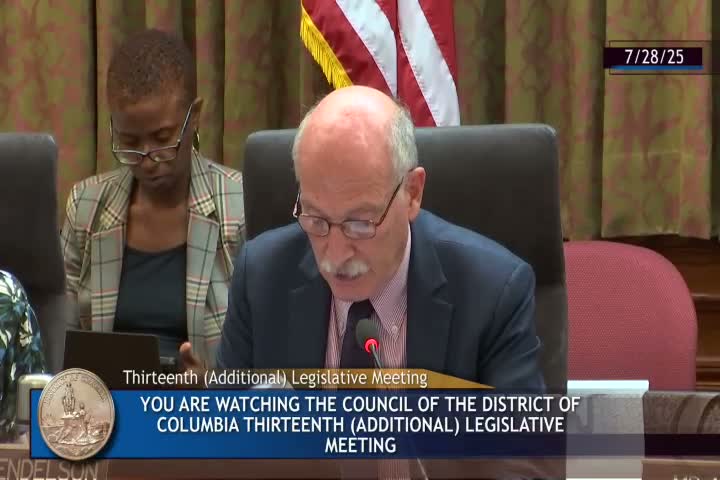
The Council of the District of Columbia approved first reading on July 28, 2025 of Bill 26‑164, the "Rebalancing Expectations for Neighbors, Tenants and Landlords Act," after extended debate over eviction notice timelines, exemptions to the Tenant Opportunity to Purchase Act (TOPA) and governance changes at the District of Columbia Housing Authority.
Councilmember Robert White, chair of the Committee on Housing, opened debate by calling the measure "a data‑driven, equitable solution" to the city's housing crisis and highlighted what he described as a sharp fall in apartment building permits—from roughly 7,200 in 2022 to about 1,200 in 2024—saying the decline has squeezed supply and driven higher rents. White said the bill shortens some eviction notice timeframes (for example proposing to reduce certain pre‑filing notice periods) and creates a 15‑year new‑construction TOPA exemption intended to spur investment.
Supporters said the changes are designed to speed landlord remedies and encourage investment while preserving tenant protections. "Our housing crisis demands action now," White said. "Doing nothing is not an option." His amendment in the nature of a substitute folded many committee changes into the bill on first reading.
Opponents and some tenant advocates warned that retroactive or broad TOPA exemptions would strip long‑settled tenant rights and risk displacement. Councilmember Fruman repeatedly pressed to limit the 15‑year TOPA exemption so it applies prospectively only and to remove a proposed exemption for buildings subject to long affordability covenants; both amendments failed in roll calls. Councilmember Lewis George unsuccessfully moved to postpone the first vote to Sept. 17, saying colleagues needed more time to digest the bill's complexity; that motion failed 2–10 in a roll call.
A debated public‑safety component of the bill would cut the notice‑to‑vacate period for tenants charged with violent crimes from 30 days to 10 days and require courts to schedule eviction hearings more quickly; supporters said the change gives judges needed discretion to address serious safety problems while maintaining a path for tenants to raise housing‑code defenses. Critics cautioned the changes could reduce tenants' time to prepare and increase risk of unintended evictions.
The bill also restructures DCHA, creating a nine‑member permanent board that includes two resident‑elected positions and new training and stipend provisions for board members, a change supporters said will strengthen resident voice and oversight.
The Council approved the amendment in the nature of a substitute and passed the bill on first reading; supporters said second reading will provide another opportunity to refine details. The measure now proceeds toward additional committee work and a second‑reading vote.