Get email alerts on the Committee Votes topic
No spam. Unsubscribe anytime.
Assembly Emergency Management Committee advances four bills on consent
Summary
The Assembly Committee on Emergency Management approved four bills on the consent calendar — AB 1749, AB 1866, AB 1873 and AB 2471 — sending each to the committees listed by the clerk. The motion passed by recorded 'aye' votes from present members; the roll was held open for absent members.
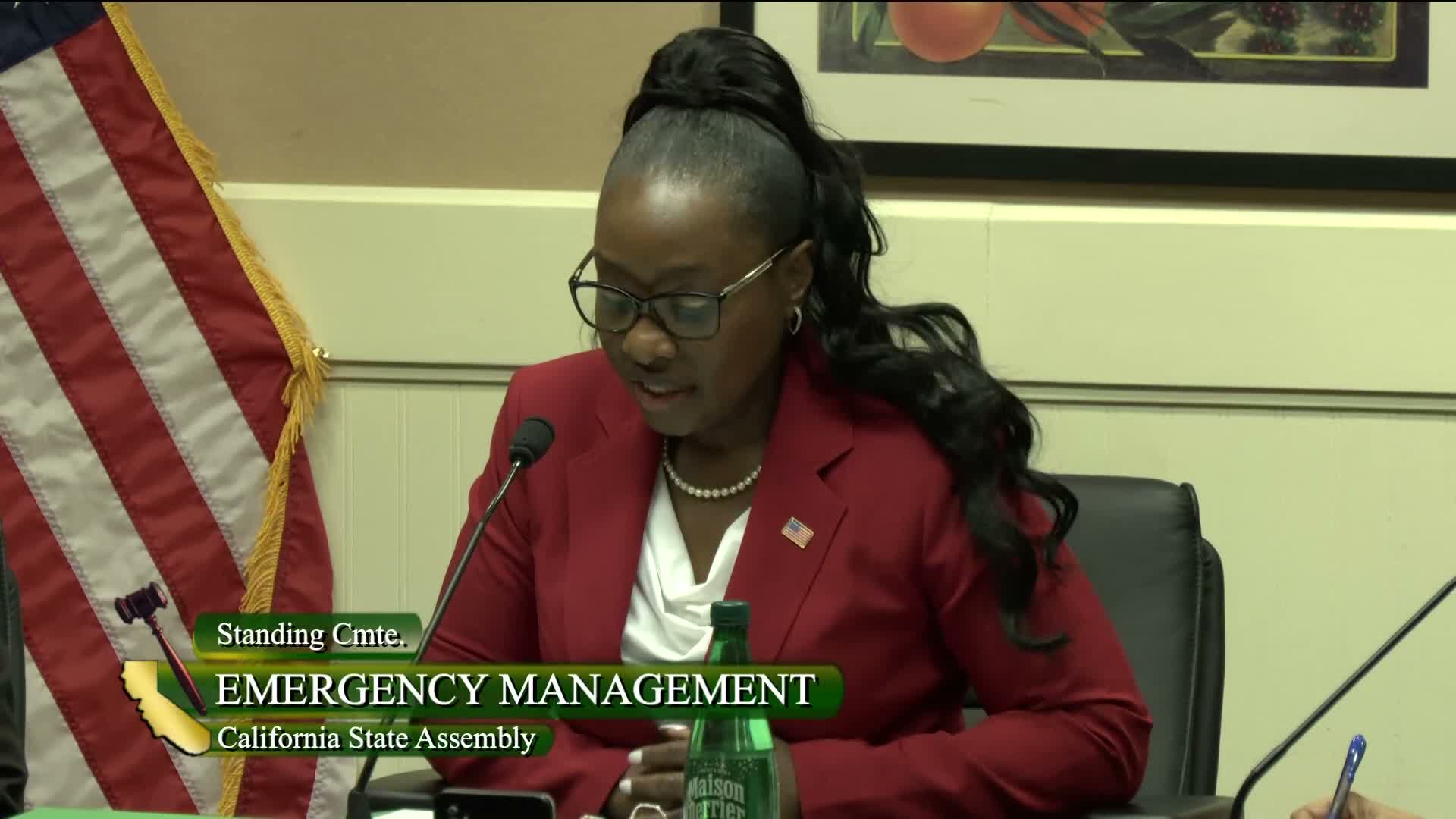
The California State Assembly Committee on Emergency Management on an afternoon hearing approved four bills on the consent calendar and sent them forward to the committees listed by the clerk.
Chair Assemblymember Rhodesia Ransom read the consent items and the committee accepted a motion by Assemblymember Arambula, seconded by Assemblymember Bennett, to move the items. The clerk called the roll; members recorded 'aye' votes from Ransom, Alanis, Arambula, Bennett, Avila Farias and DeMayo. Chair Ransom said the roll would be held open for an absent member.
The clerk identified the consent bills as: AB 1749 (Dixon), due-passed to the Committee on Judiciary; AB 1866 (Rogers), due-passed to the Committee on Appropriations; AB 1873 (Bennett), due-passed to the Committee on Utilities and Energy; and AB 2471 (Emergency Management Committee), due-passed to the Committee on Insurance. No witnesses registered formal opposition during the consent calendar vote.
The action clears those items from the committee agenda and routes them to the next committees named for further consideration; each bill’s proponents may submit written testimony or additional witnesses for later hearings as the receiving committees schedule them.
AI generated
The text on this page is AI generated. Summaries, highlights, analysis, and video transcripts are all produced from the original source material.
AI can make mistakes, so if you spot one, and we will fix it for everyone.
Note: the source content is unaltered by us. Any content source we link to, be it a video, an audio recording, or a document, is presented exactly as its publisher released it. That publisher is usually a government body, sometimes an individual official or another organisation.