Lifetime Citizen Portal Access — AI Briefings, Alerts & Unlimited Follows
Idaho committee weighs restoring Medicaid behavioral-health services; ACT restart could cost $1.3M–$4.1M
Loading...
Summary
An interim Idaho legislative committee heard testimony on restoring Medicaid behavioral-health programs cut under recent budget holdbacks, including Assertive Community Treatment, peer support and Healthy Connections; officials outlined costs, federal match rates and operational hurdles and said the panel may reconvene before any spending decision.
An interim legislative committee heard detailed testimony on restoring Medicaid-funded behavioral-health services that were reduced under recent budget holdbacks, including the Assertive Community Treatment (ACT) team, peer-support services and the Healthy Connections pediatric program.
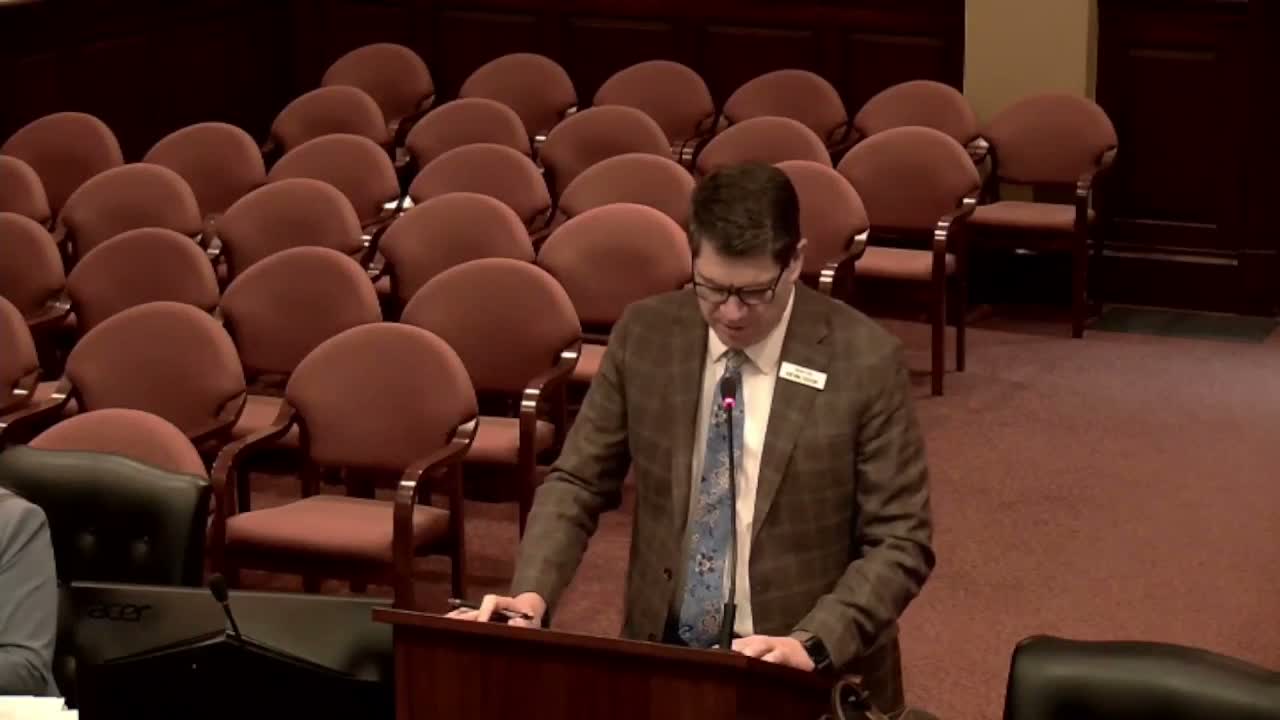
Senator Kevin Cook, Idaho state senator from Legislative District 32, told the committee ACT is an “evidence based program” that deploys a multidisciplinary team—psychologists, doctors and pharmacists—to provide in‑community care for people with severe mental illness. He estimated restarting ACT would cost about $1,300,000 for the remainder of fiscal 2026 and about $4,100,000 for fiscal 2027 and cautioned that personnel and operational ramp‑up would take time because trained staff are not immediately available.
Sasha O’Connell, Medicaid administrator and deputy director at the Department of Health and Welfare, told lawmakers match rates vary by beneficiary: expansion‑population members carry roughly a 90/10 federal/state split, while other beneficiaries receive the traditional FMAP (about 70% federal, 30% state). She said reporting under the Magellan contract showed roughly 303 members served over a year (closer to 200 at program end), with about one‑third in the expansion population.
Committee members pressed why the $25,000,000 previously allocated to Medicaid did not restore these services. O’Connell said the department entered the year expecting a large supplemental general‑fund need and followed executive‑order holdbacks (including a 3% reduction) and other cost‑containment steps. She said some services are legally protected under Idaho code and therefore not eligible for elimination, and the department pursued rate reductions and other measures before cutting services.
Lawmakers and attendees framed the reductions as having local consequences for law enforcement and families. Representative Green and others cited a sheriff’s letter and in‑committee examples—one legislator said four deaths had been reported among members since service reductions—to argue for funding ACT to reduce emergency and criminal‑justice costs.
Sen. Cook also described two other funding options discussed with the department. He put the FY26 remainder cost for statewide adult peer‑support services at about $2,000,000 and the FY27 full‑year cost at $6,000,000; peer supports involve trained peers (about 40 hours of training, cost roughly $600) who assist people in recovery. For a program the transcript calls Healthy Connections—described as a tiered pediatric clinic support model whose statutory change led to its elimination—he estimated roughly $1,500,000 to complete FY26 and $6,300,000 for FY27 to restore the highest tier of services.
O’Connell clarified that ACT had previously been delivered by state behavioral‑health clinicians, then folded into the Magellan behavioral‑health contract to leverage federal match; Medicaid began paying for the service under that contract on 07/01/2024, she said. Department leaders told the committee they pursued broad rate reductions and other feasible cost‑saving steps before cutting services and are prepared to share memos sent to JFAC members documenting those steps.
The committee did not take formal action. Co‑chair Representative Redmond said there is a bill in House Health and Welfare to fund ACT and suggested that if Medicaid claims are paid from the Millennium Fund, the panel should consider a statutory change to make that explicit. Members agreed they may convene again to decide how to allocate available funds.
The committee adjourned without a vote.