Get Full Government Meeting Transcripts, Videos, & Alerts Forever!
Get email alerts on the Governance topic
No spam. Unsubscribe anytime.
Brownsburg council adopts policy tightening use of town property and keyfobs after access dispute
Summary
The Town of Brownsburg council unanimously adopted Resolution 2026‑3 clarifying use of public property and key/key‑fob management after a temporary restriction of a council member’s after‑hours badge access prompted debate over past practice, liability and media interviews.
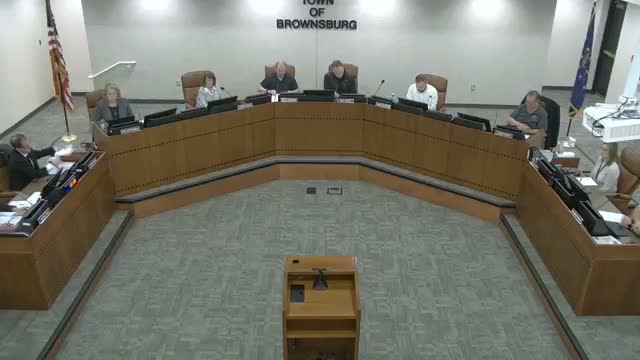
The Town of Brownsburg council on Jan. 22 adopted Resolution 2026‑3, a policy that clarifies rules for use of public property, issuance and management of town keys and electronic key fobs, and designates official council spokespersons.
Town Manager Deb Cook introduced the measure as a way to “establish clear guidelines regarding the use of public property” and to set procedures for issuing and managing town keys and electronic key fobs. She said the policy also formalizes who may speak on behalf of the council.
The resolution drew extended discussion after public commenters and one council member raised concerns about an earlier temporary restriction of after‑hours access for Council member Glenn Adams. The acting council president, who said she intends to emphasize communication and inclusivity while leading the body this year, said the action was taken to address unauthorized use of facilities and to reduce liability risks.
Council member Glenn Adams pushed back, saying elected officials are not town employees and arguing the town’s historical practice had allowed more informal use of the council chambers. “We are not employees. We are elected officials to 4‑year terms,” he said during debate, urging clearer written guidance rather than ad hoc restrictions.
Deb Cook explained the council directed an administrative restriction on after‑hours access as a temporary accommodation while the policy was prepared, and said access was restored after the matter was reviewed. “The council gave administrative internal management directive to [the] town manager to temporarily restrict Mr. Adams’ access to town hall while still giving him an accommodation to access the building to conduct his official duties as an elected council member,” she said.
Rob Kendall, a public commenter, called the controversy ‘‘petty’’ and said council actions had energized support for a city‑referendum effort; he urged the council to focus on priorities such as affordability. The council noted the policy is intended to provide clear, consistent rules and to reduce liability—citing concerns such as untracked occupancy in case of emergency.
After discussion, a motion to adopt Resolution 2026‑3 passed unanimously.
The measure formalizes internal procedures the council said are intended to prevent unauthorized personal use of town resources and to clarify who may speak publicly for the council. The council did not set additional penalties at the meeting; staff said the policy and implementation details would be administered by the town manager and related staff.