Get Full Government Meeting Transcripts, Videos, & Alerts Forever!
Get email alerts on the Housing topic
No spam. Unsubscribe anytime.
Council unanimously approves emergency green‑housing coordination amendment to speed affordable housing projects
Summary
The D.C. Council on Nov. 4 approved an emergency amendment requiring District‑funded affordable housing to meet Enterprise Green Communities Plus standards, be all‑electric and install rooftop solar where feasible, a step proponents said will allow bond issuance to renovate 19 public housing complexes. Opponents urged a permanent fix.
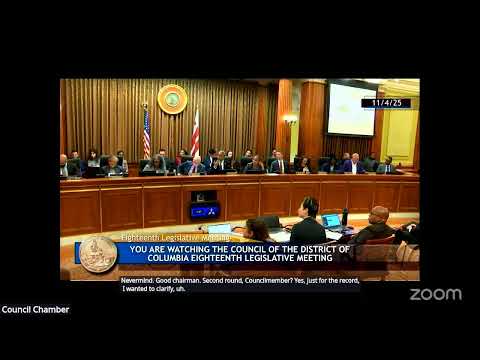
The Council of the District of Columbia on Nov. 4 unanimously approved an emergency amendment and the underlying bill to require District‑funded new affordable housing to meet Enterprise Green Communities Plus standards, be all‑electric and install rooftop solar when feasible.
Council member Robert White, sponsor of the legislation, said the measure strikes a balance between delivering affordable homes and meeting long‑term climate goals. “We can and we must achieve both,” he said, urging colleagues to back the emergency so the District Housing Authority can issue bonds to begin renovations on 19 public housing complexes scheduled to start next month.
Why it matters: supporters said the emergency amendment provides immediate clarity for housing developers and preserves momentum on projects at risk of delay while the Department of Energy and the Department of Buildings update clean‑building regulations in 2027. Council member White said the policy would reduce uncertainty and keep affordable‑housing production moving in a difficult financing environment.
Opponents and cautious supporters warned that an emergency amendment is a short‑term fix. Council member Lewis George said he supported immediate action in the moment but described the change as “not an acceptable fix” for the long term and urged work on permanent legislation, saying regulatory standards evolve and lawmakers should legislate durable frameworks.
Council member Henderson asked for assurance about the timeline to a permanent solution and whether the changes would still require review by the Green Buildings Advisory Council; White and staff said DOE, DOB and GBAC were consulted and agreed projects should not need additional GBAC review, while noting some standards will shift as regulations are updated.
Several other members, including Council member Allen, backed the amendment as an important investment in energy‑efficient construction that reduces lifetime utility costs for residents and preserves public dollars.
The council voted to approve the amendment‑as‑a‑substitute and then passed the bill as amended by unanimous voice votes. Sponsors said staff may make technical and editorial changes before printing and reporting the bill to the regular legislative record.
Next steps: proponents said the emergency action is intended to bridge the permitting and financing window until permanent legislation or regulatory updates take effect in 2027. The chair placed the measure on the legislative meeting agenda for printing and reporting with leave for staff edits.
(Provenance: topic introduced SEG 474; topic finish SEG 768.)