Committee advances expungement pathway for some misdemeanor convictions, citing needs of trafficking survivors
Loading...
Summary
SB 11‑40 would let qualifying individuals petition to expunge certain misdemeanors after court review; advocates and survivors told the committee expungement can be critical to rebuilding lives, and the committee adopted an amendment limiting certain uses of expunged records before returning the bill with a due‑pass recommendation (7‑0).
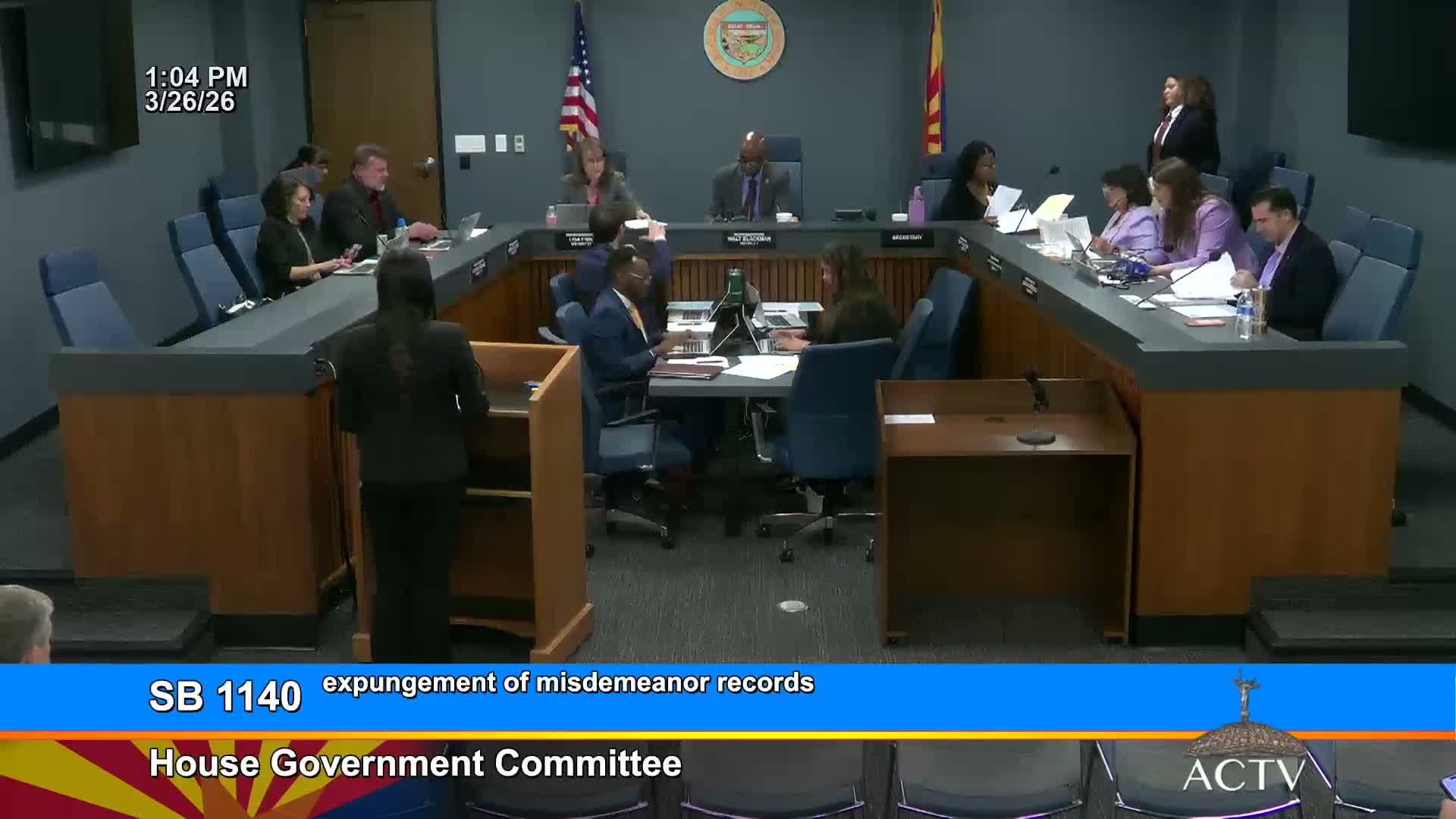
The committee adopted the Blackman amendment and returned Senate Bill 11‑40 with a due‑pass recommendation after proponents, including survivors and service providers, described how misdemeanor records can block housing, employment and recovery for trafficking survivors.
Russell Spalden (on behalf of Alliance for Safety and Justice) and John Mesa, CEO of the Arizona Anti‑Trafficking Network and a retired Mesa police chief, told the committee expungement is part of a balanced public‑safety approach that helps survivors obtain housing and work. Mesa said, "For survivors, the hardest part isn't escaping, it's rebuilding once that they're free," and added that low‑level convictions sustained while being exploited frequently create long‑term barriers to stability.
Witnesses described the bill as narrowly tailored: it allows petitions for certain misdemeanor convictions after a period of demonstrated stability and excludes violent crimes, domestic violence, child‑exploitation offenses, DUIs and felonies. The Blackman amendment clarified that an expunged record may still be used in narrow contexts such as prosecutor disclosure of exculpatory evidence and certain law‑enforcement or corrections hiring where disclosure is required.
Supporters argued expungement reduces recidivism by enabling survivors to get stable employment and housing; opponents did not appear in force at this hearing. The committee returned the bill to the calendar with a due‑pass recommendation, 7 ayes and 0 nays.