
New Castle County executive proposes 17.2% property tax increase in FY27 budget to close roughly $42 million shortfall
Get AI-powered insights, summaries, and transcripts
Sign Up Free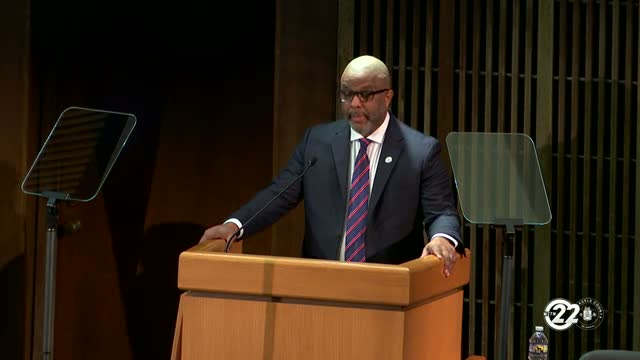
Summary
County Executive Marcus Henry presented a FY27 operating budget of $387.6 million and proposed a 17.2% county property tax increase plus a 5% sewer consumption-rate adjustment to address an estimated $36–$42 million budget shortfall; council scheduled public budget hearings in April and May.
County Executive Marcus Henry presented his FY27 budget proposal to the New Castle County Council on March 24, saying the plan would protect core services while closing a multi‑million dollar gap.
“Tonight, I am presenting the FY 27 proposal to council, an operating budget of $387,600,000 and a capital budget of $75,700,000,” Henry said. “To responsibly balance this budget, I am proposing a property tax increase for FY '27 of 17.2%.”
Why it matters: Henry said internal savings and cuts totaling about $18,500,000 were not enough to close what he described as the county’s budget shortfall — he reported that an initial review found the current‑year deficit exceeded $36,000,000 and later referred to a $42,000,000 shortfall. To avoid deeper cuts to public safety and basic services, he urged the council to consider a “managed” tax increase as part of the FY27 package.
Key elements of the proposal: the operating budget is $387.6 million and the capital budget $75.7 million; the executive proposed a 17.2% increase in the county portion of property taxes and a 5% increase to the sewer consumption rate. Henry said county services account for about 19% of the average property tax bill (with school districts receiving roughly 81% of the total bill) and that 69¢ of every county dollar funds public safety, including police, paramedics, 911 and fire services.
Possible household impacts: Henry gave examples for scaled household impacts tied to assessed values: the median homeowner with a property value of $378,000 would pay about $102 more a year (about $8.50 per month) under the proposed increase; a $150,000 row home would pay roughly $16 more a year; a $680,000 home would pay about $184 more annually.
Budget context and cuts: Henry said the county relied in part on one‑time federal relief — “about $108,000,000 through the American Rescue Plan” — and that roughly half of that funding supported ongoing operations. He described steps already taken to reduce the gap: a hiring pause on nonessential roles leaving 56 positions unfunded in the FY27 operating budget (about $5.7 million), reductions to the part‑time salary budget of about $1,000,000 that include pauses to some community programs and reduced library hours, renegotiation of contracts and other efficiencies.
Public safety and investments: Henry emphasized investments in police and emergency services, reporting roughly 29 officers per shift last year, 33 this year and an anticipated 43 per shift after the next police academy graduates. He said the budget funds a full‑time power‑shift paramedic unit to expand seven‑day coverage in southern New Castle County and thanked the Register of Wills, Ciro Papetti, for making $2,200,000 available to help fund safety technology.
Infrastructure and SPUR initiative: Henry described large investments in wastewater infrastructure — citing completed repairs to the Christina River force main — and announced SPUR (Streamline Planning and Unified Review), an initiative intended to accelerate project review in redevelopment corridors while preserving public input.
Other actions noted: Henry said he recently signed an ordinance providing a full county property tax exemption for spouses of certified line‑of‑duty deaths; he thanked council for moving quickly on that measure. He also said the county is expanding assessment office staff, developing an independent commercial valuation review and running outreach to enroll eligible seniors, veterans and residents with disabilities in tax‑relief programs.
Next steps: Council President Monique Williams Johns announced public budget hearings on April 16, April 23, April 30 and May 7 (each at 2 p.m.). Henry’s proposal is a recommendation; the council will review the FY27 budget and consider changes during the upcoming hearings. No formal council vote on the FY27 proposal was recorded during the March 24 meeting.
What we don’t know / not specified: a final vote date and the precise ballot or ordinance language for any tax change were not provided at the March 24 meeting; specific line‑item adjustments and the final revenue assumptions that would accompany a final budget were not specified.