Lifetime Citizen Portal Access — AI Briefings, Alerts & Unlimited Follows
Urgent-care witnesses say SB324 would expand rural access by modernizing x‑ray operator rules
Loading...
Summary
Proponents told the Senate Health Committee that modernizing rules for General X‑ray Machine Operators (GXMOs) in SB324 would reduce ER visits and expand urgent-care capacity in rural Ohio by allowing general supervision and reciprocity and by enabling delegation to PAs and NPs with physician oversight.
Multiple urgent-care executives and clinicians testified in support of Senate Bill 324, which would modernize Ohio’s rules governing General X‑ray Machine Operators (GXMOs). Witnesses said the current requirement for a physician on-site makes basic imaging cost‑prohibitive in many freestanding urgent cares and limits access in rural communities.
Alan Ayres (urgent-care consultant) told the committee that, based on industry data, "43.8 percent of Ohio urgent care centers log 0 x rays" in a recent peak season and that Ohio's urgent-care x‑ray availability trails peer states. He said SB324 would allow "general supervision of GXMOs," provide reciprocity for out‑of‑state limited‑scope licenses, and let physicians verify competence while delegating day‑to‑day supervision to nurse practitioners or physician assistants.
Other witnesses described workforce pressures: Kirk Hummer and Manoj Kumar said staffing rules and difficulties recruiting radiology technologists leave urgent cares unable to provide on‑site imaging; Dr. Carol Bland said allowing GXMOs to perform limited x‑rays under PA/NP supervision could prevent long trips to emergency departments for basic imaging. Elizabeth Colonis framed the bill as a "tiered workforce model" that preserves technologist expertise for complex imaging while expanding access to basic diagnostic studies.
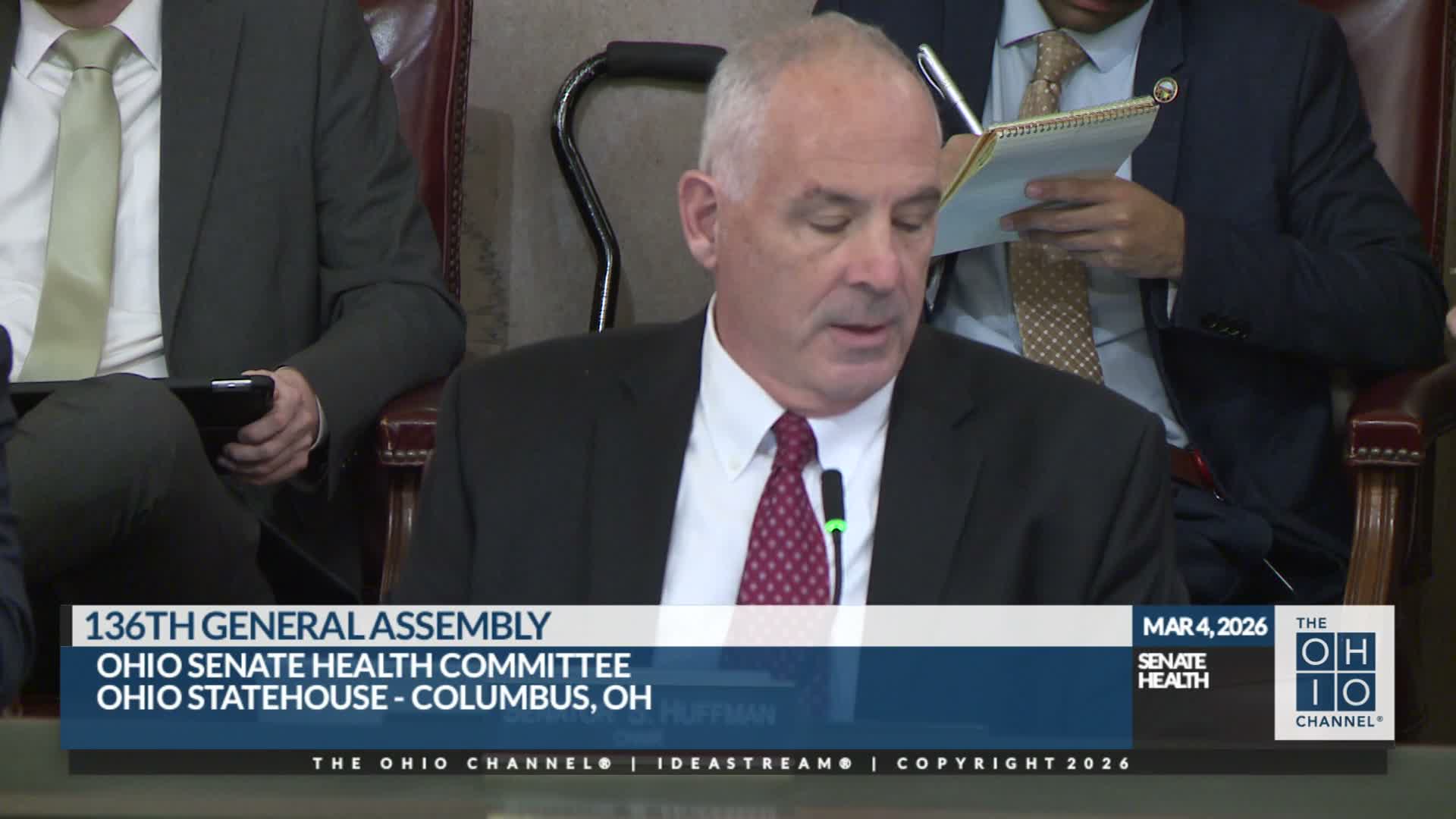
Committee members asked detailed questions about training, supervision, and whether the bill would allow PAs or NPs to operate machines without additional training; witnesses repeatedly said the GXMO would remain the person operating the machine and that supervisor physicians would retain ultimate accountability. The committee closed the hearing and recorded written testimony for the record.