Lifetime Citizen Portal Access — AI Briefings, Alerts & Unlimited Follows
Alaska Senate committee hears victims and industry on bill to limit kiosk cryptocurrency scams
Loading...
Summary
At a March 30 hearing, the Alaska Senate Judiciary Committee heard industry, consumer advocates and law enforcement on Senate Bill 249, which would cap fees and set transaction/refund rules for virtual-currency kiosks; the committee held the bill for further review and set an April 10 amendment deadline.
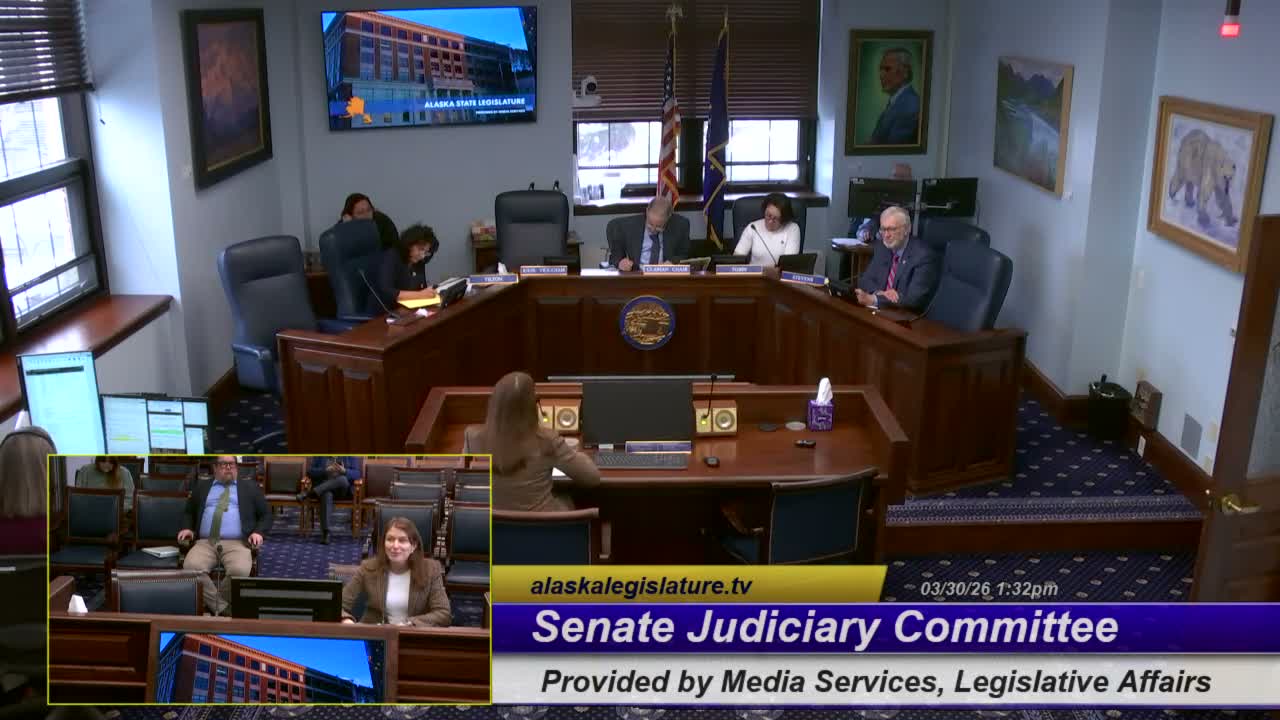
The Alaska Senate Judiciary Committee on Monday heard invited and public testimony on Senate Bill 249, a proposal to regulate virtual-currency kiosks in the state and curb kiosk-related fraud.
Senator Klaiman opened the 1:30 p.m. hearing in Juneau, identifying Senator Tyler Tilton as the bill sponsor and announcing the committee would take invited testimony and public comment.
At the hearing, operators said strict fee caps and limits in the bill would jeopardize their ability to operate in Alaska. "This bill will put us out of business in Alaska," said Clara Wolfson, legislative counsel for CoinFlip, which she said operates seven machines in the state and has about 1,000 Alaska customers. Wolfson urged the committee to adopt a "middle ground" and cited other states' approaches that differentiate transaction limits and refunds for new versus existing customers while preserving federal reporting obligations.
Louise Pais Meyers, chief compliance officer for Health Ventures, told the committee her company runs 36 kiosk locations in Alaska and largely implements the bill's consumer protections but likewise opposed a 2–3% fee cap. Meyers described operational controls such as "first-time holds," cool-off periods and circumvention locks that she said prevent rapid, repeated transactions and help mitigate scams.
Consumer advocates and law enforcement urged tightened safeguards. Clarklyn Barr, government affairs director for financial security at AARP, said kiosk-facilitated scams are a growing problem and urged the committee to reject a bifurcated approach that treats new and existing users differently. "Over 94% of the transactions conducted with one crypto kiosk operator, CoinFlip, were linked to scams," Barr said, citing an attorney general investigation in another state and pointing to a sharp increase in Alaska reports to the FBI in 2024. Barr recommended a single lower daily limit, suggesting $1,000 per day and a $10,000 monthly cap for all users, and said she supported stronger fee limits in statute to protect vulnerable consumers.
Several Alaskans described personal losses. Sylvia Silverton, a Juneau resident, said she lost $8,000 after being coerced into using a kiosk and urged clearer, more prominent warnings on machines and greater public outreach to elders. Detective Matthew Moore of the Palmer Police Department described an elder case with losses exceeding $15,000 and said law enforcement currently has limited options to recover funds, adding that senior citizens are being targeted and that outreach efforts (flyers, seminars) have become necessary.
Industry witnesses responded that operators already file suspicious-activity reports and use OFAC screening and blockchain analytics to help detect and trace bad actors. Wolfson and Meyers urged the committee to align statutory thresholds with federal reporting practices (they cited federal currency-transaction reporting triggers) and to avoid language that would extend kiosk limits to other company products or online platforms.
The committee did not take a vote. Senator Tilton thanked witnesses and said members would consider amendments. Chair Klaiman said the committee would set the bill aside for further review, set an amendment deadline for April 10, 2026 at 5 p.m., and scheduled the committee to meet again April 1 to hear Senate Bill 252.
What happens next: The committee's April 10 amendment deadline will determine whether members introduce changes that narrow fee caps, set transaction or refund windows, or adopt the single-limit approach AARP recommended. The committee scheduled follow-up consideration after members have had time to circulate draft amendments.