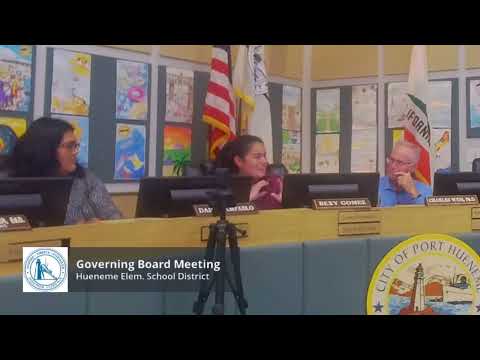
District outlines rollout of state-mandated early-grade reading screener; data show students flagged for intervention
Loading...
Summary
Educational-services staff described implementation of the new SB 114 early-grade reading screener, explained the diagnostic and RAN measures, shared color-coded risk tiers and sample counts of students flagged for intervention, and noted tools for teachers and families.
The Hueneme Elementary School District presented an update on the new state-mandated early-grade reading screener and how the district is using results to guide instruction.
Dr. Oldham summarized the district's timeline and process for implementing the screener required by SB 114, including teacher training in September and a middle-of-year administration window (Jan. 20–Feb. 4). He explained the screening instrument gives a composite score and color-coded risk tiers (blue: beyond grade level; green: at grade level; yellow: making progress; red: below grade level) and described a two-step diagnostic process: the initial screening and a rapid automatized naming (RAN) measure for students who score well below benchmarks.
Dr. Oldham provided sample counts from the district's administration of different tools: for one English screener (DIBELS-like), 764 students scored well below benchmark and were then administered the RAN; of those, the presenter reported 79 percent were considered low risk and 21 percent at risk after the follow-up measure. For other assessment groups, the transcript lists percentages by grade indicating varying shares flagged as at risk; classroom- and individual-level reports, parent letters in English and Spanish, and lesson recommendations generated by the platform were described as supports for teachers and families.
Board members asked clarifying questions about the color tiers, how middle-of-year results compare with beginning-of-year results (noting the comparison is skewed because not all students had taken the earlier screen), and what suggestions are being shared with parents; Dr. Oldham said the district will continue conversations at parent conferences and site meetings to improve family understanding and engagement.
The presentation emphasized that students flagged as at risk should receive small-group interventions tied to the screener's recommended lessons and that the platform provides progress-monitoring tools for teachers.