Lifetime Citizen Portal Access — AI Briefings, Alerts & Unlimited Follows
Board approves expansion of Coles County enterprise zone to allow residential tax abatements
Loading...
Summary
Mattoon CUSD 2’s board voted to approve a county resolution to expand the Coles County enterprise zone to include residential projects, enabling a five‑year abatement schedule on increased assessed value, sales‑tax exemptions for building materials and waived permit fees; the joint application is expected in mid‑April–May.
William Hickey, who presented the proposal to the board, said the resolution would let the Coles County enterprise zone include residential projects and offer three incentives: a five‑year abatement on increased property valuation for new single‑family homes, a sales‑tax exemption certificate for building materials permanently affixed to a structure, and a waiver of local permit fees. Hickey told the board municipalities including Mattoon, Charleston, Oakland and Ashmore had passed related resolutions and that a joint application to the Illinois Department of Commerce and Economic Opportunity was expected to be filed in mid‑April to May.
The board followed with questions about timing and eligibility. Hickey said the program will target developer‑built single‑family homes and that the state‑suggested minimum investment threshold discussed in the application is $100,000; developers would be assigned the benefits and those savings are intended to pass through and lower costs for purchasers. Hickey said, “This is really an incentive tool to incentivize people to build here, to live here, and to invest their time, their money, and their loved ones here.”
Board members framed the measure as simultaneously supporting community stability and long‑term revenue. One board member said the expansion could help reduce pupil mobility and stabilize enrollment — a metric the district tracks — while another noted that a larger tax base can produce lower tax rates across taxing bodies as development grows. Administrators and board members also noted the expansion is not a local giveaway: parcels must be added to the enterprise zone and the district will continue to collect existing property taxes on land (abatement applies only to increased valuation due to new construction).
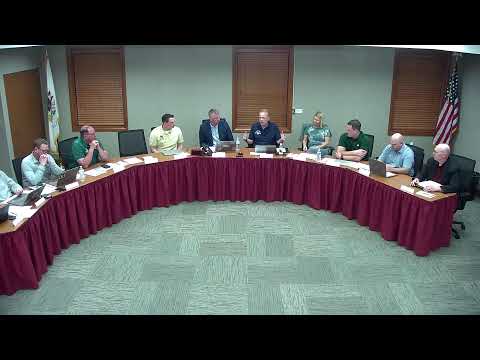
The chair called for a motion to approve resolution number 01‑2026; the motion was made and seconded and the board conducted a verbal roll‑call vote in which members voted in favor, approving the resolution as presented. The board did not set an implementation timetable beyond the expected application window; Hickey said municipalities and school boards are meeting to finalize details and responses to the state application. The board did not vote on any local ordinance changes or tax levies at the meeting — the action taken was approval of the county resolution and the local support for the joint application.