Lifetime Citizen Portal Access — AI Briefings, Alerts & Unlimited Follows
Attorney Shannon Layman Pecoraro outlines financial planning tools for students with disabilities
Loading...
Summary
At a Chesapeake Public Schools PEAK Parent University webinar, attorney Shannon Layman Pecoraro reviewed SSI/Medicaid rules, waiver programs, special-needs trusts, ABLE accounts and surrogate-decision options, and answered audience questions about 529 rollovers and estimated costs.
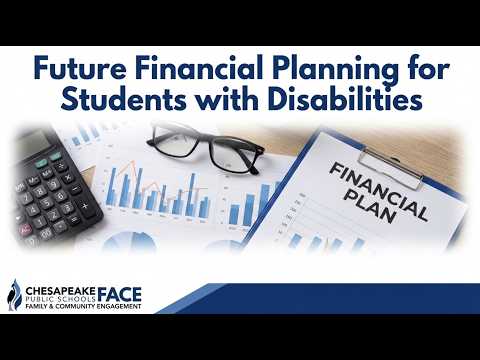
Attorney Shannon Layman Pecoraro, founder of East Coast Elder Law, laid out estate-planning and public-benefits strategies families can use to preserve supports for students with disabilities during a Chesapeake Public Schools PEAK Parent University webinar.
Pecoraro told attendees that planning before a child turns 18 is critical to avoid service gaps and financial crises when school-based supports end. "We need to talk about that before something happens to you," she said, urging families to begin estate and benefits planning early and to ask questions about how different tools interact.
Why it matters: many federal and state benefits hinge on narrow income and asset tests and on legal designations such as guardianship or representative payees. Pecoraro explained that Supplemental Security Income (SSI) is an income- and asset-tested benefit that becomes especially important at age 18 because parental income and assets are no longer automatically counted for the child. The presentation repeatedly emphasized trade-offs between income, assets and access to Medicaid waivers that pay for in‑home or group-home services.
Key points and tools described
• SSI eligibility and tests: Pecoraro described the Social Security Administration's technical standard (inability to maintain substantial gainful activity for at least 12 months) and said the transcripted presentation lists an asset test of $2,000 as the limit on countable resources for an individual. She also summarized earned- and unearned-income rules, including the common $20 disregard for certain unearned income and the earned-income exclusion framework that lets beneficiaries keep some earnings while retaining partial SSI benefits. "You cannot have more than $2,000 in your name," she said when discussing the asset limit.
• In-kind support and maintenance: Pecoraro warned that free or reduced shelter can trigger a presumed maximum value rule and reduce SSI by roughly a third in some cases; she described methods attorneys may use to structure rent and household arrangements to avoid unintended reductions.
• Medicaid and waiver programs: She outlined major waiver programs referenced in the presentation — including CCC Plus (for nursing-home level care) and My Life, My Community waivers (designed for ongoing community supports) — and stressed that these waivers are expensive per enrollee and often have long waiting lists.
• Trusts and inheritance planning: Pecoraro reviewed trust options (third‑party special‑needs trusts, first‑party special‑needs trusts, pooled trusts and D(4)(A)-style trusts), explained that first‑party trusts are subject to federal Medicaid payback at death, and recommended naming trusts (not individuals) in beneficiary designations to avoid converting assets into countable resources.
• ABLE accounts and limits: The presenter described ABLE accounts as limited-purpose savings vehicles for eligible people with disabilities and cited contribution and suspension thresholds shown on her slides (the transcript references $15,000 and $20,000 figures and a $100,000 SSI-suspension threshold for ABLE balances). She noted differences in state ABLE program treatment (for example, a Virginia waiver of certain Medicaid payback rules was mentioned).
• Surrogate decision-making and federal interaction: Pecoraro compared powers of attorney, advance directives, guardianship and conservatorship, and cautioned that Social Security may appoint a representative payee for benefit management regardless of state court guardianship or private POA documents.
Question-and-answer highlights
• 529 to ABLE rollovers: In response to an attendee question about continuing contributions to a 529 plan, Pecoraro said rollovers into ABLE accounts exist but have limits; she said she typically uses ABLE accounts for small windfalls or savings by the individual and prefers third‑party trusts for larger or more complex funding.
• Estimated costs: Asked about costs for guardianship and special-needs planning, Pecoraro estimated that a guardianship might run about $6,000 on average (and noted some attorneys charge $8,000–$10,000), and that a relatively simple married-couple estate plan including a trust could be roughly $5,000, while warning that complexity and court requirements can raise total costs.
Closing and resources
Chesapeake Public Schools staff closed the session, noted the webinar is being recorded and will be posted to the district YouTube channel, and displayed contact information for transition specialists and the Office of Exceptional Learning for families who want follow-up assistance.
Ending: The webinar ended after a brief final Q&A; attendees were directed to district resources and the recording on the Chesapeake Public Schools YouTube page.