Get Full Government Meeting Transcripts, Videos, & Alerts Forever!
Get email alerts on the Infrastructure Pedestrian Bridge topic
No spam. Unsubscribe anytime.
Denver panel approves Aims Construction contract for National Western pedestrian bridge after debate over elevators and workforce goals
Summary
The South Platte River Committee approved a roughly $12.7 million construction contract with Aims Construction for a pedestrian bridge at the National Western Center campus, while members pressed presenters about the stability of federal grant funding, the removal of DBE workforce goals and long-term elevator maintenance. Presenters said the project uses a USDOT Reconnecting Communities grant and will be operated by the campus authority.
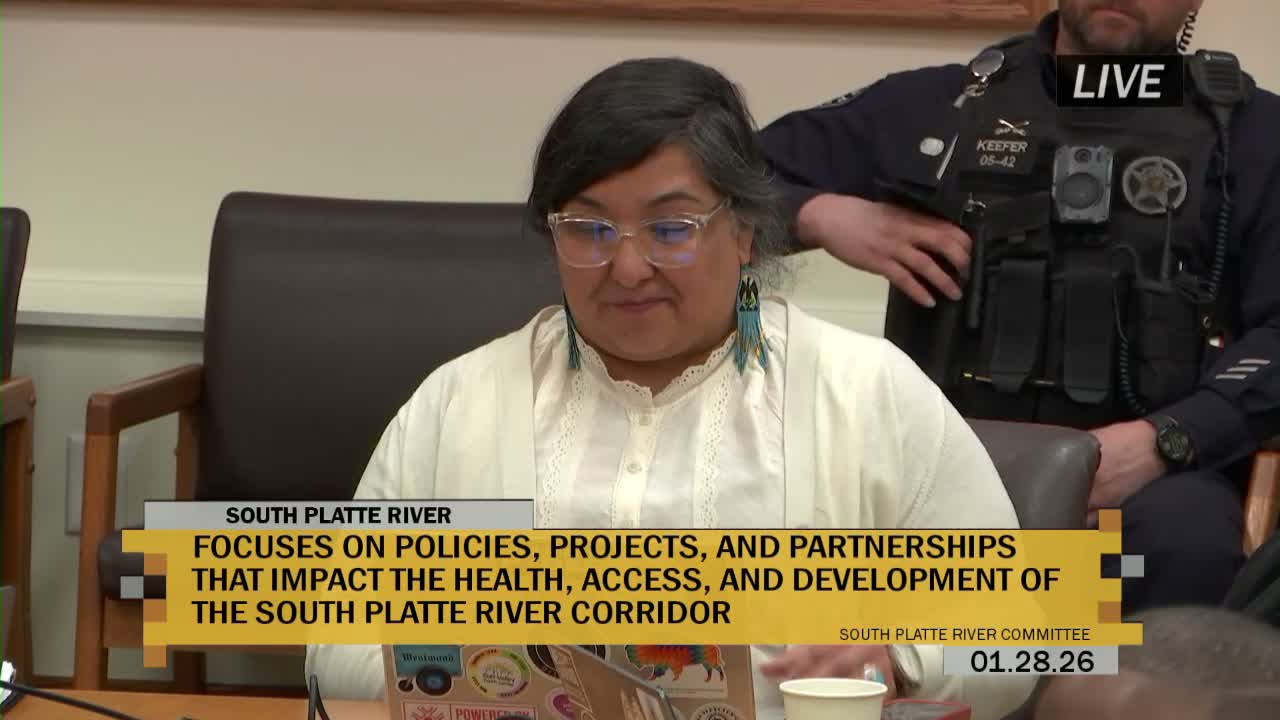
The South Platte River Committee of the Denver City Council on Jan. 28 approved a construction contract with Aims Construction to build an enclosed pedestrian bridge linking the National Western Center campus to the 49th and Brighton RTD station, committee members said.
Sarah DiBietro, program director for the Mayor's Office of National Western Center, told the committee the contract covers a single-span bridge that will cross nine railroad tracks (RTD, BNSF and DRIR), include elevator towers with HVAC, stairs, landing plazas with lighting, security cameras and IT/fiber connectivity, and provide a direct pedestrian connection to Brighton Boulevard. "This includes federal funding from a USDOT Reconnecting Communities and Neighborhoods grant," DiBietro said.
Why it matters: committee members said the bridge is intended to improve campus and neighborhood connectivity and reduce walking routes by roughly a mile for some users. Councilman Daryl Watson said the award represented a major federal grant win for nearby neighborhoods, but asked how "sticky" the funding was after other components of the four-project application lost unobligated portions. DiBietro said the bridge portion was obligated early and secured; portions of the broader award for other projects were rescinded and she credited city staff coordination for locking in what they could.
Key details and costs: DiBietro presented the contract amount listed in the materials and the contract term shown as 550 days after notice to proceed (about 18 months). She said the full project delivery estimate, including design and contingency, is about $23 million and that the USDOT grant portion is up to $10 million, with the remainder to be covered by local match; she said she would confirm the exact local/federal percentage in follow-up. The presentation also said the bridge length is about 265 linear feet and that substantial time is expected for procuring long-lead items and meeting Buy America requirements.
Concerns raised: several councilmembers pressed presenters on elevator reliability and long-term maintenance. Council President Amanda Sandoval said, "The elevators don't work," referring to recurring elevator outages on other city and regional bridges. Mike Bouchard, executive director of the Mayor's Office of National Western Center, said the city will own the asset when built and that the National Western Center Authority will operate and maintain the bridge: "We hand this over to the National Western Center Authority to operate, maintain, and program, for the next hundred years," he said. Councilmembers nonetheless urged a stronger, explicit assurance, including exploring a dedicated maintenance line item when the authority assumes operations.
Equity and contracting: councilmembers asked about airspace or easement costs and about minority, women-owned and disadvantaged business enterprise (MWBE/DBE) goals. DiBietro said no airspace purchase was required from RTD or DRIR, that an easement payment for BNSF had been made (she estimated approximately $200,000 and offered to provide exact figures), and that the team had previously set workforce and MWBE goals but removed DBE goals after federal guidance changed. "We were disappointed to have to do that," DiBietro said, describing coordination with the Division of Small Business Opportunity and the city attorney to comply with federal guidance. She added the contractor has a history of maintaining subcontractor relationships and that the city will ask the contractor to report utilization data for small, minority and women-owned firms.
Schedule and next steps: DiBietro said, if approved by the Council floor, the team expects to issue notice to proceed in late March and that construction could extend into 2027 (presenters also noted a conservative target to ensure opening for later campus events). Councilman Kevin Flynn asked for details on the design contract and construction schedule, and presenters said they would provide follow-up materials on longer-term milestones and subcontractor certifications for the record.
Vote and motion: Councilman Chris Hines moved the item forward, seconded by Councilman Daryl Watson; Chair Jamie Torres asked, "Everybody good with this moving forward?" and committee members answered "Yes," advancing the contract by consensus. The committee adjourned after the action.
What was not decided or remains to be confirmed: presenters promised to follow up with exact easement amounts, the precise federal/local funding split, workforce requirement percentages (DiBietro referenced a 15% apprenticeship expectation but offered to confirm), and a list of certified subcontractors and certifications. The committee did not adopt a formal, line-item funding guarantee for future elevator maintenance during the meeting.
Sources: presentation to the South Platte River Committee, Jan. 28, 2025; speakers at the committee meeting included Sarah DiBietro (program director, Mayor's Office of National Western Center), Mike Bouchard (executive director, Mayor's Office of National Western Center), and Councilmembers Jamie Torres (chair), Chris Hines, Daryl Watson, Kevin Flynn and Amanda Sandoval.