Get Full Government Meeting Transcripts, Videos, & Alerts Forever!
Get email alerts on the Grants topic
No spam. Unsubscribe anytime.
Grant manager outlines record-keeping, FOIA and audit rules for school-based mental health grants
Summary
Amy Banks, competition manager for the school-based mental health services grant program, led a training module stressing that grantees must keep accessible records (retained three years after closeout), prepare documents for auditors, and that grantee audits are required when federal expenditures reach $500,000 annually.
Amy Banks, competition manager for the school-based mental health services grant program, led a training module on grant management that covered record keeping, the Freedom of Information Act and audit requirements for grantees.
Banks said grantees must maintain a viable records system that includes the most recently approved budget, policies and procedures for overseeing and implementing the grant, an inventory of purchased or leased items, and the evaluation plan with timelines and measurement instruments. "That is 3 years after the grant ends and is closed out," she said when describing the standard retention period, while noting exceptions for litigation and audit.
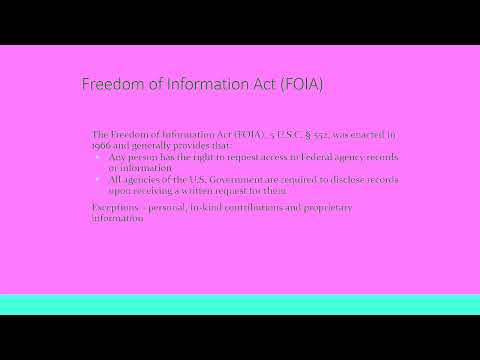
On public access, Banks summarized FOIA, noting that the 1966 statute "means that anybody has the right to request access to federal agency records or information that includes your grant application." She added that personal contributions and proprietary information can be redacted and are not fully disclosed under FOIA.
Banks outlined two audit pathways. She said grantee-initiated audits are required for "any grantee that expends, 500,000 or more annually of federal funds" (alone or combined with other federal awards) and must be completed by an independent auditor and submitted to the federal audit clearinghouse in compliance with OMB Circular A-133 provisions. She cautioned that the SBMH and the MHSP programs are not included in the audit compliance supplement for that circular and that auditors should instead use Part 7 guidance for programs excluded from the supplement.
An Office of Inspector General (OIG) audit, Banks said, may be triggered by complaints or serious audit findings; an office reviews audit reports when such triggers occur. She referenced a recommended list of documents grantees should prepare for auditors and flagged common audit findings including poor record keeping; unallowable costs and activities; missing time-and-effort reports; failure to follow procurement standards; lack of internal controls; failure to obtain prior approvals before spending or encumbering funds; incorrect indirect cost calculations; and poor cash management.
Banks encouraged grantees to adopt internal controls and maintain accessible records so that staff and auditors can locate required documents for reporting and review. The training module provided a sample list of recommended documents and guidance resources for auditors. No formal votes or decisions were recorded during the session.