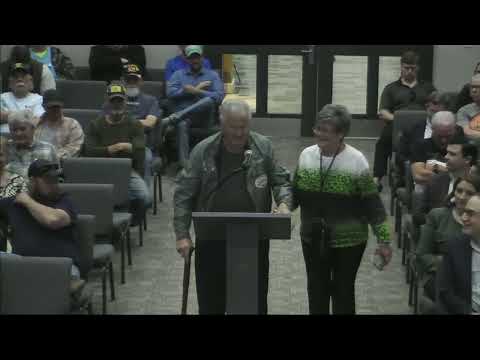
Fairview approves new development code on first reading; more amendments expected at second reading
Summary
After months of drafting and public comment, the board approved the new Fairview development code on first reading. Commissioners debated finished‑floor height, age‑friendly entry options and traffic‑study thresholds; multiple amendments will be drafted for the second reading.
The board advanced a multi‑year rewrite of Fairview’s zoning and development regulations by approving the final draft on first reading Thursday night.
Planning staff described the process, which began in mid‑2024 with a consultant, public drafts, a 30‑day comment period and planning commission review. The planning commission forwarded nine recommended amendments; staff incorporated many citizen comments and said the final draft aims to modernize the code, address stormwater and traffic concerns and clarify development standards.
Commissioners debated several potential changes during the first reading—most notably a standard that sets minimum and maximum finished‑floor heights (the draft included 18–36 inches above average grade at the front facade) and an amendment offered to permit a portion of new developments to include grade‑entry homes marketed as age‑friendly. Some commissioners argued the finished‑floor requirement addresses flooding and aesthetics; others called it an overreach that could limit custom home design. Planning staff agreed to draft competing amendments (an option to offer grade‑entry homes versus a percentage requirement; and a flood‑sensitivity approach rather than an across‑the‑board restriction) for consideration at the second reading.
After a procedural confusion over a call to question, the board ultimately voted to approve the code on first reading (5–0). The second and final reading will return to the board on a future meeting (staff and commissioners signaled April 2).
AI generated
The text on this page is AI generated. Summaries, highlights, analysis, and video transcripts are all produced from the original source material.
AI can make mistakes, so if you spot one, and we will fix it for everyone.
Note: the source content is unaltered by us. Any content source we link to, be it a video, an audio recording, or a document, is presented exactly as its publisher released it. That publisher is usually a government body, sometimes an individual official or another organisation.