Lifetime Citizen Portal Access — AI Briefings, Alerts & Unlimited Follows
Treasury outlines FY27 priorities: IT modernization, new tax administration costs and multiple pass-through programs
Loading...
Summary
State Treasurer Rachel Eubanks and Treasury budget director Ken Osborne presented the department’s FY27 executive recommended budget, highlighting IT modernization requests, proposed administrative funding for a vaping tax and digital advertising tax, a $20.25M election administration fund proposal, and questions about multiple multi-year work projects and grant distributions.
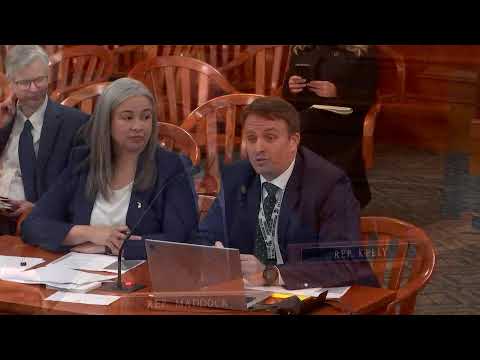
State Treasurer Rachel Eubanks and Treasury budget director Ken Osborne briefed the House Appropriations Subcommittee on General Government on the Department of Treasury’s FY27 executive recommended budget and answered lawmakers’ questions about program administration, work projects and fund distributions.
Eubanks described Treasury’s broad responsibilities — tax administration and collection, revenue forecasting, investing state assets, local government and school district fiscal oversight, and managing unclaimed property returns. "We administer taxes," she said, noting the department handles the bulk of state revenue flow and returned a record amount of unclaimed property last year. She briefly summarized recent IT system migrations and call-center upgrades aimed at improving customer service.
Osborne walked through Treasury’s budget footprint and highlighted several FY27 requests. He said Treasury operations are roughly $364,000,000 with a general fund component of about $84,000,000. Key proposals include an IT investment to modernize the sales/use/withholding platform, a $2,350,000 request and 17 FTEs to administer a proposed vaping and non-tobacco nicotine tax, a $2,000,000 request (including $1,300,000 one-time and 5 ongoing FTEs) to administer a proposed digital advertising tax, and a $750,000 one-time request to implement proposed changes to the Homestead Property Tax Credit.
Members asked detailed questions. On identifying school districts in probable financial distress under a 2014 act, Eubanks said Treasury works with the Department of Education and currently tracks fewer than a dozen districts on its probable-distress radar and will provide the legislature’s quarterly report. On the MiABLE retirement-savings outreach program, Eubanks noted a federal age-expansion will raise eligibility and Treasury is increasing outreach. Regarding the election administration support fund, Ken Osborne confirmed the FY27 proposal mirrors FY26 at $20,250,000.
Lawmakers also pressed Treasury on several multi-year work projects and grant distributions: the Michigan Infrastructure Council request ($3,000,000) to support local asset-management tools; a $47,000,000 municipal support work project (Treasury said it would provide details on nonprofit recipients); and questions about local prosecutor support grants (Osborne explained administrative delays tied to boilerplate language and said FY24 funds were distributed while FY25 agreements are expected to be finalized in April). Members raised a concern about an apparent concentration of $47,000,000 in Flint/Genesee County and whether boilerplate population thresholds affect eligibility; Treasury said distribution will follow enacted boilerplate and statute and that timing of reimbursements often spans fiscal years.
On workspace modernization (roughly $5,000,000 across earlier work projects), Treasury said most funds have been expended, including a recent Austin Building remodel, with modest remaining balances used for reconfiguring office space to support collaboration. Members also asked about the wrongful imprisonment compensation fund and a $10,000,000 budget request; Treasury said it would supply the current fund balance.
At the meeting’s close Representative Kelly moved to excuse absent members; there being no objection the motion prevailed by unanimous consent and the subcommittee adjourned.