Lifetime Citizen Portal Access — AI Briefings, Alerts & Unlimited Follows
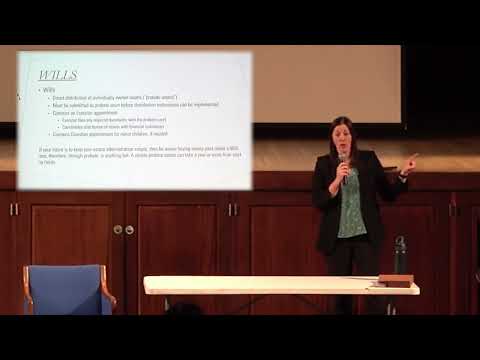
Attorney Allison Poirier outlines wills, trusts and probate at community Estate Planning 101
Loading...
Summary
At a community Estate Planning 101 presentation, attorney Allison Poirier of KKC Law explained how joint ownership, beneficiary designations, wills and trusts affect probate; she urged advance planning for powers of attorney, health care directives and warned of Medicaid’s five‑year lookback for irrevocable transfers.
Attorney Allison Poirier of KKC Law delivered a community presentation titled “Estate Planning 101,” walking attendees through how ownership forms, wills and trusts affect what happens to assets after death and how to plan for incapacity.
Poirier opened by urging people not to rely on default state rules (intestacy) and said the primary benefit of estate planning is control: "you get to pick who that person is to make sure it's the right person doing those things," she said. She described a four‑column framework for asset ownership: joint survivorship ownership, beneficiary‑designated accounts, assets owned solely in one name (probate assets), and assets held in revocable (living) trusts.
She advised that jointly owned assets and beneficiary‑designated accounts commonly bypass the will and probate: "those assets get to pass automatically to the surviving homeowner," Poirier said, but cautioned that relying only on ownership forms can leave gaps. For assets solely in one name, she said, probate is typically required and can be lengthy: full administration often takes about a year, while small‑estates procedures (she cited roughly a $40,000 threshold) can be much faster.
On taxes and multi‑state property, Poirier said an estate tax return must be filed within six months of death if applicable; she noted federal/Connecticut exemption levels have been in the multi‑million‑dollar range (historically near $14,000,000 and more recently about $15,000,000), meaning most people do not owe estate tax. She also warned that owning real estate in other states can require ancillary probate proceedings in each jurisdiction.
Poirier clarified the will’s role: it governs distribution only of probate assets, appoints an executor to file court paperwork and can name guardians for minor children; it does not control jointly held or beneficiary‑designated property. She summarized intestacy (default) rules: when no will exists, closest relatives typically inherit in a hierarchical order (spouse, children, parents, siblings, nieces/nephews, etc.).
Explaining trusts, Poirier said revocable (living) trusts often serve probate‑avoidance goals while allowing the grantor continued control during life. "Revocable trusts do not provide protection from long term care costs," she warned; by contrast, properly structured irrevocable trusts can offer asset protection but require advance planning because Medicaid applies a five‑year lookback to transfers.
Poirier recommended planning for incapacity: she described financial powers of attorney (typical forms are effective immediately) versus springing powers that activate only on incapacity and may require a doctor’s affidavit. She explained health care directives, living wills (end‑of‑life preferences) and the conservatorship process the court uses when no planning document exists. She urged attendees that institutional actors differ: hospitals may act on family input, but banks generally require formal legal authority such as a POA to act on accounts.
She closed by pointing attendees to handouts and her YouTube channel for more information and invited questions from the audience. The prepared slides concluded with an opportunity for attendees to consult the presenter or sponsors after the session.