Get Full Government Meeting Transcripts, Videos, & Alerts Forever!
Get email alerts on the Freedom To Read topic
No spam. Unsubscribe anytime.
Staff to Sen. Kawasaki urges support for SB 238, the 'Freedom to Read Act', at commission meeting
Summary
A staffer for Sen. Scott Kawasaki told the Fairbanks Library and Literacy Commission that SB 238 would create statewide reconsideration procedures, protect librarians, and allow certain parties to seek injunctive relief if materials are improperly removed.
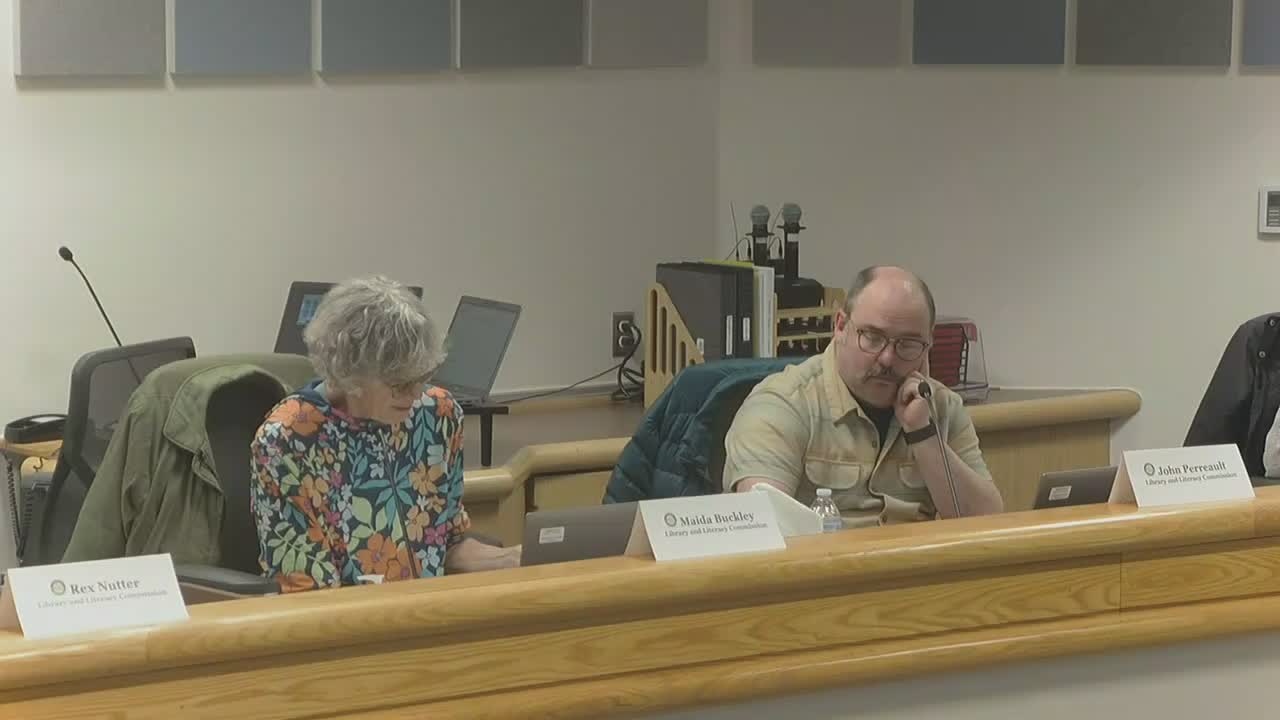
Jenna Calhoun, staff to Sen. Scott Kawasaki, told the Library and Literacy Commission on March 11 that SB 238, the "Freedom to Read Act," would establish a statewide policy for public and school libraries to handle reconsideration requests and to protect librarians who follow curatorial rules. "SB 238 ensures that these institutions can protect this marketplace of ideas while also allowing a deliberate and certain policy for which reading materials are curated," she said.
Calhoun described key provisions included in the sponsor statement: a requirement that materials be considered as a whole rather than cherry-picked passages; inclusion of a trained library employee in any review panel; consideration of students' developmental stages in school libraries; and protections for librarians and school employees from disciplinary action. She also said the bill would create a private right of action allowing "students, their parents or guardians, authors, booksellers or publishers" to bring civil claims and seek injunctive relief to keep materials available.
Commissioners asked where SB 238 stands in the legislative process. Calhoun said the bill had its first hearing before the Senate Education Committee and was awaiting a second hearing; she said she was working with the committee aide to schedule it and encouraged commissioners to submit testimony to Senator Lukey Geltobin, chair of Senate Education. Several commissioners expressed support for the bill's aims and discussed whether the commission could convene a special meeting to consider formal action before the legislative session ends; staff and the mayor's office explained the process to request a special meeting under the Open Meetings Act.
Why it matters: commissioners advise the library and are a local forum for community input; testimony from a senator's office signals the measure's potential local impact on library policy, staff liability and community access to materials. The commission discussed possible interim steps — including requesting a special meeting — to allow time for the commission to weigh in while the bill moves through committee.
The commission took no formal vote on SB 238 during the March 11 meeting; commissioners were told a second committee hearing had not yet been scheduled and were encouraged to submit testimony to the Senate Education chair.