Get Full Government Meeting Transcripts, Videos, & Alerts Forever!
Get email alerts on the Budget Public Input topic
No spam. Unsubscribe anytime.
Residents urge protections for libraries, parks and Vision Zero safety as council opens FY2027 budget hearings
Summary
At the evening budget hearing, hundreds of residents urged the council to protect libraries and parks, prioritize Vision Zero traffic safety funding, explore new revenue options and avoid cuts that disproportionately affect low‑income communities.
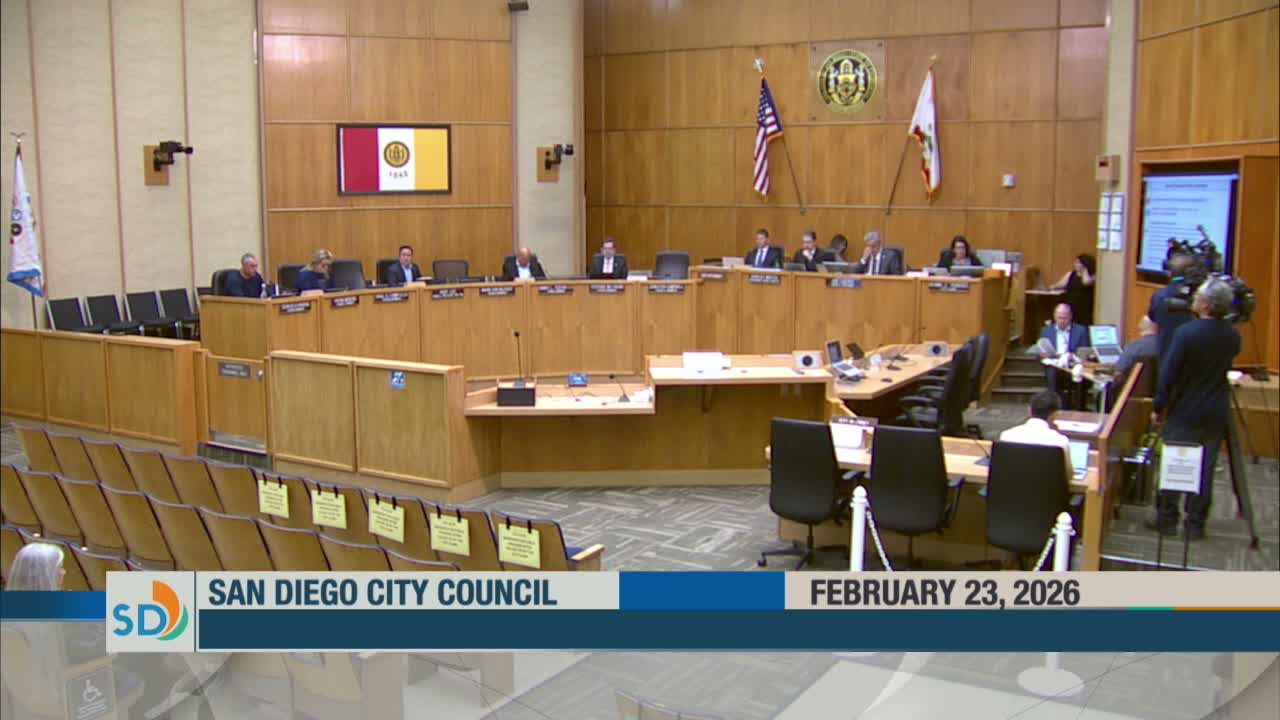
The San Diego City Council opened public participation for the fiscal year 2027 budget during an evening hearing on Feb. 23, drawing lengthy public testimony on spending priorities and tradeoffs as the city faces a projected structural deficit.
Council President Joe LaCava framed the hearing by urging callers to pair funding requests with suggested cuts, noting the city cannot add services without offsetting revenue or reductions elsewhere.
Speakers repeatedly called on the council to preserve libraries, parks and recreation services and to reject cuts that would fall hardest on low‑income neighborhoods. Multiple attendees asked the council to fund the Vision Zero Coalition’s priorities — fixes for the city’s most dangerous intersections, implementation of the city’s speed‑management plan with school‑zone priority, and funding for daylighting intersections — saying those are cost‑effective safety investments.
Other themes included calls to cancel or revisit surveillance contracts, reallocate middle‑management positions rather than frontline services, pursue revenue from short‑term rental platforms and better monitor Measure C expenditures. Several public health speakers cited recent studies linking adolescent cannabis use to higher risks of psychosis and bipolar disorder and urged stronger local guardrails on marketing and potency.
Charles Monica, the independent budget analyst, and Councilmember Foster reiterated that the city faces a sizable projected FY27 shortfall and that many of the recent revenue gains are either one‑time or partial; they urged realistic prioritization and outreach during the budget process.
The council scheduled additional public hearings and encouraged residents to email further input. No votes took place in the evening hearing; the event served to collect public priorities to inform the mayor’s April proposed budget.