Lifetime Citizen Portal Access — AI Briefings, Alerts & Unlimited Follows
Big Bear Lake planning commission agrees to process Labor Day rodeo application, asks for expanded notice and a sound study
Loading...
Summary
The City of Big Bear Lake Planning Commission voted to accept and process a major special-event application for a proposed Labor Day rodeo (SC2026-0013). Commissioners asked the applicant for expanded resident notification, a sound study, firm parking/shuttle arrangements and adherence to the city's noise limits (closure of event activity by 10 p.m.).
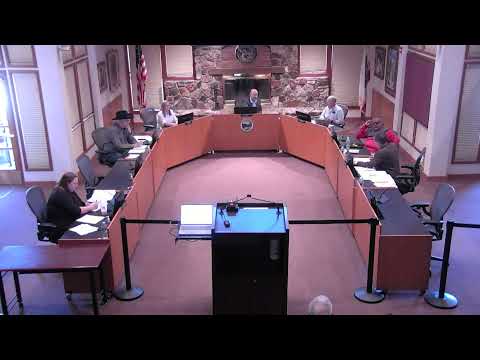
The City of Big Bear Lake Planning Commission voted to accept and process an application to host a pro rodeo and accompanying carnival on Labor Day weekend, giving the applicant direction to provide expanded neighborhood notice and a noise analysis before the matter returns for formal review.
Joel, the event applicant, told the commission the proposal would revive a Big Bear rodeo tradition on Labor Day weekend (Sept. 3—8, 2026) with PRCA sanctioning, televised exposure and family-focused events including youth mutton busting. "So what we're proposing is a pro rodeo," Joel said during a roughly 45-minute presentation in which he described a 5,000-seat cap per performance, carnival components, local-vendor outreach and coordination with Big Bear Mountain Resorts and Visit Big Bear.
Why it matters: Commissioners framed the item as a potential boost to shoulder-season lodging and local vendors but flagged traffic, noise and public-safety risks that staff and the applicant must address before any final permit. Commissioner Biss asked the commission to require "notification to beyond the 500 feet to first couple blocks of each of the residential areas" and to commission a sound study to measure likely decibel impacts on nearby homes; the commission approved adding those items to the motion.
What the applicant proposed and the commission's concerns Joel described plans to engage a national stock contractor (Honeycutt Rodeo), seek PRCA sanctioning and televise portions of the event. He said the applicant would cap rodeo seating at 5,000 seats per performance and estimated that total weekend attendance spread across performances and the carnival could reach roughly 15,000 people over the multi-day event. He also said food-and-beverage operations would be coordinated through BBMR/Levy and that multiple insurance carriers were engaged for different liability components.
Commissioners and staff pressed for operational detail. They asked Joel to provide clearer maps showing where carnival rides and generators would be sited, how spectator and vendor entrances would be controlled, formal parking and shuttle agreements (staff and commissioners pointed to a closer lot behind the hospital as a possible shuttle origin) and specific plans for medical support, perimeter fencing and ABC-compliant alcohol controls.
"I would like to see something much beyond 500 feet for the residential," Commissioner Biss said, arguing for targeted mail notice or door-to-door outreach to the first few blocks of adjacent neighborhoods. Jim, a commissioner with event experience, urged the applicant to include ambulance-on-site specifications (not just standby), hot-water utensil-washing plans for multiple food vendors, fencing and trained wristband/ID checks for alcohol sales, and a firm parking-monitoring agreement with off-site lots.
Process and conditions set by the commission Staff explained that because the event was filed as a large-impact major special event, it must go before the Planning Commission for an initial decision on whether to accept and process the application; acceptance does not equal final approval. Commissioners unanimously accepted the application to proceed, and they clarified that the acceptance includes direction that the applicant return with:
- A targeted notification plan reaching the nearby residential blocks identified by commissioners (beyond the standard 300—500-foot radius that staff mails for public hearings). - A decibel/noise study and recommended operational hours consistent with the city's noise ordinance; staff and commissioners indicated they expected event activity to cease by 10 p.m. rather than at 11 p.m. in order to limit ambient post-event noise. - Detailed maps showing carnival layout (rides, ticket booths and spectator entrances), parking and shuttle routing agreements and written agreements with BBMR and any off-site parking providers. - A finalized public-safety plan, including EMS/ambulance details, veterinary coverage for livestock, perimeter fencing/security protocols required by ABC, and vendor-food-safety plans.
The vote and next steps Commissioner Jim moved to accept the application to proceed with planning for the rodeo; the motion was seconded and, after the agreed amendments were added, the commission voted unanimously to accept the application and the additional conditions. Roll call recorded 'Aye' from all seated commissioners.
The commission's acceptance allows staff to continue technical review through the Development Review Committee and to send expanded public notices ahead of a subsequent, formal hearing. Staff said they will work with the applicant to refine the site plan, noise study and mitigation measures and bring the proposal back to the commission for an approval decision that could include permit conditions or restrictions.
Public comment A member of the public introduced as Daniel Gabronson spoke in favor of restoring rodeo tradition, said youth participation benefits kids and urged the commission to support the proposal. The meeting record contains a short, unrelated critique of state homelessness policy embedded in that public comment; the commission did not act on non-agenda policy items.
What remains unresolved The commission did not grant final permits or adopt operating conditions beyond the direction to require expanded notice and a noise study. Final decisions on alcohol licensing, exact security staffing, ambulance-on-site requirements and vendor-permitting paperwork will be made during DRC review and the public hearing stage.
The commission thanked the applicant and attendees and said staff would follow up; the meeting adjourned at about 2:14 p.m.