Get Full Government Meeting Transcripts, Videos, & Alerts Forever!
Get email alerts on the Utility Finance topic
No spam. Unsubscribe anytime.
San Diego staff warn water and wastewater funds will strain without new revenue; council urged to pursue internal efficiencies and CWA fixes
Summary
City staff told the City Council that wholesale water-cost increases and flat sales will put San Diego's water and wastewater finances under strain over the next five years, requiring use of rate stabilization funds and CIP deferrals; the council asked staff to pursue internal savings, lease revenue and coordinate with the San Diego County Water Authority.
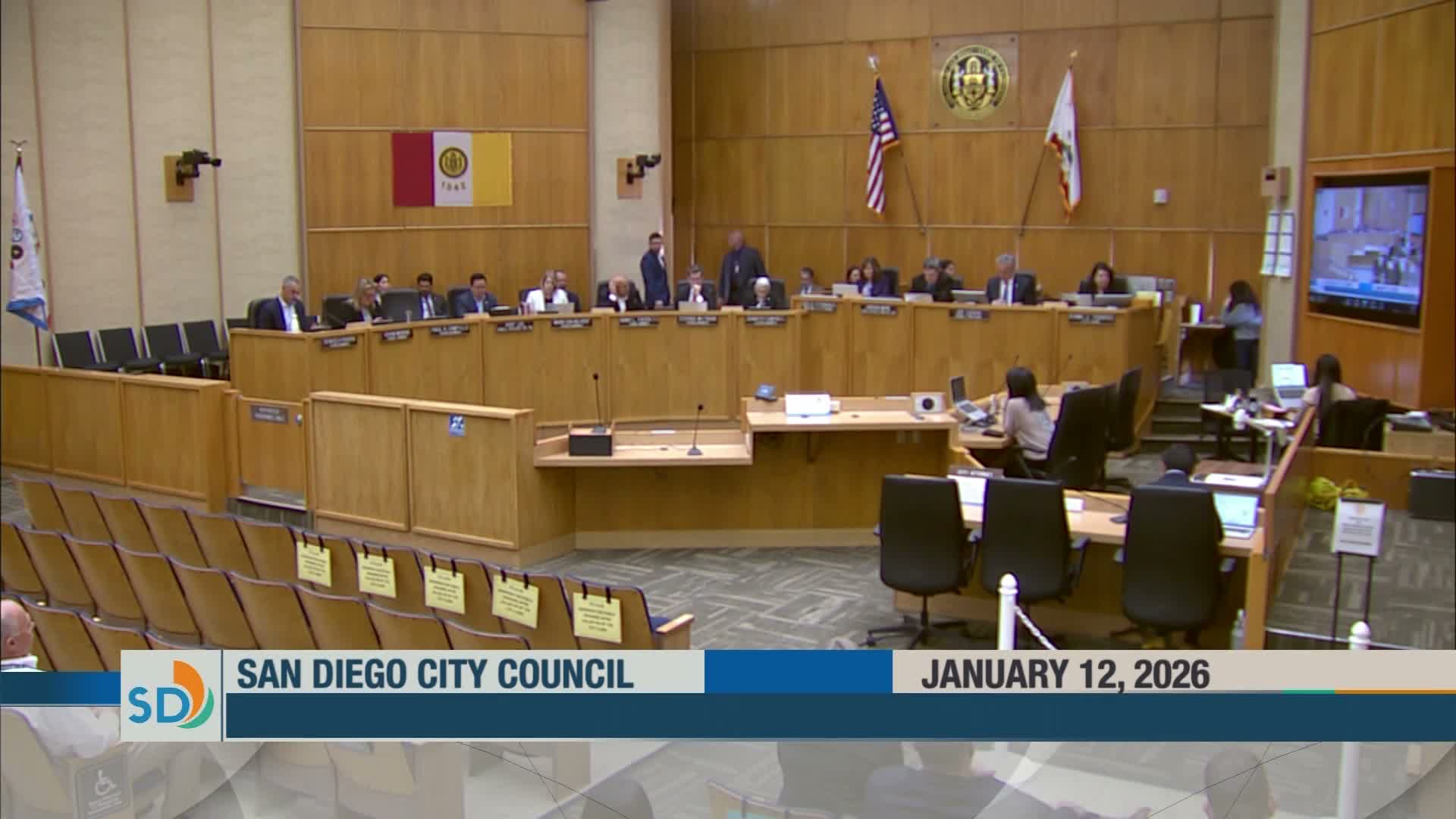
City staff presented an informational five-year financial outlook for the Public Utilities Department's water and wastewater enterprise funds, warning that rising wholesale costs and flat demand will strain key financial metrics and require continued use of the city's rate stabilization funds.
"We run one of the largest wastewater and water systems in the entire state of California as well as the nation," Adam Jones, deputy director of finance for the Public Utilities Department, said, adding that changes in County Water Authority costs and a higher salary assumption contributed to the updated forecast. He said staff prioritized dam safety, pump stations and treatment-plant modernization while deferring some neighborhood pipeline projects.
Jordan Moore of the Office of the Independent Budget Analyst said the IBA's review shows the water system's debt-service-coverage ratio will fall and the outlook assumes heavy use of rate stabilization reserves. "This really does show that the system is under financial strain," Moore said, urging the city's CWA representative to push for a business-plan update and the sale of excess supplies by the Water Authority.
Lisa Salai, executive assistant director for PUD, told the council the department is adopting a slightly higher salary adjustment in its baseline assumptions and is incorporating the County Water Authority's long-range financing plan into the forecast. Salai said PUD plans further condition assessments and said that, to stay within the revenue authority established by the recent rate case, staff will prioritize projects and consider strategic one-time deferrals.
Council members pressed staff for specifics on internal mitigations. "When will council have an opportunity to see a document that indicates some potential paths to achieve what we need to achieve internally?" Council member Henry Foster asked, noting he wanted detail on personnel and operational adjustments. PUD responded that many condition-assessment and prioritization efforts are already underway and that staff will provide more detailed information during the budget-development process.
Several council members and public commenters urged the city to accelerate non-rate revenue options. Council member Hilo Rivera asked about holdover leases and their potential to generate "hundreds of thousands of dollars per year"; PUD said it has been coordinating with Economic Development to prioritize lease renegotiations and expected more detailed timelines within a month. PUD also said the county had authorized $600,000 over four years toward certain lake-related items under discussion.
Council members raised dam-safety concerns after PUD said some dam projects will be delayed to 2028. Council member Von Wilpert pressed staff about Lake Hodges and said Sacramento has required the city to lower the lake to 280 feet, which has had local consequences for hydropower and brush growth; PUD staff said they are coordinating with state dam-safety regulators and are treating Hodges and other priority dams as high priority within available funding.
The presentation was informational only; no council motions or votes were required. Council members asked PUD and the IBA to return with more detailed mitigation options during the upcoming budget cycle and to coordinate more visibly with the San Diego County Water Authority on business-plan reforms and potential sales of excess supplies.