Get Full Government Meeting Transcripts, Videos, & Alerts Forever!
Get email alerts on the Wildlife Grizzly topic
No spam. Unsubscribe anytime.
Experts describe grizzly returns, risks and local sightings around Missoula
Summary
Montana Fish, Wildlife & Parks specialist Jamie Jonkel told a Bonner Milltown roundtable that grizzlies are increasingly appearing around Missoula but a self-sustaining population requires reproductive females; he outlined historical declines, recent verified sightings and management responses.
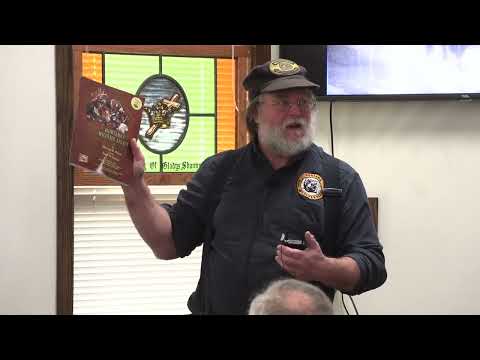
Jamie Jonkel, a wildlife management specialist with Montana Fish, Wildlife & Parks, told a Bonner Milltown History Center roundtable that grizzly bears are appearing more frequently around Missoula but that an established, reproductive population has not yet formed.
Jonkel opened with history and context, recounting centuries of human impacts on grizzly distribution and population pressure from the fur trade and market hunting. He said the species has made a slow recovery since federal protection: “Since 1975, they’ve been protected by the endangered species act,” Jonkel said, noting that recovery has been concentrated in the Northern Continental Divide Ecosystem.
Why it matters: Jonkel explained that the Missoula valley and two-river corridor provide strong movement pathways and rich riparian food sources that attract both black and grizzly bears. He warned that the same connectivity that brings bears into human-dominated landscapes also increases their exposure to vehicle collisions and conflicts over attractants.
Key local observations and management actions: Jonkel described recent, verified occurrences and management outcomes in the region, including a collared male the team nicknamed “Gold,” which was captured in 2024, collared and later documented moving through the area. He also recounted a female that frequented chicken coops, produced two orphaned subadults after an apparent mortality event, and a case in which a subadult was struck and killed on Interstate 90.
Jonkel emphasized practical reporting and evidence collection as essential for tracking bears: "If you find bear tracks and you think they're grizzlies...give us a front track photo," he said, adding that hair and game-camera footage allow staff to confirm species and lineage.
Audience questions during the session covered whether overpasses or undercrossings could aid wildlife movement and how managers decide when to remove or translocate animals. Jonkel said feasibility studies for wildlife passages on Interstate 90 are under way and that removal or destruction of individual animals has occurred only when animals repeatedly become food-conditioned or pose human-safety risks.
What’s next: The session ended with a 10-minute intermission and an invitation for continued reporting of sightings and imagery to Montana FWP. The roundtable supplied phone and email contact details for Jonkel and encouraged residents to submit photographs and hair samples to improve local monitoring.
The program moved on to a second presentation on beaver restoration after the break, and no formal policy decision or vote was taken during the session.