Get AI Briefings, Transcripts & Alerts on Local & National Government Meetings — Forever.
Wausau council approves Waterside Place development agreement after parking dispute
Loading...
Summary
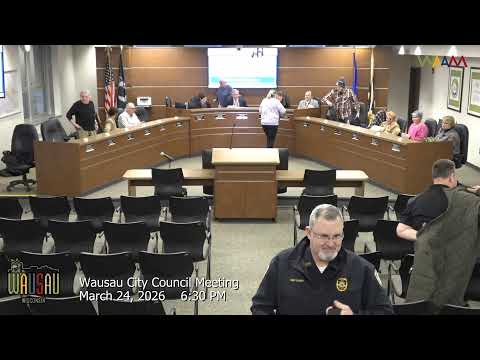
On March 24, 2026, the Wausau Common Council approved a joint resolution authorizing a development agreement and an amended and restated parking agreement with Lehi Scott Street LLC for the Waterside Place project at 11 Scott Street, after debate about a reduced parking commitment and long-term TID timing. Vote: 6–3.
The Wausau Common Council on March 24 approved a development agreement and an amended and restated parking agreement with Lehi Scott Street LLC for the Waterside Place project at 11 Scott Street, moving forward a plan to rehabilitate a vacant 100,000-square-foot building into market-rate residential units.
Alder Rasmussen told colleagues the project would return the property to taxable status, reclaim parking spaces in the Jefferson Ramp for public use and add “missing-middle” housing downtown, saying it will “add some vibrancy to downtown” and help replace lost daytime office workers with residents. The council moved the item up on the agenda and voted to approve the measure 6–3.
Developers and staff described the scale and fiscal effects of the proposal. Project supporters said the redevelopment costs are more than $10 million in total and that the residential component is roughly $8.3 million to create 52 mid-priced units. City staff estimated the project would generate about $55,000 in annual parking-ramp revenue that could help with ongoing ramp maintenance.
A central point of contention was parking. Development Director Randy Pfeiffer told the council the negotiated, restated parking agreement reduces the developer’s required allocation in the ramp from 480 spaces under a prior Opus agreement to 150 spaces in the new agreement; the 150 spaces will be paid for over a two-year period. Alder Tierney pressed staff on contingency plans should the ramp cease to exist, noting the contract requires the city to provide alternative parking within a 300-yard radius for the developer’s spaces. Pfeiffer said the developer would not accept shortening the duration tied to the existing agreement and that the restated terms reflect negotiated concessions compared with the prior arrangement.
Alder Larson, who said he had been a dissenting voice previously, said he was concerned about “discounting our services” and lowering the price or value of city assets amid budget pressures; Larson said residents should apply for parking permits like others rather than receive special treatment.
City engineering staff reassured members the Jefferson Ramp is structurally sound and that projected revenue from the agreement would support maintenance; council members noted several tax-increment financing districts, including TID 8, are nearing planned closure timelines and that the project’s increased assessed value could accelerate the flow of property tax revenue to the general fund.
The resolution’s approval authorizes the development and the amended parking agreement as presented; meeting minutes record the final vote as 6 in favor and 3 opposed. The council did not record a roll-call of individual votes in the public on the record beyond the tally.
The project’s next administrative steps include finalizing the development contract documents and implementing the phased payment schedule for the allocated ramp spaces; the council did not adopt additional parking mitigation measures at the meeting.