Get Full Government Meeting Transcripts, Videos, & Alerts Forever!
Get email alerts on the Sb88 Compliance topic
No spam. Unsubscribe anytime.
Delta measurement group outlines SB 88 steps, urges large diverter engagement
Summary
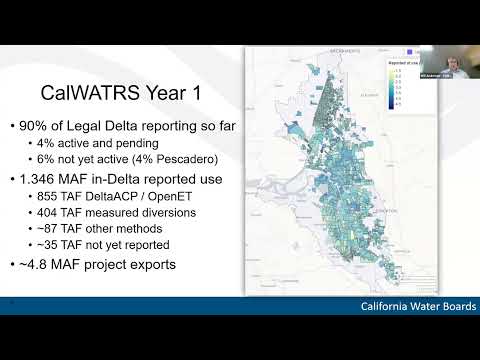
At the DMEC meeting, agency staff reviewed SB 88 measurement rules and the Cal Waters transition, urging about 38 large Delta diverters to work with regulators to update alternative compliance plans, improve reporting and provide system capacity data.
The Delta Measurement Experimental Consortium convened a technical meeting where staff outlined next steps to meet SB 88 measurement requirements and finish the transition to the Cal Waters reporting platform. Aaron O'Callaghan, an environmental program manager at the State Water Resources Control Board, said he will track communications around SB 88 and act as a point person for changes between this year and the next water year.
The meeting framed SB 88 as clarifying existing measurement obligations rather than creating novel duties. A senior engineer in the Delta Watermaster's office said the rules now codified in state regulation set stricter timelines for large diverters — defined in the regulation as diversion works greater than 30 cubic feet per second or totaling more than 10,000 acre‑feet annually — including hourly measurement (where required) and at‑least weekly reporting of volumes to the State Water Resources Control Board. "Specific requirements for large diversions ... is in terms of strict compliance with the regulations before we take into consideration any alternative compliance," the engineer said.
Why it matters: the DMEC noted roughly 38 entities around the Delta account for about one‑third of consumptive use there; getting consistent measurement and reporting from those diverters is critical to building a reliable Delta water balance. Presenters urged diverters to propose practicable updates to their alternative compliance plans (ACPs) and to supply static system details — pipe and pump capacities, peak-season operations, and contact points — so regulators can update internal records.
Officials acknowledged implementation challenges. The guidance distinguishes measurement frequency from reporting frequency: for some large facilities the regulation requires hourly measurement while allowing a weekly or daily summary for provisional reporting. Presenters described a staged approach where preliminary/provisional datasets can be refined through QA/QC and then reported as final annual figures.
Next steps: staff said they will continue outreach to the larger diverters, pursue pilot deployments (including SCADA and telemetry at selected reclamation districts), and ask diverters to submit ACP updates by the schedule outlined in the regulations. Aaron O'Callaghan offered to serve as a point of contact for SB 88 communications.
The consortium scheduled follow‑up coordination and regular outreach with diverters as the State implements the reporting platform and ACP update timelines.