Keene-owned 5 MW solar arrays at Dillant-Hopkins Airport advance in Swansea; hearing continued to April 9
Loading...
Summary
Revision Energy presented a proposed 5 MW, fixed-tilt solar project on roughly 24 acres at Dillant-Hopkins Airport; the Swansea Planning Board found the site plan complete, granted two technical waivers and continued the public hearing to April 9 to let the Conservation Commission provide comment and to collect FAA and landscaping materials.
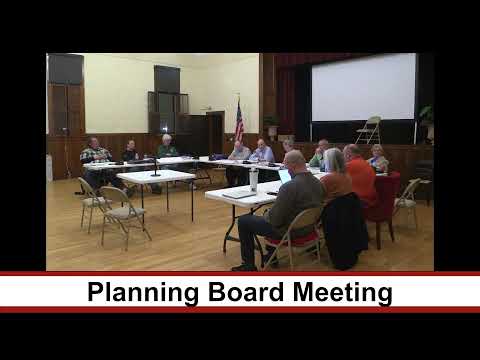
The Swansea Planning Board on March 26 reviewed a site plan from Revision Energy for a city-owned solar project at Dillant-Hopkins Airport and determined the application was complete, granted two technical waivers and continued the public hearing to April 9 to allow conservation review and additional submittals.
"The project that we have proposed is a 5 megawatt fixed tilt ground mounted array," said Megan Newland of Revision Energy, describing ground-screw foundations, buried electrical, equipment pads for inverters and transformers, and a maximum system height just under 12 feet. Newland told the board the city of Keene will own the arrays and that the design avoids moving components and tracking mechanisms.
Town planner Adam Paquette told the board staff had reviewed the packet and "concluded that the applicant ... meets all the site plan review regulations," while flagging one design detail: additional screening is needed at the northern end of subarray 1.
Board members voted to accept two waivers — one for a north-arrow/graphic-scale presentation issue and a second for a short gravel access section that exceeds a 5% grade — by voice vote. After technical questions and public comment the board voted to continue the public hearing to April 9 to give the Conservation Commission time for review and to allow the applicant to provide missing plan sheets, a landscaping detail and FAA documentation.
The applicant identified the permitting pathway the project will follow: an FAA airspace/obstruction review (the Form 7460 process), a New Hampshire Department of Environmental Services alteration-of-terrain (AOT) permit and associated stormwater design, an EPA construction general permit and DOT driveway/change-of-use permits tied to the two access points. Newland said the northern subarray will use an existing driveway while the southern subarray has a newly permitted DOT entrance.
Revision Energy and its civil engineer described the stormwater approach as conservative. Ryan Hudock of consulting firm Verdantas explained that, for solar projects, New Hampshire DES treats the whole area inside the array fence line as "disturbed area" and that the AOT requirement follows from that interpretation. "The AOT permit is essentially a highly detailed stormwater design plan," Hudock said.
Airport safety questions focused on instrument landing and glare. Multiple board members and pilots asked whether the arrays could interfere with the airport's instrument landing system (ILS) or create unsafe glare on approach. Newland said the FAA will make a final determination in its airspace/obstruction review; Ryan Cooley, the airport director who spoke to the board, urged confidence in the multi-layered review and said airport planners had selected the site in part to avoid impacts to safety areas and airspace. "I can safely assure you that both the FAA and the airport, and the city of Keene would not be proposing something that would be detrimental to the traveling public," Cooley said.
Revision Energy said it provided a glare analysis to the zoning board and would follow FAA guidance; its glare report found limited instances of low‑intensity reflections and no instances of high‑intensity "yellow glare" that could produce after‑images. The applicant also noted a no‑work window from May 1 through August 1 to avoid nesting-season disturbance and said it had coordinated with New Hampshire Fish and Game on species‑protection measures.
Residents at the hearing raised aesthetic, drainage and property‑value concerns and asked about health effects and wildlife attraction. The applicant and consultants said the evidence does not show documented health impacts from solar arrays, that the inverters are rated below 65 dB at 1 meter (a maximum), and that the proposed stormwater collection and detention will likely improve existing drainage in the neighborhood.
The board asked for a more detailed landscaping plan showing staggered plantings and alternative species, while airport staff urged caution: FAA advisory circular 150/5200-33 (wildlife hazard management) restricts landscaping that could attract birds or create standing water near airfield operations.
The board’s next procedural step is the continued public hearing on April 9, when members expect to see the missing plan sheets, a landscaping/screening plan that accounts for FAA wildlife limits and the FAA determination letters required under the airspace/obstruction review.