Lifetime Citizen Portal Access — AI Briefings, Alerts & Unlimited Follows
Planning Commission accepts Santa Rosa's 2025 General Plan and inclusionary housing annual review
Loading...
Summary
The Planning Commission reviewed the city's General Plan 2050 annual implementation report and the 2025 inclusionary housing ordinance review, praised staff's tracking, and voted unanimously to accept the report, noting new housing permits and ongoing implementation items including a public dashboard and South Santa Rosa plan.
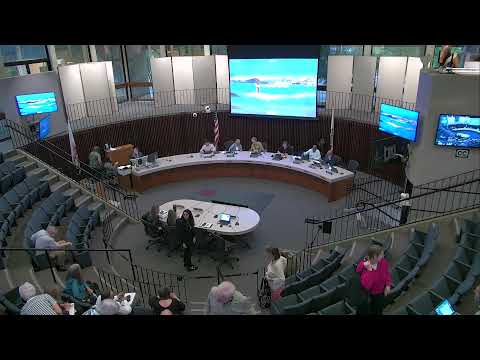
The Santa Rosa Planning Commission on March 26 accepted the city's General Plan 2050 annual review and the inclusionary housing ordinance report for 2025, finding the document usefully summarizes progress on housing, transportation, open-space and public-safety measures.
Planning staff Sedgina Bisla opened the presentation, saying, "My name is Sedgina Bisla, and the item before you today is the general plan and inclusionary housing annual review for 2025," and outlined the report's purpose: to inform the public and decision-makers about progress toward the general plan's goals and the annual inclusionary housing review required by state law.
Staff highlighted that Santa Rosa's population grew just under 1 percent in 2025 and that building permits were issued for 847 new residential units last year, primarily multifamily. Supervising planner Amy Nicholson described progress across income categories — "some good progress in our very low and low income categories," she said — and noted that staff found no need to amend the inclusionary housing ordinance at this time.
The presentation also listed notable projects: Lance Drive phase 1 (372 multifamily units with 20 very-low-income units in phase 1) and Casa Roseland (a 75-unit, 100 percent affordable project). Staff described policy and program advances including active-transportation investments, a downtown economic-development strategy, a conditional-use-permit streamlining ordinance under development and a planned public-facing dashboard of implementation metrics expected to launch in summer 2026.
Commissioners asked detailed operational questions about permit attrition, the commercial linkage fee and how the Enhanced Infrastructure Financing District (EIFD) will be prioritized. Director of Planning and Economic Development Gabe Osborne explained EIFD funding is tax-increment based and begins collecting revenue as development increases, and that prioritization involves the public financing authority together with council direction.
The commission commended staff for consolidating information from multiple departments. Commissioner Sanders moved to accept the report; Commissioner Carter seconded. After brief comments from several commissioners praising the report's clarity and completeness, the motion passed unanimously.
The commission recorded the action as a formal acceptance of the 2025 General Plan annual review and the inclusionary housing ordinance report; staff said the materials will support future council and community outreach and that the dashboard will provide ongoing public tracking of implementation milestones.