Get Full Government Meeting Transcripts, Videos, & Alerts Forever!
Get email alerts on the Boa Plan topic
No spam. Unsubscribe anytime.
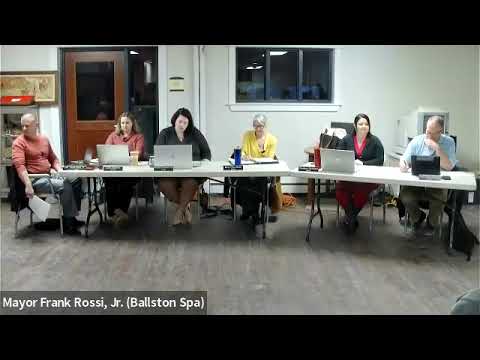
Ballston Spa board adopts BOA plan, issues SEQR negative declaration
Summary
The Village Board adopted the Revitalize Ballston Spa Brownfield Opportunity Area (BOA) plan, issued a SEQR negative declaration and directed the clerk to file notice with state agencies, moves that officials said will improve the village’s competitiveness for remediation and economic-development grants.
The Ballston Spa Village Board voted to adopt the Revitalize Ballston Spa Brownfield Opportunity Area (BOA) plan and issued a State Environmental Quality Review (SEQR) negative declaration, stating the plan will not require a full environmental impact statement.
Board counsel read the findings in the board’s resolution and the board approved a roll-call resolution declaring itself lead agency, classifying adoption of the BOA plan as a SEQR Type I action and directing the village clerk to file the negative-declaration notice with the New York State Department of Environmental Conservation. Carla, who led the SEQR presentation, described the action as a procedural step required for adoption of a land-use plan affecting more than 25 acres and said LaBella’s FEAF parts 1–3 were reviewed by staff.
Supporters told the board the study inventories underused and potentially contaminated properties and maps opportunities for remediation and redevelopment. Brenda, the BOA presenter, said the plan documents roughly 193 acres and about 89 parcels under review and includes recommendations that aim to make the village more competitive for state grants and redevelopment incentives. “Once we approve this, this does make the village more competitive for grants, economic-development grants,” Brenda said, adding the plan opens options for property owners who want to pursue state assistance.
During a public-comment period before the vote, residents praised the plan’s alignment with the comprehensive plan but urged clearer outreach and an implementation committee. Liz Kormos said the plan "makes a lot of good suggestions" but observed local developers and some BOA committee members reported limited engagement; Marilyn Stevenson called the project a "best-kept secret" and recommended a presentation from the State Historic Preservation Office on model preservation ordinances to protect village architectural character.
Board members and staff acknowledged those concerns but said some properties’ owners had not cooperated with outreach efforts. Brenda said planners tried repeatedly to contact some landowners and used conservative recommendations where owner participation was lacking. Carla noted the board’s role was adoption of a land-use plan rather than imposing redevelopment on private owners.
The board also passed a separate resolution authorizing publication of a public notice of intent to apply to the New York State Department of State for BOA designation. Trustees approved both the SEQR negative-declaration resolution and the adoption/public-notice resolution by roll call.
The BOA designation process and any eventual projects will require further steps, including owner cooperation, funding awards and potential site-specific environmental work. The board directed staff to file notice with the DEC and to publish required state notices, and trustees said they expect continued public engagement as next steps.