Lifetime Citizen Portal Access — AI Briefings, Alerts & Unlimited Follows
Burke County adopts zoning text amendment to streamline planning board and Board of Adjustment
Loading...
Summary
The board unanimously adopted Ordinance No. 2026‑03 to amend Article 8 of the Burke County zoning ordinance, removing alternate BOA seats, standardizing a three‑term limit for planning and BOA members, and clarifying variance hardship criteria to align with state statute (160D).
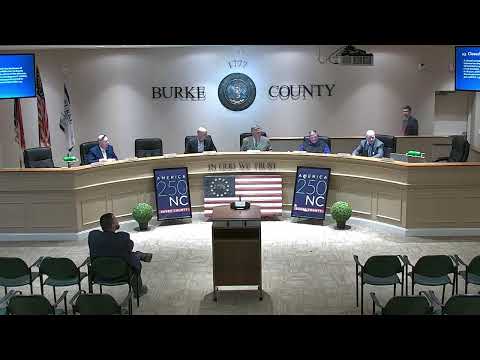
The Burke County Board of Commissioners voted 5‑0 on April 20 to adopt Ordinance No. 2026‑03, a text amendment to Article 8 of the county zoning ordinance that restructures membership and clarifies duties for the Board of Adjustment and the planning board.
Patrick Dickinson, the county planner, told the board the amendment eliminates alternate BOA members and establishes seven regular members so all appointed members can participate at every meeting. The ordinance also standardizes term limits — a maximum of three consecutive terms — for both the planning board and the Board of Adjustment and codifies planning board responsibilities such as preparing consistency statements, maintaining the zoning map and performing administrative review of major subdivisions.
Dickinson said the variance standard was revised to specify that hardships must arise from property conditions — "location, size or topography" — rather than from personal circumstances, bringing local code into alignment with state law (chapter 160D). A commissioner who moved the ordinance said the changes "promote efficient and consistent board operations" and improve clarity for applicants and staff.
The motion to adopt Ordinance No. 2026‑03 carried unanimously. The chair read the vote as 5‑0 and the clerk recorded adoption. No members of the public spoke during the hour‑long public hearing on this item.
Why it matters: By codifying membership structure, term limits and clearer variance criteria, the amendment aims to reduce ambiguity in administrative procedures and ensure consistent participation on quasi‑judicial bodies that influence land‑use outcomes.
What’s next: The ordinance takes effect according to the county’s normal rulemaking timetable; staff will incorporate the changes into the county code and update board appointment procedures.