Lifetime Citizen Portal Access — AI Briefings, Alerts & Unlimited Follows
Legislative audit finds payroll accuracy and timeliness gaps at Minnesota State
Loading...
Summary
An Office of Legislative Auditor review found instances of inaccurate and late faculty pay at Minnesota State between July 2022 and December 2024, identifying at least 57 faculty with inaccurate payments (totaling roughly $85,000 in absolute value) and recommending stronger controls and timelier approval of assignments.
An audit by the Office of the Legislative Auditor (OLA) found instances of inaccurate and late faculty pay across Minnesota State during the audit period of July 2022 through December 2024.
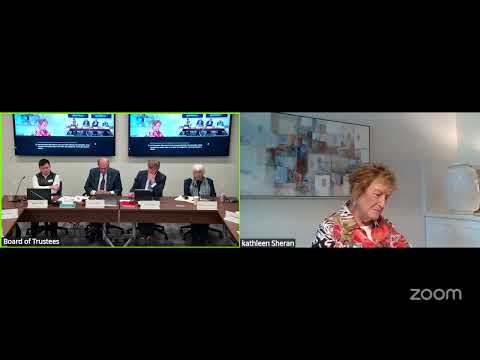
"We designed our work to determine whether Minnesota State accurately compensated faculty members and timely approved faculty payroll records," said Kayla Bornham, audit manager with the Office of the Legislative Auditor, during a March committee meeting. The audit assessed the adequacy of internal controls and tested payroll records at four sampled institutions.
Bornham told trustees the audit began with a random sample of 202 faculty members and identified 19 faculty in that sample who were paid inaccurately. Additional targeted testing added 38 more faculty, raising the total to 57 affected employees. "For the 57 faculty members who we found to have inaccurate payments, the inaccurate payments ranged from $10 to almost $16,300," Bornham said. The absolute value of the errors totaled approximately $85,000.
The audit attributed inaccuracies to several causes, including manual data entry errors that misrecorded credits taught by part-time faculty and an incorrect assignment type code used by one institution for project work. Bornham also cited migration issues related to Workday implementation: "Another cause for some of the inaccurate payments was due to the implementation of Workday and issues that arise with implementing a new system."
The review also found delays in compensation. Bornham said the auditor identified assignments that were not paid on time: "For the assignments paid late, 46% were paid within the next pay period. The remaining 54% were paid anywhere from two pay periods to a year late." The primary cause for late payments was late approval of instructional assignments at the campus level.
Vice Chancellor Eric Davis, who addressed trustees after the presentation, framed the problem as a process and coordination challenge: "Faculty payroll is a complex process. There are multiple systems involved and staff from both the institutions and central HR," he said. Davis described a planned continuous quality improvement (CQI) project that will focus on harmonizing campus practices for entering and approving assignments; that work is expected to begin in early April.
Davis and other system officials noted that Minnesota State currently relies on a legacy Faculty Workload Management (FWM) function in ISRS to compute course assignments and then imports those values into Workday. "Workday is not able to calculate faculty pay," Davis said, adding that the project to replace the legacy FWM and integrate it into the Workday ecosystem is planned to coincide with the Workday go-live in 2029.
Trustees pressed for more detail about who was affected, noting that contingent and adjunct faculty were often vulnerable when assignments change. Bornham and system leaders said errors affected both contingent and some full-time faculty (for example, cases involving phased retirement where workload changes were not captured in the system), and they offered to provide institution-level breakdowns from the report.
The OLA recommended that Minnesota State review and correct identified errors, accurately record assignment information, approve and process assignments in a more timely way, and strengthen internal controls and oversight. System leaders said the CQI effort will examine campus approval practices and look to adopt best practices across the 54-campus system.
The committee noted that the system had anticipated the financial cost of being the audited entity; the chief audit officer warned trustees that Minnesota State will likely receive a bill for the OLA audit that could be several hundred thousand dollars but that the system office had budgeted for that cost.
Next steps described by trustees and staff included follow-up work by the OLA on prior recommendations and internal CQI work to reduce future errors and late payments. The committee did not take a formal action on the audit itself during the meeting; the OLA indicated it will follow up on recommendation implementation as required by statute.