Get Full Government Meeting Transcripts, Videos, & Alerts Forever!
Get email alerts on the Landscape Replacement topic
No spam. Unsubscribe anytime.
Planning commission backs denser tree mix to restore screening at 1730 Canola Road
Summary
The La Habra Heights Planning Commission recommended city council approve a revised tree‑replacement plan for 1730 Canola Road (option 2), requiring large, field‑grown Victorian box and strawberry trees to be planted before rough‑grading signoff and imposing verification, replacement and recordation conditions.
The La Habra Heights Planning Commission on Tuesday recommended that the city council approve a revised landscape and tree‑replacement plan — dubbed option 2 — for a new residence at 1730 Canola Road, concluding the denser mix of larger trees will provide more immediate screening while complying with local fire‑safety spacing.
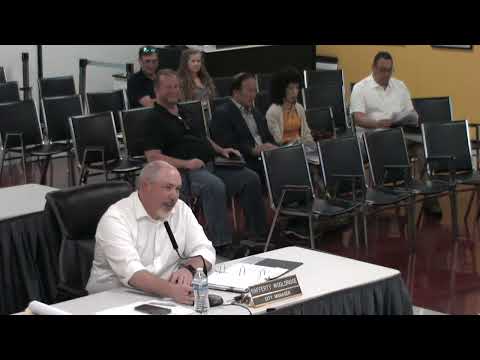
Staff recommended the commission forward option 2, which replaces planned fruitless olive trees with Victorian box specimens and repositions trees along the east property line so canopies don’t overhang neighboring lots. Rafferty, the city’s planning staff, said the council had previously approved the project and asked the commission to advise on landscape screening and tree replacement.
Why it matters: Neighbors argued the project must restore privacy, views and character after several trees were removed in prior work; the commission sought to balance those concerns while honoring fire department fuel‑modification requirements that limit tree spacing and species. The decision sets conditions the council can adopt or amend when it considers the full project.
The landscape architect, Carl Garcia, told the commission both planting options had been reviewed by the city’s fire plan checker and that option 2 uses larger, denser trees to reach screening goals sooner. Garcia said the Victorian box trees proposed are 60‑inch box specimens at installation and will stand roughly 12–18 feet tall and 12–20 feet wide “day one,” and the strawberry trees are slightly smaller but still substantial field‑grown stock.
Neighbors pressed for enforceable guarantees and verification. Several residents said photos and past site changes made it unclear which trees remain on site, and they worried a sizeable share of planted specimens may not survive. The Ling homeowners described clay‑heavy soils on their lot and urged warranties, proper planting contractors and irrigation to improve survival odds; another neighbor alleged plan documents undercounted trees that once stood on the site.
How the commission responded: Commissioners pressed staff and the applicant on several technical items — whether trees can be moved off the property line, whether retention‑basin pipes conflict with roots, planting specifications and how tall trees will be at planting and after five years. Commissioners and staff agreed trees should be planted early in construction so they are growing during the building phase and inspected before final sign‑offs.
Conditions attached to the commission’s recommendation included: requiring the approved landscape plan to show x‑y coordinates and dimensions for each tree; staking and civil‑engineer verification of tree locations; independent landscape‑architect verification that the planted trees match specified species and sizes; having Garcia & Associates select and tag the trees before shipment; replacing specified missing or nonviable plantings with 36‑inch box trees; removing the silk/silt tree and replacing it with a species limited to 12–15 feet under power lines; and directing the city attorney to research whether the conditions may be recorded against the property (the commission asked for recorded maintenance/replacement language if legally feasible).
The motion to recommend option 2 with conditions, moved by Commissioner Rick Brooks, carried unanimously. The planning commission’s recommendation will go to the city council, which has final authority to adopt or modify the conditions and the project’s approval.
What’s next: The city council will receive the commission’s recommendation and the associated conditions; the city attorney will advise whether conditions can be recorded against title and the council may adopt alternative enforcement measures (a bond or recorded maintenance requirement).