Get Full Government Meeting Transcripts, Videos, & Alerts Forever!
Get email alerts on the Provider Accountability topic
No spam. Unsubscribe anytime.
Baltimore council committee presses for stronger oversight as state rewrites behavioral-health regulations
Summary
Baltimore City's Public Health and Environment Committee heard updates on provider accountability, the COMAR 10.63 rewrite and access measures such as 988. Behavioral Health System Baltimore outlined new licensing expectations and promised aggregate audit data for the council to inform budget and oversight decisions.
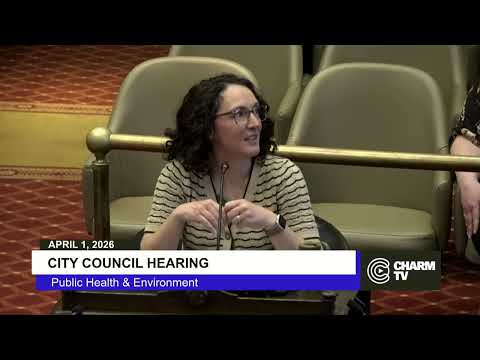
Councilwoman Felicia Porter convened the Public Health and Environment Committee to continue a series of oversight sessions on behavioral health in Baltimore City, calling for concrete interventions to improve quality at recovery homes and clinics.
"We cannot keep having these same conversations ... without some intervention," Porter said as she opened the committee hearing. The meeting began with public testimony and agency presentations intended to clarify where the city's system can strengthen monitoring and outcomes.
Adrienne Bridenstine, vice president of policy and communications at Behavioral Health System Baltimore (BHSB), told the committee the public behavioral-health system in Baltimore City served more than 150,000 unique people in the most recent year of available data and that roughly $500,000,000 is invested annually across mental health and substance-use services in the city. BHSB said it also manages about $64,000,000 in grant-funded services that are not reimbursable through Medicaid.
Bridenstine highlighted three local Certified Community Behavioral Health Clinics (CCBHCs) as models of integrated, accountable care: Shepherd Pratt, Gaudenzia and Volunteers of America. "CCBHCs are required to provide comprehensive mental health and substance-use services," she said, noting the federal CCBHC model includes data reporting, care coordination and an outcomes-aligned payment model.
Bridenstine also described a near-final rewrite of COMAR 10.63 (the state regulations that govern community-based behavioral-health programs), which she said is being reorganized from nine chapters into about 39 service-specific chapters. The department has moved the rules through the Behavioral Health Administration's regulatory office and will next send them to the secretary and the governor; the rules will then go out for a 30-day public-comment period before finalization. "We think this is important," Bridenstine said of the rewrite and its new expectations for licensing, staffing and compliance.
On provider accountability, BHSB said it audits programs it funds, monitors contract performance year-round and can place providers on corrective-action or performance-improvement plans when they fail to meet deliverables. Bridenstine said BHSB investigates complaints and tracks critical incidents (for example, overdose or deaths) in partnership with the state Behavioral Health Administration but acknowledged there are limits to local authority when issues fall under state jurisdiction, such as Medicaid fraud.
The committee pressed for more transparent, aggregate audit information. Porter formally requested that BHSB share aggregate audit data and district-level complaint breakdowns so council members can better assess outcomes before the budget season. Bridenstine said some BHSB outcomes and volume measures are already publicly posted and she would follow up with links and any additional aggregate audit metrics available.
The hearing also covered access tools: Bridenstine reminded the committee that the 988 helpline functions both as a crisis line and as an access point for same-day outpatient clinic appointments, and that a majority of 988 calls are resolved on the phone without higher levels of care.
Why it matters: committee members said clearer data, shared accreditation reports and stronger local access to licensing and audit information would help distinguish higher-quality providers from those creating neighborhood problems. Members signaled interest in local measures that would complement the state regulatory changes and in ensuring accreditation and corrective-action documents are visible to city decision-makers.
Next steps: BHSB will provide committee staff with publicly available outcome pages and explore what aggregate audit and complaint data can be shared at the district level. The COMAR rewrite will proceed through the state process and, after public comment, may take effect later this year.