Lifetime Citizen Portal Access — AI Briefings, Alerts & Unlimited Follows
Councilman Blanchard moves amendments to smoke‑shop zoning bill; committee recommends it favorable
Loading...
Summary
The Land Use & Transportation Committee adopted amendments to a smoke‑shop zoning bill that set 750‑foot buffers from schools and parks and a phased two‑year (plus one‑year extension) removal of proximate nonconforming shops; the committee recommended the bill favorable to the full Council. City agencies warned enforcement capacity and shop inventories are not yet in place.
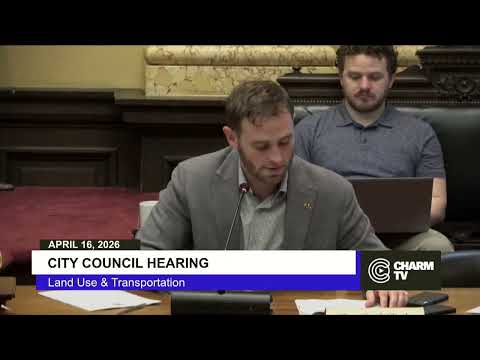
Councilman Zack Blanchard, sponsor of Council Bill 25‑0114 on smoke‑shop zoning, presented a package of amendments April 16 that the Land Use & Transportation Committee recommended favorable to the full Baltimore City Council.
Blanchard said the amendments aim to identify and limit concentrations of smoke shops while avoiding state licensing preemption and unintended impacts on grocers and pharmacies. He described the key changes as a method to identify regulated smoke‑shop uses, 750‑foot minimum distances from schools and parks and between smoke shops, and a time‑limited phase‑out for existing proximate shops. "I feel confident that this gives us a strong ground to stand on in a way that is both enforceable, effective, but also legally defensible," Blanchard said.
The amendments would make existing shops within 750 feet of a disqualifying feature (a school, park or recreation center) nonconforming and establish a phase‑out schedule: two years from enactment for termination, with a possible one‑year extension for limited extenuating circumstances (a maximum three‑year transition). Planning staff explained that most enforcement tied to that nonconforming transition would not require action until the two‑year window expires, though newly established uses after enactment could be subject to immediate enforcement under the new definition.
Representatives of the mayor's office cautioned the committee about immediate enactment. Tyler Schnell of the mayor's office said agencies "do not currently have ... a list of the smoke shops" and urged keeping some enactment lead time so zoning, inspection and enforcement units can compile inventories and prepare to enforce effectively.
Blanchard and other members said they understood enforcement challenges but wanted the statutory clock for phase‑out to start as soon as the bill becomes law to accelerate reductions in proximity to schools. The Law Department reviewed the amendments and said they were legally sufficient for formal consideration.
After committee discussion, Blanchard moved adoption of amendments 1, 2 and 3; the vice chair seconded the motion and the committee voted to recommend the bill favorable with amendments to the full Council.
Next steps: the committee transmitted the bill to the full City Council with the recommended amendments; specifics about enactment timing and the city’s enforcement plan remain to be finalized between DOT, Planning, enforcement units and the mayor’s office.