Get Full Government Meeting Transcripts, Videos, & Alerts Forever!
Get email alerts on the Privacy And Transparency topic
No spam. Unsubscribe anytime.
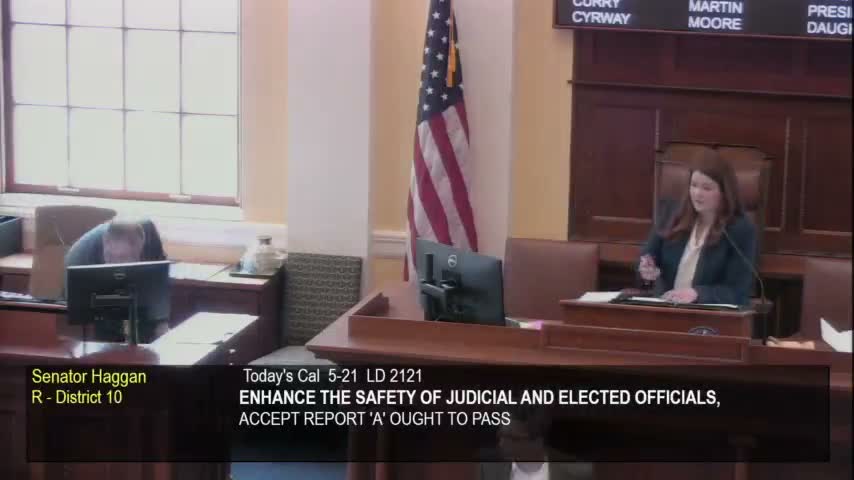
Maine senators debate pilot to shield judges’ and officials’ home data from public websites
Summary
Lawmakers debated a resolve to create a working group and two-year pilot allowing qualifying judicial and elected officials to remove certain personal identifying information from public websites and databases, with proponents citing safety and opponents warning of transparency and cost risks.
Senators spent more than an hour weighing a proposal to limit public exposure of certain personally identifying information for judges, constitutional officers and other elected officials.
Proponents said the measure responds to real threats. "The safety of judicial officers and elected officials and constitutional officers is not a partisan issue," said Senator Hagen, arguing that removing some public-facing personal data and testing a pilot could reduce swatting and other targeted threats. Sponsor Senator Carney told colleagues the proposal "isn't about doxxing. This is about actual threats to our physical safety," and described a two-part approach that creates a stakeholder working group and a two‑year pilot to let qualifying officials apply to have certain data removed from publicly accessible sites.
The working group described by Carney would include representatives of the judicial branch, the attorney general, the state chief information officer and a member of the Right to Know Advisory Committee to try to balance privacy and public access. The pilot would allow a limited number of qualifying officials to subscribe to services that remove personally identifying information from publicly accessible websites and databases, with program features requiring an application and time-limited participation.
Opponents warned the initiative could undermine transparency and pose administrative burdens. "Removing home addresses and other identifying details from public records may create unintended barriers for journalists, watchdog organizations and citizens seeking to verify conflicts of interest, residency requirements, or potential misconduct," said Senator Hagen during his remarks opposing the committee version. Other senators raised concerns about using taxpayer-funded pilot projects to pay for private data‑removal services and questioned equity and auditability of vendor operations.
Senators also debated where to draw the line between protecting safety and preserving open‑records principles. Supporters emphasized the pilot's limited, two‑year scope and said the project would report back to the Legislature before any permanent policy is adopted; opponents requested stronger, explicit protections for public access and clearer cost-benefit evidence.
The excerpted transcript records extended floor debate and several members pressing for clarifications about the pilot's design and stakeholders; it does not show a final enactment vote or the precise legislative disposition of the measure in the later calendar. The record includes requests for committee study and motions to adopt committee amendments, but the ultimate final vote on the underlying resolve was not recorded in the provided excerpt.
What happens next: Sponsors said the working-group and pilot design would be reported back to the Legislature for evaluation; any continued or expanded program would require further legislative action.